














Black Friday
Code: BLACKFRIDAY2026
This Black Friday, elevate your diamond jewel with a complimentary upgrade in Colour, Clarity or Cut. Enjoy an exceptional diamond at no additional cost. Exclusive offer until 30 November 2026.


When choosing a diamond for an engagement ring or any piece of jewellery, the diamond setting—how the diamond is mounted onto the ring’s precious metal band—is just as important as the stone itself. The right setting not only enhances the diamond’s beauty but also plays a crucial role in its durability, appearance, and overall style. Whether you’re drawn to classic or modern designs, each setting type offers unique benefits, from maximising sparkle to providing added protection. In this guide, we’ll explore everything you need to know about diamond settings, including how metal choices, diamond shapes, and various setting options can help you find the perfect ring.
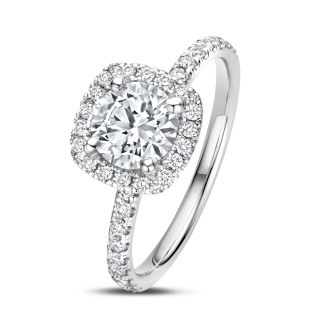
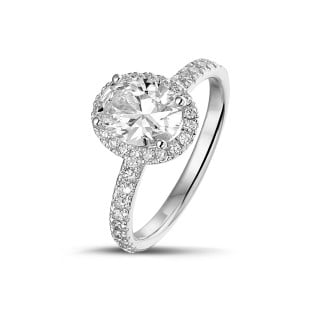
Diamond settings influence a ring's aesthetics, durability, and light reflection. Popular settings include the prong setting, which maximises brilliance and is often used in solitaire rings; the bezel setting, which offers extra protection and is ideal for everyday use; and the halo setting, which makes the central diamond appear larger through a circle of smaller diamonds. The cathedral setting raises the diamond for a dramatic effect, while the tension setting gives the impression that the diamond is floating, which requires high precision. Finally, there is the channel setting, where multiple diamonds are placed in metal channels for a smooth and secure finish. Choose the setting that best suits your style, durability requirements and the cut of the diamond.

Prong: Sparkle - very high, allows maximum light into the diamond. Security - moderate; depends on prong count and thickness. Maintenance - periodic checks and occasional re-tipping. Style - classic and versatile, suits most cuts. Cost - typically lower bench time than bezels or intricate pavé.
Bezel (case): Sparkle - moderate; the metal rim slightly reduces face-up brilliance but creates a clean frame. Security - excellent; full protection of the girdle and edges. Maintenance - low, easier to clean and less likely to snag. Style - modern, low-profile and sleek. Cost - higher due to metal use and finishing demands.
Pavé: Sparkle - high surface sparkle from many small stones. Security - good for protected settings, but tiny stones are more vulnerable to knocks. Maintenance - careful cleaning and periodic inspection of beads. Style - continuous sparkle that complements a centre stone. Cost - moderate to high depending on number of stones and setting complexity.
Channel/Bar: Sparkle - restrained, linear brilliance from aligned stones. Security - very good; stones sit flush within channels or between bars. Maintenance - lower snagging risk, straightforward cleaning. Style - streamlined and ideal for stacking. Cost - moderate; depends on rail finishing complexity.
Beyond the number of prongs, the head shape and engineering of each prong influence both appearance and security. Common head shapes include rounded heads, knife prongs and V-prongs. Rounded prongs look softer and conceal minor wear. Knife prongs are slim and taper to a refined tip, emphasising the stone’s silhouette. V-prongs cradle pointed shapes like marquise or pear cuts, protecting tips while keeping the profile elegant.
Double prongs: two narrow prongs set closely together add redundancy without much visual weight; chosen when extra security is desired with a delicate look. Hidden prongs: these hold the diamond from underneath so little metal shows from the top, producing a floating appearance with excellent light entry. Swept or Tiffany-style prongs: gently curved prongs that sweep up from the band, offering a classic profile that balances security with an open presentation.
A four-prong setting balances visibility and security; it exposes more of the diamond to light and suits many round and brilliant cuts. Six prongs add redundancy and better protect the girdle from impacts, at the cost of slightly more metal coverage. Three-prong prong settings are used for well-cut stones and artisan designs where symmetry and minimalism matter; they can be secure when seats and prong thickness are engineered appropriately.
Prong thickness and the depth of the seat where the diamond rests affect resistance to lateral knocks and whether the prongs will require re-tipping over time. Thicker prongs and properly cut seats distribute stress more evenly, while shallow seats or very thin prongs speed wear. Since wear patterns depend on lifestyle, ask your bench about likely inspection points and arrange periodic checks; routine work such as re-tipping preserves long-term security for prong-set stones.
These choices - head shape, prong count, thickness and seat design - let you set the balance between sparkle, protection and the ring’s visual character.
A full or closed bezel setting wraps the diamond completely in a continuous rim of metal, giving strong edge protection and a smooth silhouette. A partial or half bezel traces only part of the girdle, leaving sections open so more light reaches the stone and its shape remains visible. Visually, a full bezel reads as a solid frame; a partial bezel sits between protection and openness.
When to choose a full bezel: choose a closed bezel if daily wear and maximum protection matter most. The continuous rim shields the girdle and vulnerable edges, reduces snagging and gives the ring a lower profile. Full bezels are a sensible option for softer gems or for owners who prefer lower maintenance.
When to choose a partial bezel: select a half bezel when showing the diamond’s face-up size and cut is more important than complete protection. Partial bezels suit elongated and fancy shapes like pear or emerald cuts, where exposed sections keep the facet pattern and lines visible and preserve light return.
When a hybrid or custom solution is best: a mixed approach - for example a full rim at the girdle with a cutaway gallery or a three-quarter bezel - can combine protection at vulnerable points with visual openness at the crown. Use hybrids when you want edge security without losing the stone’s presence.
Emerald and pear cuts often work well with partial bezels to avoid masking characteristic lines. Expect trade-offs: a full bezel can make a diamond look slightly smaller face-up because of the surrounding metal, but it gives a neat, graphic frame that highlights the outline. A partial bezel tends to make the diamond look larger and livelier while offering less edge protection.
Bezel work needs precise metal finishing and careful seating of the stone. A seamless full bezel requires accurate measurement and burnishing and often uses more metal than a simple prong head, while partial bezels demand exact transitions where metal meets exposed facets. That extra bench time and attention to finish explain why bezel work usually involves more craftsmanship than basic prong settings. The result is a clean, durable mount that balances protection with a refined look.
Black-diamond pavé Eternity wedding ring: a special choice to match with your white diamond pave Eternity wedding ring
When people are looking for a special Eternity wedding ring, considering a black-diamond pave setting together with a white-diamond pave setting is a stylish choice.
Black diamonds bring particular technical issues to pavé because many specimens differ in structure and toughness from typical white brilliants. Their dark colour and surface texture create dramatic effects in pavé bands and halos, but stone type, setting technique and the bench’s skill determine long-term behaviour.
Natural black diamonds - what to expect
Natural black diamonds are often polycrystalline with dense inclusions, which can make consistent polishing harder and create fragility at thin edges.
Adjusting the technique for black melee
Because surface and internal structure vary, experienced setters sort stones by hardness and finish before setting and then adapt cup depths, bead sizes and seating technique to the lot. A bench familiar with black-diamond pavé will increase mechanical protection where needed and take measures to reduce stress on the girdle and avoid micro-chipping.
Technical pavé guidance for black diamonds
Bright-cut versus modern micro-pavé: bright-cut pavé uses slightly deeper cups and stronger beads to cradle each stone, adding mechanical support that benefits darker, less predictable material. Modern micro-pavé uses shallower cups and finer beads for a continuous surface, but it demands very consistent stone geometry and a highly skilled bench when applied to black diamonds.
Cup depth and bead choices: for darker melee, setters commonly use modestly increased cup depth and slightly larger beads to protect girdles. Cup depth and bead count should match the diamonds’ thickness and girdle condition rather than following a single rule.
Shank thickness and resizing risks: pavé bands with many small black stones need a robust shank and planning for future resizing. Benches typically leave extra metal where pavé runs, since thin shanks complicate secure resizing and raise the chance of loosening stones during work.
Practical considerations for choosing a black diamond eternity ring:
If you are choosing a black diamond eternity ring to match a white diamond eternity ring, please choose the same setting as the perfect pair(pave or castle or channel). The width of the ring could be different but it’s better to have the same type of setting.
For the ring band, you should opt for high-quality precious metals, such as gold or platinum. They are beautiful, durable and suitable for almost everyone with sensitive skin or allergies. Diamonds - from a large solitary stone to a setting with various small diamonds - give the ring extra class and radiance. If you like colour, but coloured diamonds are a bit too pricey, then you're sure to find a gorgeous ring with a sapphire, ruby or emerald.
We offer a wide range of exclusive diamond jewellery, from dazzling engagement rings to elegant bracelets and cool watches for men. You can choose between designs ranging from modern and trendy to traditional and elegant. If you don't quite find your taste among our offerings, you can still opt for customisation. Our craftsmen provide quality and affordable customised jewellery.
If you are creative or have a clear design in mind, you can come to us and work with our designers to create a customised piece of jewellery. So you can have a very personal engagement ring made that will surely have a lot of emotional value when you ask her the question. Or design a custom-made diamond locket for a special or festive occasion.
You can discuss this with our experts in one of our showrooms or send us your own (rough) sketch of your jewel. Or send us an image of the exclusive piece of jewellery on which you would like to base your design. In addition, we would like to receive the following information in order to prepare an offer for your customised piece of jewellery:
After you have sent us the necessary information, we will provide you with an offer for your custom-made jewellery. Because we buy our gemstones directly at the source and mainly work with online sales, we can guarantee the best price-quality. We also have a strict zero-tolerance on diamonds from conflict areas.
After you have given us your approval on the offer and your payment has reached us, we start our sketching process. After one working week, you will receive an e-mail from us with the digital visualisation of your design. Using CAD software, we create a 3D model so that you can immediately imagine what your beautiful piece of jewellery will look like in reality.
After you have approved the 3D drawings, the real craftsmanship starts: our craftsmen make your exclusive piece of jewellery by hand using traditional methods. The precise craftsmanship ensures that your jewel can be personalised down to the smallest detail: from a unique diamond setting to engraving a name or symbolic word. After about three weeks, your beautiful piece of jewellery will be finished.
Your exclusive piece of jewellery is completely unique and of top quality thanks to our expertise. Just like the jewellery in our collections, your made-to-measure piece of jewellery will be sent free of charge and insured. You will receive your jewellery in a high-quality BAUNAT packaging box.

We can also personalise the gemstone of your choice for you. You can contact us if you own loose diamonds and would like to incorporate them into a piece of jewellery. Or contact us if you have seen a beautiful design in our collection, but prefer a different gemstone.
This way, you can choose a higher quality and/or a larger diamond than the one in the jewel of your choice. Or let your exclusive piece of jewellery stand out even more with a coloured gemstone, such as a ruby, sapphire or emerald. We would like to receive the following information from you in order to be able to make an offer for your custom-made piece of jewellery:
If you have your eye on a different cut, we will have to make some adjustments to the chaton or setting of the stone.
If you prefer to leave the creative thought process to us, our jewellers and BAUNAT experts will be happy to sit down with you and offer advice.
Request your personalized offer right away.
Learn more about the advantages of tailor-made jewellery.
The quality of diamonds is translated into the 4 C's:
The 4 C's not only provide verifiable information about the quality of your stone, they also make it possible to make your diamond traceable. When you are going to buy diamonds, you will always get a certificate that proves the value of your diamond.
Fabienne, manager of the German market is able to guide every client with finding the right jewel. She takes care of most of the German orders, but also takes other task on her plate. Thanks to her six years of experience at BAUNAT she acquainted well with the product and the marketing around it. Her degree in PR ensures that BAUNAT is well presented across all media channels. For anyone looking into a new investment opportunity, Fabienne is the perfect guide in this process. No question will be left unanswered, and she will help you every step of the way.
• Eternal Bloom bespoke engagement concept - Role: project lead for client briefing and prototype coordination. Fabienne translated personal design references into a 3D-printed prototype, supervised stone selection and ensured the finished piece matched the client’s vision and comfort preferences.
• Personalized anniversary necklace - Role: design coordinator and quality overseer. She managed the custom design process from the initial sketch to final polishing, liaising between client and workshop to preserve proportions and finish.
• Reimagined heirloom ring restoration and redesign - Role: client consultant and technical coordinator. Fabienne guided the client through options to modernize setting details while keeping sentimental elements, delivering a wearable result that respected the original piece.
Her hands-on involvement in bespoke commissions ensures each custom order has a clear brief, careful prototype review and close follow-up with the workshop, so clients receive a tailored jewel that meets both aesthetic and practical expectations.
For speaking engagements, press requests or research collaborations, please send your message to BAUNAT’s communications team with the subject line: "Fabienne Rauw - Professional Enquiry." Include a brief description of the request and any relevant dates or documents. The communications team will route enquiries to Fabienne and provide guidance on next steps.
BAUNAT diamond experts assure real diamonds with profound market knowledge and personalized service. Start your diamond journey with trust and no obligations.
How can i recognize a real diamond? What are 3 characteristics to take into account? Find out more at BAUNAT.
Every month has a birthstone. Find out more about yours at BAUNAT and take a look at our collection.
This Black Friday, elevate your diamond jewel with a complimentary upgrade in Colour, Clarity or Cut. Enjoy an exceptional diamond at no additional cost. Exclusive offer until 30 November 2026.


