







Features:
-
Category:
-
Posted at:
-
Author:
- Fabienne Rauw
-
BAUNAT Antwerp
-


-
Reading time:15 minutes
In this article:
- Wearing a ring on the thumb
- Wearing a ring on your index finger
- Wearing a ring on your pinky
- The significance of the ring finger
- What does wearing a ring on the middle finger mean?
- The significance of wearing a ring on the left or right hand
- The perfect placement for your ring
- Want to know more about how to wear your rings?
- Frequently asked Questions
What finger to wear a ring on: different meanings explained
A beautiful diamond ring on your finger can add elegance to your office while representing lasting love. It can also have an emotional value, as is often the case with an heirloom.
But what finger to wear a ring on? Though people traditionally wear it on their left hand, on the ring finger, different fingers have different meanings. You may choose to wear your ring on your middle finger, ring finger, or index finger. If you are married, then you typically wear your engagement ring and wedding ring together on the ring finger of your left hand.
In this in-depth article, we’ll explain the meaning behind each finger, so you can make the right choice for yourself.
Read summary
Which Finger Should You Wear Your Ring On?
Have you ever wondered what message your ring placement sends? While traditionally worn on the left ring finger, each finger carries its own symbolic meaning.
The thumb represents power and confidence, while the index finger—associated with Jupiter—symbolizes leadership and ambition. The middle finger, being central and prominent, signifies balance and a desire for attention. The ring finger, linked to Apollo, represents love and commitment, making it the traditional choice for engagement and wedding rings. The pinky finger symbolizes intelligence and communication skills, historically used for signet rings.
Left versus right hand placement also varies by culture. In Western traditions, wedding rings typically go on the left hand, believed to be closer to the heart via the "Vena Amoris." For the perfect fit, always ensure you know your ring size by using a ring sizer or consulting a jeweler.
5 Questions to Find Her Perfect Engagement Ring
Are you planning to propose? Finding the right engagement ring is a defining step. Every ring is handcrafted in Antwerp from the finest materials by skilled artisans. Discover what engagement ring fits her personality.
Most viewed diamond jewels
-
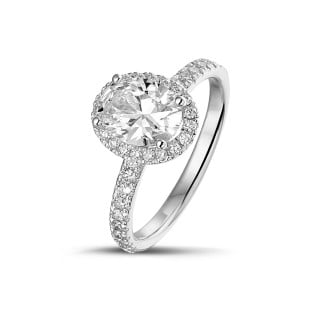
![1.00Ct halo ring in white gold with oval diamond]() Bestseller1.00Ct halo ring in white gold with oval diamondFrom USD 5.210,00 (excl. VAT)
Bestseller1.00Ct halo ring in white gold with oval diamondFrom USD 5.210,00 (excl. VAT) -
![1.00 carat solitaire cluster ring in white gold with marquise diamond]() BestsellerNew1.00 carat solitaire cluster ring in white gold with marquise diamondFrom USD 4.320,00 (excl. VAT)
BestsellerNew1.00 carat solitaire cluster ring in white gold with marquise diamondFrom USD 4.320,00 (excl. VAT) -
![0.95 carat diamond rose design ring in white gold]() NewPrincess Delphine0.95 carat diamond rose design ring in white goldFrom USD 15.720,00 (excl. VAT)
NewPrincess Delphine0.95 carat diamond rose design ring in white goldFrom USD 15.720,00 (excl. VAT) -
![1.00 carat solitaire ring with an asscher cut diamond in white gold]() Bestseller1.00 carat solitaire ring with an asscher cut diamond in white goldFrom USD 4.620,00 (excl. VAT)
Bestseller1.00 carat solitaire ring with an asscher cut diamond in white goldFrom USD 4.620,00 (excl. VAT) -
![1.00 carat solitaire ring with a cushion diamond and hidden halo in white gold]() BestsellerNew1.00 carat solitaire ring with a cushion diamond and hidden halo in white goldFrom USD 3.940,00 (excl. VAT)
BestsellerNew1.00 carat solitaire ring with a cushion diamond and hidden halo in white goldFrom USD 3.940,00 (excl. VAT)


Wearing a ring on the thumb
The thumb has positive connotations as well, when offering a thumbs up signal, for example. A thumb ring for men and women often implies someone is distinguished and confident.
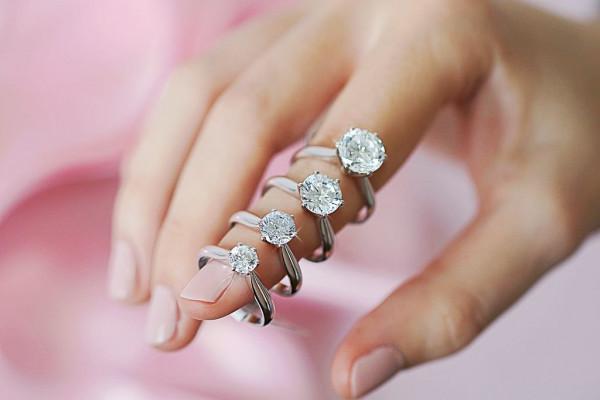
Wearing a ring on your index finger
Historically, rings on the index finger were worn by royalty and high-ranking officials to signify their status and authority. Today, it continues to be a symbol of ambition and capability. If you want to convey strength and leadership, the index finger is an excellent choice.
Wearing a ring on your pinky
People with extraordinary talents, who are bright and resourceful, often wear rings on their little finger. Historically, men wore signet rings on their pinkies to sign important documents, giving these rings a vintage connotation. Today, a pinky ring continues to signify intelligence, resourcefulness, and a touch of old-world charm.
“People with extraordinary talents, who are bright and resourceful, wear rings on their little finger.”

The significance of the ring finger
Other types of rings, such as promise rings or eternity rings, are also highly suitable for this finger. Wearing a ring on the ring finger is a classic choice that signifies commitment and timeless elegance.
History and etymology: where the ring traditions came from
Exchanging rings to show commitment goes back millennia and took on meaning in many cultures. Ancient Egyptian couples used simple rings to suggest eternity; the circle implied an unbroken cycle. In classical Rome the ring, anulus in Latin, became part of betrothal and marriage customs - metal rings represented legal and social bonds between families. Medieval Europe added Christian ritual to existing practices, and by the Renaissance rings became more ornate and were used as visible markers of status and alliance.The 'vena amoris' story
A persistent legend says a special vein, the vena amoris or "vein of love," runs from the fourth finger to the heart, explaining why the ring finger was chosen. Early appearances of this claim come from medieval and later romantic-era sources rather than anatomy. Modern anatomical study shows no unique vein running from the ring finger to the heart; the human venous system does not support a single dedicated "love vein." Historians therefore treat the vena amoris as a symbolic myth that helped popularise a cultural explanation for ring placement rather than a medical fact.
Linguistic notes and terminology
Different languages reflect the cultural importance of the ring finger: Latin anulus gave rise to many Romance-language words for ring, and some languages refer to the finger in connection with marriage or pledge. Over time names and terms for rings and ring fingers evolved alongside rituals and legal practice, while the underlying symbolism of unity and commitment remained consistent.
Why the myth matters despite being false
Although the vena amoris is not anatomically accurate, the story shaped popular thinking about the ring finger for centuries and helped standardise practices in many Western societies. Today the choice of finger is cultural and personal rather than anatomical; understanding the history clarifies why certain traditions endure and why others have changed or merged over time.

What does wearing a ring on the middle finger mean?
Psychologists suggest that choosing to wear a ring on the middle finger can indicate a desire to show off the ring and, by extension, oneself. It is also associated with fate and magic. If you wish to draw attention to your jewellery and make a statement, the middle finger is the perfect choice.

The significance of wearing a ring on the left or right hand
For example, it is customary in some Western (Christian) countries to wear your engagement ring on the left and move it to the right when you get married. The wedding ring then goes on the left hand. Many married women, however, choose to wear wedding and engagement rings together, on the left hand.
If you want to wear another ring as well as your wedding ring and engagement ring, you can choose whether to wear it on the same or the other hand. An eternity ring might even be worn on the same finger, for instance.
The Romans believed that a wedding ring should be worn on the left, since that hand, and the Vena Amoris or vein in the ring finger, is closest to the heart. Read more about ring superstitions.
In some cultures, it is customary to move the wedding ring to the other hand when someone loses their partner. Both wedding rings can also be worn together, too, in which case the deceased partner's ring is worn behind the survivor's ring. Both rings can also be reworked by the jeweller into a memorial ring.
The perfect placement for your ring
Discover our collection of rings at BAUNAT and find the perfect piece that resonates with your personal style and the finger you choose to adorn.
Practical considerations: materials, comfort and matching your ring
Material choice and durabilityFor everyday wear, choose metals known for long-term durability. Baunat recommends 18Kt gold or platinum for engagement and wedding rings because these metals balance longevity with a premium finish. Higher-karat gold offers richer colour and resists frequent polishing, while platinum provides strength and a natural white tone that holds diamonds securely.Comfort-fit and sizing
Comfort-fit profiles, with a slightly rounded interior, make rings easier to slide over the knuckle and more comfortable for long wear. When choosing a width and profile, consider your daily activities: wider bands look substantial but may feel stiffer; narrower bands are lighter and layer more comfortably.
Matching engagement rings and wedding bands
- Curved versus straight bands: If your engagement ring has a prominent centre stone or raised setting, a contoured or curved wedding band will create a closer, neater fit. Straight bands suit low-set solitaires or designs with a flat gallery.
- Proportions and balance: Match band thickness and visual weight to avoid a top-heavy result. A thin pavé band complements a larger solitaire without competing for attention, while a broader plain band can ground a more elaborate engagement ring.
- Metal matching: For a cohesive look, match metals between engagement and wedding rings. Mixing metals is a modern option, but for a classic pairing choose the same metal family or a deliberate contrast.
Final advice
Discuss ring pairings with your jeweller early in the design process. Custom contouring and precise measurements give the best stacked appearance and comfort. Prioritise durable, premium materials and practical design details to keep your rings both beautiful and wearable for years to come.
Want to know more about how to wear your rings?
Now that you know which fingers to wear your rings on, you may want to know more about diamond rings to the right choice. Find more information in our blog articles below:
Frequently asked Questions
How to wear your engagement ring and wedding ring?
How to wear your engagement ring and wedding ring?
Ceremony options - step-by-step
1) Traditional: wedding band placed on the ring finger first, engagement ring moved on top
- Step 1: The celebrant or partner places the wedding band on the ring finger.
- Step 2: The engagement ring is moved from the opposite hand and set above the wedding band so the wedding band sits closest to the heart.
Pros: places the wedding band nearest the heart and is widely recognised. Cons: works best when the rings stack well together.
2) Alternative: engagement ring placed first, wedding band added afterwards
- Step 1: The engagement ring remains on the finger during the ceremony.
- Step 2: The wedding band is added on top or below, depending on local custom.
Pros: simpler for couples who already wear an engagement ring; useful when the engagement ring cannot be removed. Cons: can cause rubbing or misalignment if bands are not designed to pair.
3) Temporary placement: move engagement ring to other hand during the ceremony
- Step 1: Before the vows, move the engagement ring to the opposite hand.
- Step 2: Have the wedding band placed on the customary finger.
- Step 3: Return the engagement ring to its daily position after the ceremony, or leave them stacked.
Pros: avoids complex stacking on the wedding day; adaptable to many ring shapes.
Stacking considerations and design guidance
- Which band sits nearest the heart: If you follow the traditional order, place the wedding band closest to the heart, with the engagement ring above it.
- Designing for a flush fit: For a smooth look choose a wedding band contoured to the engagement ring’s profile, or order a custom contoured band. Straight bands sit well with low-set solitaires or designs with a flat gallery.
- Profile and width: Match band widths to avoid a top-heavy appearance; a narrow band pairs well with a larger solitaire, while wider bands suit substantial settings.
Soldering and fusion - brief pros and cons
- Pros: Soldering an engagement ring and wedding band together creates a permanent, perfectly aligned pair that will not shift or twist. It can be an effective way to achieve a flush appearance.
- Cons: Soldered rings cannot be separated easily for maintenance or resizing; any future adjustments require careful work. Discuss long-term implications with your jeweller before choosing this option.
Protective alternatives for active wearers
- Wear as a pendant: If your job or activities risk damage, wearing the engagement ring on a short necklace keeps it close and visible without exposing it to daily wear.
- Temporary removal and safe storage: Take rings off for heavy labour, contact sports, or when using harsh chemicals; store them in a soft pouch or a lined jewellery compartment.
- Use of a simple band for daily wear: Some choose a plainer, robust band for everyday use and reserve the more delicate engagement ring for special occasions.
Brand note
Baunat recommends durable precious metals such as 18Kt gold or platinum for engagement and wedding rings to ensure longevity and stability of setting; avoid tension settings if you need a highly secure solution for daily wear. Discuss design and material compatibility with your jeweller when planning stacking or protective alternatives.
On which side do women wear bracelets?
Most women wear their bracelets and watches on their non-dominant hand. So if you are right-handed, you wear your bracelet on the left and vice versa. We do this mainly for practical reasons. Your bracelet can get in the way when writing or when performing certain actions. However, if you wear a watch and several bracelets together, the whole thing quickly looks messy and it is better to wear the bracelets on the other arm.
Engagement ring which hand/engagement ring which hand Muslim/engagement ring which hand Christian
The engagement ring: on which hand do I wear it? The engagement ring: on which hand do I wear it as a Muslim? The engagement ring: on which hand do I wear it as a Christian?
In most cultures, people wear both the engagement ring and wedding ring on the left-hand ring finger. As a Christian, you can also wear the engagement ring on the left hand and the wedding ring on the right hand. In countries of the Islam culture, the hand on which rings are worn varies from country to country. Jordan Muslims wear their wedding ring on the right hand, but in Iran people choose the left hand.
-
Fabienne Rauw
-
BAUNAT Antwerp
-
-
Fabienne, manager of the German market is able to guide every client with finding the right jewel. She takes care of most of the German orders, but also takes other task on her plate. Thanks to her six years of experience at BAUNAT she acquainted well with the product and the marketing around it. Her degree in PR ensures that BAUNAT is well presented across all media channels. For anyone looking into a new investment opportunity, Fabienne is the perfect guide in this process. No question will be left unanswered, and she will help you every step of the way.
Selected Bespoke Projects
• Eternal Bloom bespoke engagement concept - Role: project lead for client briefing and prototype coordination. Fabienne translated personal design references into a 3D-printed prototype, supervised stone selection and ensured the finished piece matched the client’s vision and comfort preferences.
• Personalized anniversary necklace - Role: design coordinator and quality overseer. She managed the custom design process from the initial sketch to final polishing, liaising between client and workshop to preserve proportions and finish.
• Reimagined heirloom ring restoration and redesign - Role: client consultant and technical coordinator. Fabienne guided the client through options to modernize setting details while keeping sentimental elements, delivering a wearable result that respected the original piece.
Her hands-on involvement in bespoke commissions ensures each custom order has a clear brief, careful prototype review and close follow-up with the workshop, so clients receive a tailored jewel that meets both aesthetic and practical expectations.
Professional enquiries
For speaking engagements, press requests or research collaborations, please send your message to BAUNAT’s communications team with the subject line: "Fabienne Rauw - Professional Enquiry." Include a brief description of the request and any relevant dates or documents. The communications team will route enquiries to Fabienne and provide guidance on next steps.
Fabienne, manager of the German market is able to guide every client with finding the right jewel. She takes care of most of the German orders, but also takes other task on her plate. Thanks to her six years of experience at BAUNAT she acquainted well with the product and the marketing around it. Her degree in PR ensures that BAUNAT is well presented across all media channels. For anyone looking into a new investment opportunity, Fabienne is the perfect guide in this process. No question will be left unanswered, and she will help you every step of the way.
Selected Bespoke Projects
• Eternal Bloom bespoke engagement concept - Role: project lead for client briefing and prototype coordination. Fabienne translated personal design references into a 3D-printed prototype, supervised stone selection and ensured the finished piece matched the client’s vision and comfort preferences.
• Personalized anniversary necklace - Role: design coordinator and quality overseer. She managed the custom design process from the initial sketch to final polishing, liaising between client and workshop to preserve proportions and finish.
• Reimagined heirloom ring restoration and redesign - Role: client consultant and technical coordinator. Fabienne guided the client through options to modernize setting details while keeping sentimental elements, delivering a wearable result that respected the original piece.
Her hands-on involvement in bespoke commissions ensures each custom order has a clear brief, careful prototype review and close follow-up with the workshop, so clients receive a tailored jewel that meets both aesthetic and practical expectations.
Professional enquiries
For speaking engagements, press requests or research collaborations, please send your message to BAUNAT’s communications team with the subject line: "Fabienne Rauw - Professional Enquiry." Include a brief description of the request and any relevant dates or documents. The communications team will route enquiries to Fabienne and provide guidance on next steps.