








Features:
-
Category:
-
Posted at:
-
Author:
- Sofie Kuppens
-
BAUNAT Antwerp
-


-
Reading time:12 minutes
In this article:
- The unique qualities of both alloys
- Red gold alloys
- Rose gold alloys
- Which skin tones and styles suit rose and red gold?
- The difference in copper percentage between red gold and rose gold
- Common karats and how composition changes colour and strength
- The difference in colour between red gold and rose gold
- Care, cleaning and long-term colour changes
- Why are the names red and rose gold sometimes intermixed?
- Are you ready to choose?
- Allergies and skin sensitivity
- Frequently asked Questions
What’s the difference between red gold and rose gold?
Are you considering red and rose gold for your next piece of jewellery? Understanding the difference between red gold and rose gold can help you make an informed choice that suits your style and preferences. Both metals have unique qualities that can influence your decision.
Read summary
What’s the difference between red gold and rose gold?
Red gold and rose gold differ mainly in their copper content. Red gold has a higher copper percentage, giving it a rich, deep red hue with vintage appeal, while rose gold has less copper and more silver, resulting in a softer, pinkish color that’s romantic and modern. Both are durable and beautiful, making them excellent choices for various jewellery styles.
5 Questions to Find Her Perfect Engagement Ring
Are you planning to propose? Finding the right engagement ring is a defining step. Every ring is handcrafted in Antwerp from the finest materials by skilled artisans. Discover what engagement ring fits her personality.
Most viewed diamond jewels
-
![1.00 carat solitaire cluster ring in red gold with marquise diamond]() BestsellerNew1.00 carat solitaire cluster ring in red gold with marquise diamondFrom € 4.622,20 (incl. 21% VAT)
BestsellerNew1.00 carat solitaire cluster ring in red gold with marquise diamondFrom € 4.622,20 (incl. 21% VAT) -
![1.00 carat solitaire cluster ring in red gold with a round diamond]() Bestseller1.00 carat solitaire cluster ring in red gold with a round diamondFrom € 4.343,90 (incl. 21% VAT)
Bestseller1.00 carat solitaire cluster ring in red gold with a round diamondFrom € 4.343,90 (incl. 21% VAT) -
![1.00 carat solitaire ring with a cushion diamond and hidden halo in red gold]() BestsellerNew1.00 carat solitaire ring with a cushion diamond and hidden halo in red goldFrom € 4.210,80 (incl. 21% VAT)
BestsellerNew1.00 carat solitaire ring with a cushion diamond and hidden halo in red goldFrom € 4.210,80 (incl. 21% VAT) -
![1.00 carat solitaire ring with an asscher cut diamond in red gold]() Bestseller1.00 carat solitaire ring with an asscher cut diamond in red goldFrom € 4.936,80 (incl. 21% VAT)
Bestseller1.00 carat solitaire ring with an asscher cut diamond in red goldFrom € 4.936,80 (incl. 21% VAT) -
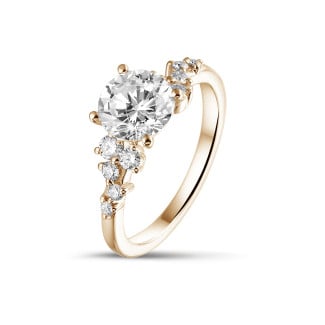
![0.15 carat solitaire ring with a oval cut diamond in red gold]() New0.15 carat solitaire ring with a oval cut diamond in red goldFrom € 2.323,20 (incl. 21% VAT)
New0.15 carat solitaire ring with a oval cut diamond in red goldFrom € 2.323,20 (incl. 21% VAT)



In this article, we’ll cover:
The unique qualities of both alloys
Red gold alloys
Red gold is an alloy made by combining pure gold with copper. The high copper content gives the red gold metal its rich, reddish hue. The more copper in the alloy, the redder the gold appears. This vibrant colour has a classic, vintage appeal that is often associated with antique jewellery. Our red gold engagement rings capture this vintage appeal, making them a popular choice for those seeking unique, elegant designs.Red gold's unique, rich colour makes it stand out. It's an excellent choice for those who appreciate vintage and antique styles. Its higher copper content not only gives it a distinct colour but also enhances its durability, making it suitable for everyday wear.
Rose gold alloys
Rose gold, sometimes referred to as pink gold, is created by mixing pure gold with a smaller amount of copper compared to red gold. The result is a softer, pinkish hue that is romantic and feminine. Rose gold has become very popular in contemporary jewellery designs.Rose gold is perfect for those who prefer a softer, more romantic look. Its pinkish hue complements all skin tones and adds a modern touch to any piece of jewellery. It’s versatile and works well in both casual and formal settings.
Which skin tones and styles suit rose and red gold?
Practical pairing examples:
• Mixing metals: Combine rose or red gold with yellow gold for a cohesive warm palette, or add small white-gold or platinum accents to lift and contrast the piece without clashing.
• Outfit contexts: For casual daytime wear, softer rose gold pairs naturally with pastels and earth tones. For formal or statement pieces, deeper red gold alloys convey vintage richness and sit well with jewel-toned fabrics.
These guidelines are starting points to help choose a metal that complements both skin tone and personal style.
The difference in copper percentage between red gold and rose gold
For example, in red gold, the remaining 25% of the alloy will consist almost entirely of copper. A very small percentage is silver.

Common karats and how composition changes colour and strength
• 22K: very high gold content, so the warm pink tones from copper are subdued. The result is a paler, more yellow-leaning gold with reduced mechanical strength compared to lower karats.
• 18K: 75% gold plus the remaining metals, a popular balance between purity and colour. In 18K red and rose alloys you see a clear warm pink or red tone while retaining good durability for everyday jewellery.
• 14K: lower gold percentage increases the share of copper and other alloys. This produces a stronger, often redder tone and improved scratch resistance, at the cost of higher alloy content.
• 10K: the highest proportion of alloying metals in common consumer jewellery. Colours tend to be stronger and redder, and the metal is harder and more resistant to wear, though it contains less pure gold.
Each step down in karat typically deepens the warm, copper-derived hue and increases mechanical strength. When choosing a karat, weigh the desired intensity of colour against the metal’s resistance to daily wear.

The difference in colour between red gold and rose gold

Care, cleaning and long-term colour changes
At home, a simple gentle routine keeps jewellery looking its best. Use lukewarm water with a drop of mild dish soap, let the piece soak for five to ten minutes, then clean crevices with a soft-bristled brush. Rinse under lukewarm running water and dry with a lint-free cloth. Avoid ultrasonic cleaners and strong chemical dips on pieces with high copper content, since these can speed up undesirable surface changes.
How often to clean depends on wear. For daily rings, a monthly gentle clean removes oils and light buildup; for occasional pieces, cleaning every few months is usually enough. Between cleans, a soft polishing cloth refreshes the shine without removing the natural surface character.
It helps to tell patina and tarnish apart. Patina is a gradual, even warming or slight darkening from the copper in the alloy; many owners value this mellowing as vintage character. Tarnish is an uneven, flaky or discoloured film caused by contaminants; properly alloyed red and rose gold are more likely to develop a uniform patina than the kind of tarnish seen on base metals.
Turn to a professional for polishing when scratches, deep dulling or uneven surface colour appear. A trained jeweller can restore the finish and remove superficial oxidation without changing the ring’s profile. Avoid abrasive DIY polishes or aggressive dips, which remove metal; when unsure, ask a specialist whether preservation or polishing is the better choice.
Why are the names red and rose gold sometimes intermixed?
Some even argue that there is no distinction at all and claim that the term rose gold is only used to give the colour an even more romantic undertone. Others still use the word rose gold consistently, but see it as a kind of overarching name for all gold alloys in which copper was also used.
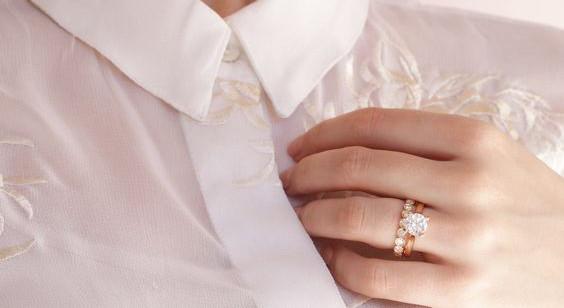
Are you ready to choose?
For more information and to explore a wide range of designs, visit Baunat. Discover how red and rose gold can enhance your jewellery collection.
Allergies and skin sensitivity
One option is to choose higher-purity alloys. Because BAUNAT uses 18 carat and above, the relative share of alloying metals is smaller than in lower-karat pieces, which can reduce the chance of a reaction. Another simple test is to wear a ring for a day or two to check for any immediate reaction before committing to long-term use.
Plating can mask the underlying alloy and limit skin contact with copper, but it is not permanent and will wear with time; see plating as a temporary measure. If reactions continue, consider alternative metals with known hypoallergenic properties.
Frequently asked Questions
What’s the difference between platinum and white gold?
Platinum and white gold are both precious metals. Platinum is rarer and more expensive than white gold. It’s stronger too. White gold has a distinct shiny silver colour, whereas platinum looks more greyish-white. Both are mixed with other metals for strength. A ring in white gold is more traditional and more symbolic than a platinum one.
What is gold worth?
Precious metals such as gold and silver are good long-term investments and are often traded on the global market. Their price fluctuates. If you are selling an item of gold jewellery , the jeweller will determine the amount of pure gold in the alloy and base their offer on this.
What is yellow gold?
Fine gold is the only metal in the world which is yellow in its pure form. Because pure gold is too soft, and therefore too sensitive to dents and scratches for the manufacture of gold jewellery, an alloy of gold with other metals is always used. These include silver, palladium, copper or nickel. Pure 24 carat gold is an ochre yellow colour. To produce an alloy of 18 carats, fine gold is melted together with silver and copper. Depending on the proportion of metal added, the colour of the metal will vary from yellow to pink or red. If the fine gold is alloyed with a certain amount of silver and copper, a yellow gold alloy is produced.
-
Sofie Kuppens
-
BAUNAT Antwerp
-
-
“Logistics Champion”, which is the title Sofie was awarded with in 2018, leads and supervises the processing of orders and logistics and closely working together with the BAUNAT order team. She strives to ensure maximum customer satisfaction by keeping our clients up to date in the production process and delivering on-time. To improve her product expertise even further, Sofie completed the Diamond Foundation Course by De Beers, which makes her a true diamond specialist.
“Logistics Champion”, which is the title Sofie was awarded with in 2018, leads and supervises the processing of orders and logistics and closely working together with the BAUNAT order team. She strives to ensure maximum customer satisfaction by keeping our clients up to date in the production process and delivering on-time. To improve her product expertise even further, Sofie completed the Diamond Foundation Course by De Beers, which makes her a true diamond specialist.