












Black Friday
Code: BLACKFRIDAY2026
This Black Friday, elevate your diamond jewel with a complimentary upgrade in Colour, Clarity or Cut. Enjoy an exceptional diamond at no additional cost. Exclusive offer until 30 November 2026.


When spontaneously thinking of a magnification device - a loupe, one sometimes imagines the loupes our grandparents used to read small prints and newspapers or the ones used by collectors to see the minute details in paintings and stamps.
Diamond loupes are slightly different in that they are small and super portable. They can come in a variety of strengths and formats.
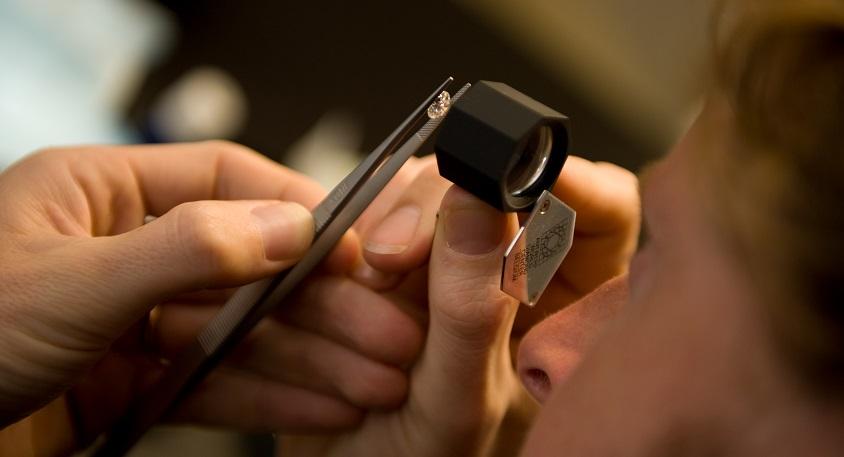
A proper loupe has to be a 10 power triplet - meaning it has three lenses that are fused together in order to eliminate distortion at the edges and colour fringing. These loupes are the most sold on the market and the most used by the industry. The GIA for instance always refers to a loupe which has 10x magnification when describing the grade of the clarity for a stone.
You can also find up to 30x magnifying loupes on the market, but those aren’t as commonly used since it is rather for very small goods and therefore used by sorters or buyers in offices.
Although the diamond loupe doesn’t replace the microscope for in depth viewing, it does remain a crucial tool used daily by the diamond and jewellery industry worldwide, to see all major inclusions and characteristics of a diamond when buying and selling diamonds.
A diamond loupe is a crucial tool in the jewelry industry that allows professionals and buyers to examine diamonds' characteristics up close. Unlike regular magnifying glasses, diamond loupes are compact, portable devices typically featuring a 10x magnification triplet design with three fused lenses that eliminate distortion and color fringing. This specific magnification level is the industry standard, used by organizations like GIA for clarity grading.
While examining diamonds for purchase, a loupe helps evaluate key characteristics including cut quality, symmetry, polish, and internal inclusions. It's also useful for verifying laser inscriptions on diamond girdles that link to certification numbers. Though not as powerful as microscopes, loupes remain essential for quick, practical diamond assessment in buying and selling situations. BAUNAT welcomes clients to their offices to examine diamonds using loupes, complementing their certified diamond offerings with hands-on viewing opportunities.
.
When looking at buying a diamond, you can of course simply look at a certificate by a well-known laboratory to know the details of the diamond, but you can also have a look at the stone yourself and delve into the wonders of colour, clarity, cut grades and more. That is when a loupe comes in handy. It is small and light and can be carried anywhere.
When buying a diamond, there are several aspects that need to be taken into consideration. The external characteristics that one needs to look at are: the cut of the stone, its symmetry and polish. You may also be interested in seeing how large or small the table is, as some people do prefer either one or the other when buying a diamond.
Then you need to look at internal characteristics of the stone and identify its inclusions and define whether you like them or not.
The loupe is also very practical when trying to quickly identify whether the stone has a laser inscription on its girdle thereby giving you directly its identification number, associated to a certificate by a laboratory.
BAUNAT certainly uses certificates from reputed labs, but should you wish to have a look at diamonds in person, BAUNAT would be delighted to welcome you to one of their offices and help you understand diamonds and how to look at them.
How to inspect a diamond with a loupe (step-by-step)
1) Prepare and stabilise your grip
Slide your index finger through the loupe loop and hold the barrel lightly between thumb and middle finger. Rest the heel of your hand gently against your cheek or the side of your nose to steady the loupe. Support your elbow on a table or your body so the loupe stays steady while you inspect.
2) Position the diamond and light
Hold the diamond between thumb and forefinger or, for mounted stones, grip the band behind the setting. Use neutral, diffuse light or daylight where possible. Avoid strong spotlights that create misleading reflections; softer light gives a truer view of inclusions and colour.
3) Focus by moving the stone, not the loupe
Keep the loupe steady about 2–3 cm from your eye and move the diamond slowly toward or away from it until facets and any inclusions are sharp. Small adjustments are normal. Bring the stone closer to see fine inclusions, move it away to view overall pattern and symmetry.
4) Follow a recommended inspection order
Inspect in this sequence so you do not miss anything: table, crown, girdle, pavilion, culet, then check the girdle for any laser inscription. This moves from the most visible surfaces to the hidden areas and finishes with the girdle where inscriptions or chips commonly appear.
5) Use a systematic search pattern
Sweep the loupe methodically in a clock-face pattern across each facet. For example, examine the table starting at 12 o’clock and move clockwise, then repeat on the crown and pavilion. When checking clarity, scan from the table toward the culet to note whether inclusions reach the surface or remain internal. Tilt the diamond slightly to reveal chips at facet junctions and on the girdle.
6) Quick checks for mounted stones
With the stone set, check prong security by observing how the prongs contact the girdle, look for chips or knocked facets at the girdle, and note how the metal colour of the setting affects perceived diamond colour. Yellow gold can warm a stone; white metals tend to make colour less noticeable. If colour assessment matters, view the loose stone or ask for neutral-background photos.
Mounted ring scan - 60–90 second checklist
This routine gives a repeatable inspection that highlights major clarity issues, surface damage and whether a deeper, microscope-based review is needed.
Why 10x is the industry standard
A 10x triplet loupe is the trade standard because it balances field of view and detail without making features look bigger than they matter to the naked eye. Higher magnifications make inclusions appear larger and more numerous, which can mislead buying decisions. Triplet construction corrects edge distortion and colour fringing, so what you see is a reliable representation of the stone at that magnification.
Practical lighting recommendations
View diamonds under neutral, diffuse light whenever possible. Natural daylight or a neutral laboratory-style lamp shows colour and contrast most reliably. Avoid bright store spotlights or coloured display lighting, which can mask body colour or exaggerate fire. When assessing colour, use a neutral background or a colour grading tray to reduce the influence of surrounding materials. If you must inspect under mixed lighting, compare the stone in at least two different conditions to get a balanced sense of its appearance.
Stereo binocular microscope benefits and when to prefer it
A stereo binocular microscope gives two-eye viewing, higher stability and controlled illumination, so it is better for detailed diagnosis. Use a microscope when inclusions are ambiguous under a loupe, when you suspect treatments such as fracture filling, or when the stone is mounted and fine details are hard to reach. Microscopes show three-dimensional relationships between inclusions and facet junctions more clearly than a handheld loupe, which is why laboratories and experienced graders use them for definitive evaluations.
Concrete escalation steps
If the loupe raises questions you cannot resolve, ask the seller for verified microscope images or a short video under controlled light. Request confirmation of the certificate number and, if an inscription is cited, ask the seller to show it under magnification. When in doubt about treatments, durability or origin, seek a professional inspection from an independent laboratory or a qualified gemmologist. These experts use stereo microscopes, advanced imaging and tests a loupe cannot perform for a conclusive assessment.
Knowing the limits of a loupe helps you make better choices: it is indispensable for quick, reliable checks, but not a substitute for microscope-grade confirmation when clarity concerns, treatments or mounting complications could affect value or wearability.
For most buyers the practical choice is a 10x triplet loupe, because it provides a correct, wide-enough field of view with minimal edge distortion. Look for a lens diameter around 16–20 mm for a comfortable viewing window; 18 mm is common in industry-standard models. Consider an illuminated loupe if you regularly inspect stones in low light, and an inscription reader if you often need to verify laser numbers on girdles. Hands-free or tripod-mounted magnifiers are useful for extended inspections or if you need both hands free to manipulate the jewellery.
When evaluating options, prioritise optical quality over novelty features. A well-corrected triplet lens and a secure, comfortable housing matter more than extra magnification levels. Higher magnifications can help for specialist tasks but are not recommended for standard buying decisions, as they can overemphasise minor characteristics. If you plan to inspect professionally or frequently, invest in a durable illuminated model; for occasional personal use a simple, quality 10x triplet pocket loupe is sufficient.
Fabienne, manager of the German market is able to guide every client with finding the right jewel. She takes care of most of the German orders, but also takes other task on her plate. Thanks to her six years of experience at BAUNAT she acquainted well with the product and the marketing around it. Her degree in PR ensures that BAUNAT is well presented across all media channels. For anyone looking into a new investment opportunity, Fabienne is the perfect guide in this process. No question will be left unanswered, and she will help you every step of the way.
• Eternal Bloom bespoke engagement concept - Role: project lead for client briefing and prototype coordination. Fabienne translated personal design references into a 3D-printed prototype, supervised stone selection and ensured the finished piece matched the client’s vision and comfort preferences.
• Personalized anniversary necklace - Role: design coordinator and quality overseer. She managed the custom design process from the initial sketch to final polishing, liaising between client and workshop to preserve proportions and finish.
• Reimagined heirloom ring restoration and redesign - Role: client consultant and technical coordinator. Fabienne guided the client through options to modernize setting details while keeping sentimental elements, delivering a wearable result that respected the original piece.
Her hands-on involvement in bespoke commissions ensures each custom order has a clear brief, careful prototype review and close follow-up with the workshop, so clients receive a tailored jewel that meets both aesthetic and practical expectations.
For speaking engagements, press requests or research collaborations, please send your message to BAUNAT’s communications team with the subject line: "Fabienne Rauw - Professional Enquiry." Include a brief description of the request and any relevant dates or documents. The communications team will route enquiries to Fabienne and provide guidance on next steps.
Buy a diamond? Unfortunately not everyone does that. Rare diamond of 78 carat stolen in Namibian diamond mine.
What is the symbolism behind floral jewellery? How can I buy a diamond with the right meaning? Since time immemorial, flowers have had specials meanings attached to them. BAUNAT...
Discover the timeless charm, emotional appeal, and unique identification that comes with BAUNAT’s custom jewellery engraving. Experience the best of Antwerp.
This Black Friday, elevate your diamond jewel with a complimentary upgrade in Colour, Clarity or Cut. Enjoy an exceptional diamond at no additional cost. Exclusive offer until 30 November 2026.


