








Features:
-
Category:
-
Posted at:
-
Author:
- Fabienne Rauw
-
BAUNAT Antwerp
-


-
Reading time:11 minutes
In this article:
Diamond of 4.65 million euros stolen during strike
The police in Namibia are at the moment searching for a 78 carat diamond with a value of no less than 4.65 million euro. This precious gemstone was stolen during a strike in a diamond mine. The diamond is denoted with the illustrious name The Ekati Spirit and was previously described as ‘the most valuable stone in the history of the diamond mine’.
Read summary
What happens when highly valuable diamonds fall into the wrong hands?
Throughout history, precious diamonds have been targets for theft, with some cases making headlines worldwide. A recent incident in Namibia involved the theft of a 78-carat diamond worth €4.65 million, known as The Ekati Spirit, during a mine strike. The case is particularly significant as the Namibian government owns half of the mine, which is part of the country's estimated 80-million-carat diamond deposits.
Other notable diamond heists include a creative but unsuccessful attempt by a British backpacker who swallowed a rare pink diamond worth €135,000 in Australia. Perhaps the most famous case is the Hope Diamond, which was allegedly stolen multiple times since its discovery in 17th-century India, including from a Hindu deity's statue and during the French Revolution.
Unlike these ill-fated stones, legitimate diamond jewelry from trusted retailers like BAUNAT offers beauty and value without the controversy.

Most viewed diamond jewels
-
![3.50 carat diamond tennis bracelet in white gold]() Bestseller3.50 carat diamond tennis bracelet in white goldFrom € 6.594,50 (incl. 21% VAT)
Bestseller3.50 carat diamond tennis bracelet in white goldFrom € 6.594,50 (incl. 21% VAT) -
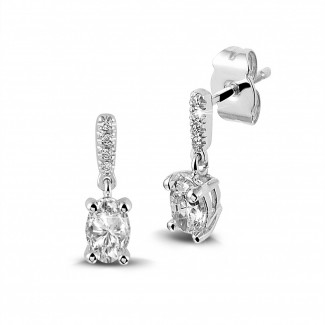
![0.94 carat earrings in white gold with oval diamonds]() 0.94 carat earrings in white gold with oval diamondsFrom € 3.823,60 (incl. 21% VAT)
0.94 carat earrings in white gold with oval diamondsFrom € 3.823,60 (incl. 21% VAT) -
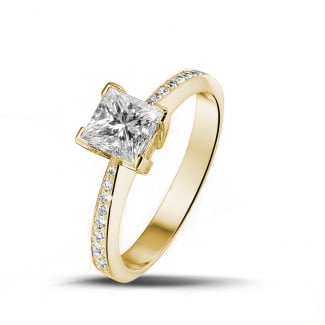
![1.00 carat solitaire ring in yellow gold with princess diamond and side diamonds]() Bestseller1.00 carat solitaire ring in yellow gold with princess diamond and side diamondsFrom € 3.908,30 (incl. 21% VAT)
Bestseller1.00 carat solitaire ring in yellow gold with princess diamond and side diamondsFrom € 3.908,30 (incl. 21% VAT) -
![1.00 carat solitaire ring in white gold with an emerald cut diamond and side diamonds]() Bestseller1.00 carat solitaire ring in white gold with an emerald cut diamond and side diamondsFrom € 7.126,90 (incl. 21% VAT)
Bestseller1.00 carat solitaire ring in white gold with an emerald cut diamond and side diamondsFrom € 7.126,90 (incl. 21% VAT) -
![1.00 carat solitaire ring in red gold with pear shaped diamond]() 1.00 carat solitaire ring in red gold with pear shaped diamondFrom € 4.416,50 (incl. 21% VAT)
1.00 carat solitaire ring in red gold with pear shaped diamondFrom € 4.416,50 (incl. 21% VAT)



According to local reports, the theft took place during a strike at the Luderitz-area operations of a major Namibian diamond concession on April 12, 2024, when work stoppages left parts of the site less supervised. Police and the mine operator issued a joint statement saying investigators were treating the incident as organised theft and that security footage and employee interviews were being analysed. Authorities confirmed the missing stone is a rough, 78 carat find first logged in the mine’s on-site inventory shortly before the strike began.
Namibian police announced a reward for information leading to recovery and asked the public and international partners to report any attempts to offer the stone for sale, while the mine’s press office said it was cooperating fully with the probe and reviewing internal security measures. Local news coverage named the mine’s private operator as responsible for on-site security and noted the Namibian government holds a stake in the concession and has joined the investigation.
Investigators notified regional customs authorities and several international diamond laboratories to be on alert for any submission matching the stone’s characteristics. No arrests had been reported in the latest official update, but enquiries were ongoing and investigators said they were following multiple leads. These facts are based on statements from Namibian police and the mine operator as reported in regional outlets.
Government owns half of stolen diamond
It is expected that the police will do everything in their power to retrieve the precious gem. The diamond mine in question is, after all, half in possession of the Namibian government. Namibia is known for its rich diamond deposits, which are estimated at more than 80 million carat.
Why a 78‑carat rough can be worth millions
A 78 carat rough can command a price in the millions because valuation of very large stones depends on factors beyond the everyday 4 Cs. First, rough weight does not convert directly to polished weight; cutters estimate how much yield is possible, and large roughs that can produce one or more significant polished stones are worth disproportionately more. Second, rarity and market appetite shape value: very large finds are uncommon, and historic sales or competitive bidding set benchmarks that affect subsequent prices.
Provenance strongly affects saleability. A clear, certified origin and an uninterrupted chain of custody allow trade through reputable auction houses and dealers, preserving competitive sale channels and higher prices. Without certification a stone is difficult to place in the primary market and may be restricted to private or grey-market sales at reduced prices.
High-value items also attract theft because of their liquidity and compact value, which makes them easy to move and conceal. That risk pushes insurers and owners to demand stricter security and certification practices across the supply chain. For buyers and sellers, verifiable lab reports and documented origin are therefore essential to protect value and ensure access to mainstream markets.
Backpack tourist steals diamond of 135,000 euro
It isn’t the first time this year that a valuable diamond was stolen. Only a few months prior a rare pink diamond of 135,000 euro was stolen in Australia in the most striking way. This was done by a British backpack tourist, who couldn’t think of anything better to do in the jeweller’s store than to swallow the diamond. Unfortunately for him his actions were thoroughly filmed by the security cameras. When he tried to travel back to New Zealand, he was arrested at the airport.
Hope diamond, the most famous stolen diamond
The most famous stolen diamond is undoubtedly the Hope diamond, which now resides in a museum in Washington. The diamond was found during the 17th century in India and has, since 1668, been travelling around the world. In the course of the centuries it was stolen repeatedly, the first time, according to the legend, even from the eye of the Hindu god Sita. It was also stolen during the French Revolution in 1792, together with all the French crown jewels. The Hope diamond also supposedly brings bad luck. It even got blamed for the beheading of Louis XVI.
Mining ownership, provenance and what a theft means for the market
Who owns a discovered diamond depends on local law and the concession agreement. In Namibia the state commonly has a stake or royalty rights alongside private operators, which means a theft affects both the company and public interests. That shared ownership usually prompts coordinated action: mine security, police and government authorities will all take part in the response because the loss is treated as damage to national resources as well as private property.
On the international side the Kimberley Process aims to keep conflict diamonds out of trade. Participating countries certify shipments as conflict-free, and legitimate buyers and labs expect a matching chain-of-custody record when a stone crosses borders. When a high-value diamond is reported stolen, that certificate trail is used to flag attempts to move the stone through formal channels and to alert customs and auction houses.
Typical law-enforcement and industry steps include issuing seizure notices, sending alerts to national police forces and INTERPOL, notifying major grading laboratories and auction houses, and adding the stone to industry watchlists. Investigators will check mine logs, staff access records and transport manifests to piece together how the theft happened and where the stone might have gone. Insurers, when involved, usually ask for formal proof of chain of custody before a claim is paid.
For the market, provenance and certification matter. A well-documented origin and clean export history preserve resale options; lacking those documents, a stone is hard to sell through mainstream channels and its price can drop significantly. A verified recovery restores legal title and buyer confidence, which is why mines and authorities prioritise quick public notice and international cooperation when a high-carat diamond goes missing.
Your lucky charm? A diamond jewel from BAUNAT
A diamond that does bring good luck? You can find it in the webshop of the online jeweller BAUNAT. You can immediately find the diamond necklace, earrings, engagement ring or bracelet that your girlfriend, fiancée or wife always wanted. Always at the sharpest prices on the market and with unbeatable service.
-
Fabienne Rauw
-
BAUNAT Antwerp
-
-
Fabienne, manager of the German market is able to guide every client with finding the right jewel. She takes care of most of the German orders, but also takes other task on her plate. Thanks to her six years of experience at BAUNAT she acquainted well with the product and the marketing around it. Her degree in PR ensures that BAUNAT is well presented across all media channels. For anyone looking into a new investment opportunity, Fabienne is the perfect guide in this process. No question will be left unanswered, and she will help you every step of the way.
Selected Bespoke Projects
• Eternal Bloom bespoke engagement concept - Role: project lead for client briefing and prototype coordination. Fabienne translated personal design references into a 3D-printed prototype, supervised stone selection and ensured the finished piece matched the client’s vision and comfort preferences.
• Personalized anniversary necklace - Role: design coordinator and quality overseer. She managed the custom design process from the initial sketch to final polishing, liaising between client and workshop to preserve proportions and finish.
• Reimagined heirloom ring restoration and redesign - Role: client consultant and technical coordinator. Fabienne guided the client through options to modernize setting details while keeping sentimental elements, delivering a wearable result that respected the original piece.
Her hands-on involvement in bespoke commissions ensures each custom order has a clear brief, careful prototype review and close follow-up with the workshop, so clients receive a tailored jewel that meets both aesthetic and practical expectations.
Professional enquiries
For speaking engagements, press requests or research collaborations, please send your message to BAUNAT’s communications team with the subject line: "Fabienne Rauw - Professional Enquiry." Include a brief description of the request and any relevant dates or documents. The communications team will route enquiries to Fabienne and provide guidance on next steps.
Fabienne, manager of the German market is able to guide every client with finding the right jewel. She takes care of most of the German orders, but also takes other task on her plate. Thanks to her six years of experience at BAUNAT she acquainted well with the product and the marketing around it. Her degree in PR ensures that BAUNAT is well presented across all media channels. For anyone looking into a new investment opportunity, Fabienne is the perfect guide in this process. No question will be left unanswered, and she will help you every step of the way.
Selected Bespoke Projects
• Eternal Bloom bespoke engagement concept - Role: project lead for client briefing and prototype coordination. Fabienne translated personal design references into a 3D-printed prototype, supervised stone selection and ensured the finished piece matched the client’s vision and comfort preferences.
• Personalized anniversary necklace - Role: design coordinator and quality overseer. She managed the custom design process from the initial sketch to final polishing, liaising between client and workshop to preserve proportions and finish.
• Reimagined heirloom ring restoration and redesign - Role: client consultant and technical coordinator. Fabienne guided the client through options to modernize setting details while keeping sentimental elements, delivering a wearable result that respected the original piece.
Her hands-on involvement in bespoke commissions ensures each custom order has a clear brief, careful prototype review and close follow-up with the workshop, so clients receive a tailored jewel that meets both aesthetic and practical expectations.
Professional enquiries
For speaking engagements, press requests or research collaborations, please send your message to BAUNAT’s communications team with the subject line: "Fabienne Rauw - Professional Enquiry." Include a brief description of the request and any relevant dates or documents. The communications team will route enquiries to Fabienne and provide guidance on next steps.