








Features:
-
Category:
-
Posted at:
-
Author:
- Fabienne Rauw
-
BAUNAT Antwerp
-


-
Reading time:13 minutes
In this article:
- .
- Pandanus candelabrum and diamond discovery
- A natural indicator for diamond sources
- How it works
- How to identify Pandanus candelabrum and other indicator species
- Less invasive field discoveries
- Practical field-survey steps when using plants as indicators
- Which other precious materials can plants show?
- Where these indicator plants grow — regional notes
- A natural indicator for gold sources
- The science behind it
- Real-world impact
- The art of diamond sifting
- The symbiosis of nature and gemology
The surprising role of plants in diamond discovery
The allure of diamonds has captivated humanity for centuries, their brilliance symbolising wealth, luxury, and eternal love. But the path to uncovering these precious gems is as fascinating as the stones themselves. Did you know that certain plants can reveal the presence of diamonds (and other valuables) beneath the earth's surface? In this article, we explore the symbiotic relationship between nature and gemology, focusing on the Pandanus Candelabrum, buckwheat, and the delicate art of diamond sinking in diamond discovery.
Read summary
How can plants help us discover diamonds and other precious materials?
Nature has developed fascinating ways to reveal hidden treasures beneath the Earth's surface. The Pandanus Candelabrum, a West African plant, grows exclusively in kimberlite-rich soil - the volcanic rock formation where diamonds are typically found. This plant's presence serves as a natural indicator for potential diamond deposits, offering a less invasive exploration method than traditional mining techniques.
Similarly, buckwheat plays a crucial role in detecting gold and copper deposits. Its roots absorb trace metals from the soil, providing valuable clues about underground mineral deposits. This practice, known as geobotany, demonstrates the remarkable relationship between plants and precious materials.
These natural indicators have revolutionized how we locate valuable minerals, creating a more sustainable approach to gem discovery. This harmonious connection between nature and gemology showcases the sophisticated ways in which our ecosystem operates, making the journey of discovering precious stones even more remarkable.


5 Questions to Find Her Perfect Engagement Ring
Are you planning to propose? Finding the right engagement ring is a defining step. Every ring is handcrafted in Antwerp from the finest materials by skilled artisans. Discover what engagement ring fits her personality.
Most viewed diamond jewels
-
![1.00Ct halo ring in white gold with oval diamond]() Bestseller1.00Ct halo ring in white gold with oval diamondFrom € 5.578,10 (incl. 21% VAT)
Bestseller1.00Ct halo ring in white gold with oval diamondFrom € 5.578,10 (incl. 21% VAT) -
![1.00 carat solitaire cluster ring in white gold with marquise diamond]() BestsellerNew1.00 carat solitaire cluster ring in white gold with marquise diamondFrom € 4.622,20 (incl. 21% VAT)
BestsellerNew1.00 carat solitaire cluster ring in white gold with marquise diamondFrom € 4.622,20 (incl. 21% VAT) -
![0.95 carat diamond rose design ring in white gold]() NewPrincess Delphine0.95 carat diamond rose design ring in white goldFrom € 16.831,10 (incl. 21% VAT)
NewPrincess Delphine0.95 carat diamond rose design ring in white goldFrom € 16.831,10 (incl. 21% VAT) -
![1.00 carat solitaire ring with an asscher cut diamond in white gold]() Bestseller1.00 carat solitaire ring with an asscher cut diamond in white goldFrom € 4.936,80 (incl. 21% VAT)
Bestseller1.00 carat solitaire ring with an asscher cut diamond in white goldFrom € 4.936,80 (incl. 21% VAT) -
![1.00 carat solitaire ring with a cushion diamond and hidden halo in white gold]() BestsellerNew1.00 carat solitaire ring with a cushion diamond and hidden halo in white goldFrom € 4.210,80 (incl. 21% VAT)
BestsellerNew1.00 carat solitaire ring with a cushion diamond and hidden halo in white goldFrom € 4.210,80 (incl. 21% VAT)



.
Pandanus candelabrum and diamond discovery
A natural indicator for diamond sources
How it works
How to identify Pandanus candelabrum and other indicator species
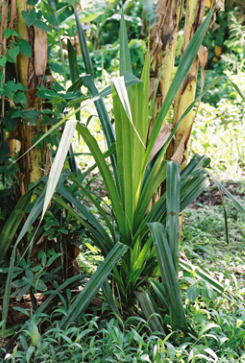
Pandanus candelabrum usually appears as a multi-stemmed, shrubby, palm-like plant. Leaves are long and strap-shaped, arranged in spiral clusters at the stem tips; individual leaves are stiff with a clear midrib and finely toothed margins. Mature plants often develop stilt or prop roots at the base, giving the trunk a slightly raised, hummocky look. Fruiting heads are globose to ovoid and made of multiple drupes. Size varies with conditions but mature plants commonly reach a few metres in height. Lookalikes include other Pandanus species; a useful distinction is that P. candelabrum often forms dense, linear stands in drainage zones and shows stronger basal prop-rooting than many relatives.
Buckwheat (indicator context) - diagnostic traits
The buckwheat used in prospecting is an annual herb with triangular to heart-shaped leaves, usually alternate on slender stems, and small clustered flowers in open panicles. Plants often form low, bushy stands on marginal soils. Individual plants are typically under one metre tall and can form mats or clumps. Lookalikes include other low annual herbs with triangular leaves; the combination of leaf shape, open branched inflorescences and a tendency to colonise disturbed or metal-rich shallow soils helps distinguish buckwheat.
Field ID checklist
Pandanus candelabrum
- Spiral arrangement of long, stiff strap leaves
- Presence of prop/stilt roots at the stem base
- Dense clumping habit, often aligned with drainage
- Globose compound fruiting heads when present
- Strong midrib and finely toothed leaf margins
Buckwheat (prospecting indicator)
- Triangular or heart-shaped leaves, alternate arrangement
- Low, bushy or mat-forming growth
- Open panicle of small flowers in season
- Tendency to dominate in isolated patches on marginal soils
- Readily colonises shallow, disturbed ground
These field cues help separate true indicator species from lookalikes during reconnaissance and improve the efficiency of follow-up sampling and mapping.
Less invasive field discoveries
Practical field-survey steps when using plants as indicators
Start with remote sensing and map work to narrow the search area. Look for features that concentrate sediments and groundwater, such as alluvial fans, river terraces and riparian corridors. These settings often expose or gather kimberlite-derived material. Focus on zones where drainage patterns imply upward movement of deeper soils rather than broad, uniform plains.
2. Visual survey
Walk transects across target zones and scan for dense, unusually vigorous stands of indicator species. For Pandanus candelabrum, prioritise clusters with a tight, linear distribution along drainage features. For buckwheat, note lush patches on otherwise sparse ground. Signs to note include consistently healthy leaves, dense basal clumps and repeated occurrence in narrow belts rather than scattered individuals.
3. Simple mapping
Record GPS waypoints for every cluster and sketch the approximate extent of each stand in field notes. Note orientation relative to drainage and any nearby outcrops or soil exposures. Use a quick abundance score (for example: 1 = single plant, 2 = small clump, 3 = extensive stand) to rank priorities for follow-up sampling.
4. Sampling basics
What to collect: fresh leaf tissue and a paired soil sample adjacent to the plant. Aim for multiple representative leaves per cluster to average out within-plant variability. For soil, collect a root-zone sample to capture the biogeochemical signal. Place plant and soil samples in clean, labelled containers or paper bags to avoid cross-contamination; change gloves or clean tools between samples. Ask the lab for a trace-element suite used in biogeochemical prospecting, including base metals and pathfinder elements relevant to kimberlitic signatures. Provide the lab with field context: GPS, vegetation notes and sample depth.
5. When to sample
Seasonality affects signals. In dry seasons, plants can concentrate solutes and tissue signals may be stronger; in wet seasons, surface dilution and leaching can weaken surface signals but root-accessible horizons are easier to sample. Where possible, collect within a consistent seasonal window across the study area so results are comparable.
Field examples
On a West African alluvial plain, a 20-metre cluster of Pandanus aligned along an old drainage and showing elevated leaf vigour led surveyors to a near-surface kimberlitic indicator. On a semi-arid plain, a repeated band of buckwheat with unusually lush growth pointed prospectors to anomalous soil geochemistry several metres down.
Practical tip
Keep sampling records simple but consistent: date, GPS, abundance score, sample ID and a one-line habitat note will improve the analytical value of tissue and soil results.
Which other precious materials can plants show?
Where these indicator plants grow — regional notes
Buckwheat and related annual indicators are more widely distributed and can occur from temperate to semi-arid regions. They are most informative on thin soils over buried bedrock or in disturbed flats where roots can access trace metals that have migrated to shallow horizons. In continental interiors and plateaus, focus prospecting on ephemeral drainage lines, shallow soils over bedrock and areas of exposed colluvium.
Limitations
Neither species is globally ubiquitous: Pandanus candelabrum is regionally confined and will not be a useful prospecting clue outside its native range. Buckwheat-like indicators occur more broadly, but local flora differences matter. Always confirm species identity against regional botanical guides. When working beyond known ranges, combine plant signals with soil observations and remote-sensing cues to avoid false positives.

A natural indicator for gold sources
The science behind it
Real-world impact
The art of diamond sifting
The symbiosis of nature and gemology
At BAUNAT, we celebrate this exquisite connection by offering diamonds of unparalleled quality and craftsmanship. Our jewellery is not just a symbol of luxury; it’s a tribute to the astonishing journeys these gems undertake — from the heart of the Earth, guided by nature’s subtle hints, to your hands.
Discover more about our ethically sourced diamonds and join us in appreciating the magnificence of nature’s hidden treasures.
-
Fabienne Rauw
-
BAUNAT Antwerp
-
-
Fabienne, manager of the German market is able to guide every client with finding the right jewel. She takes care of most of the German orders, but also takes other task on her plate. Thanks to her six years of experience at BAUNAT she acquainted well with the product and the marketing around it. Her degree in PR ensures that BAUNAT is well presented across all media channels. For anyone looking into a new investment opportunity, Fabienne is the perfect guide in this process. No question will be left unanswered, and she will help you every step of the way.
Selected Bespoke Projects
• Eternal Bloom bespoke engagement concept - Role: project lead for client briefing and prototype coordination. Fabienne translated personal design references into a 3D-printed prototype, supervised stone selection and ensured the finished piece matched the client’s vision and comfort preferences.
• Personalized anniversary necklace - Role: design coordinator and quality overseer. She managed the custom design process from the initial sketch to final polishing, liaising between client and workshop to preserve proportions and finish.
• Reimagined heirloom ring restoration and redesign - Role: client consultant and technical coordinator. Fabienne guided the client through options to modernize setting details while keeping sentimental elements, delivering a wearable result that respected the original piece.
Her hands-on involvement in bespoke commissions ensures each custom order has a clear brief, careful prototype review and close follow-up with the workshop, so clients receive a tailored jewel that meets both aesthetic and practical expectations.
Professional enquiries
For speaking engagements, press requests or research collaborations, please send your message to BAUNAT’s communications team with the subject line: "Fabienne Rauw - Professional Enquiry." Include a brief description of the request and any relevant dates or documents. The communications team will route enquiries to Fabienne and provide guidance on next steps.
Fabienne, manager of the German market is able to guide every client with finding the right jewel. She takes care of most of the German orders, but also takes other task on her plate. Thanks to her six years of experience at BAUNAT she acquainted well with the product and the marketing around it. Her degree in PR ensures that BAUNAT is well presented across all media channels. For anyone looking into a new investment opportunity, Fabienne is the perfect guide in this process. No question will be left unanswered, and she will help you every step of the way.
Selected Bespoke Projects
• Eternal Bloom bespoke engagement concept - Role: project lead for client briefing and prototype coordination. Fabienne translated personal design references into a 3D-printed prototype, supervised stone selection and ensured the finished piece matched the client’s vision and comfort preferences.
• Personalized anniversary necklace - Role: design coordinator and quality overseer. She managed the custom design process from the initial sketch to final polishing, liaising between client and workshop to preserve proportions and finish.
• Reimagined heirloom ring restoration and redesign - Role: client consultant and technical coordinator. Fabienne guided the client through options to modernize setting details while keeping sentimental elements, delivering a wearable result that respected the original piece.
Her hands-on involvement in bespoke commissions ensures each custom order has a clear brief, careful prototype review and close follow-up with the workshop, so clients receive a tailored jewel that meets both aesthetic and practical expectations.
Professional enquiries
For speaking engagements, press requests or research collaborations, please send your message to BAUNAT’s communications team with the subject line: "Fabienne Rauw - Professional Enquiry." Include a brief description of the request and any relevant dates or documents. The communications team will route enquiries to Fabienne and provide guidance on next steps.