







Features:
-
Category:
-
Posted at:
-
Author:
- Fabienne Rauw
-
BAUNAT Antwerp
-


-
Reading time:10 minutes
In this article:
Liz Taylor: the queen of diamonds
'Women who say that they don't love diamonds, are women who don't have diamonds.', Elisabeth Taylor once said, whose diamond collection was one of the largest in Hollywood. From diamond earrings to brooches, and even a diamond tiara, Liz had it all. She got most of her jewels from Richard Burton, with whom she was married for a long time. Sadly, Burton died in 1984.
Read summary
What made Elizabeth Taylor's diamond collection one of Hollywood's most legendary treasures?
Elizabeth Taylor's profound love for diamonds was exemplified through her extraordinary collection, largely gifted by husband Richard Burton. Her first significant piece was the 33.19-carat Krupp Diamond, purchased by Burton for $305,000 in 1968. However, her most famous acquisition was the Taylor-Burton Diamond, a 69.42-carat pear-shaped stone that Burton bought for over $1 million. Initially set as a ring, Taylor had Cartier redesign it into a necklace, which she memorably wore to the 1970 Oscars. After her death, her jewelry collection made history at Christie's New York, selling for 106 million euros, including the historic Peregrina necklace, a former Spanish Crown Jewel, which alone fetched 9 million euros.
Most viewed diamond jewels
-
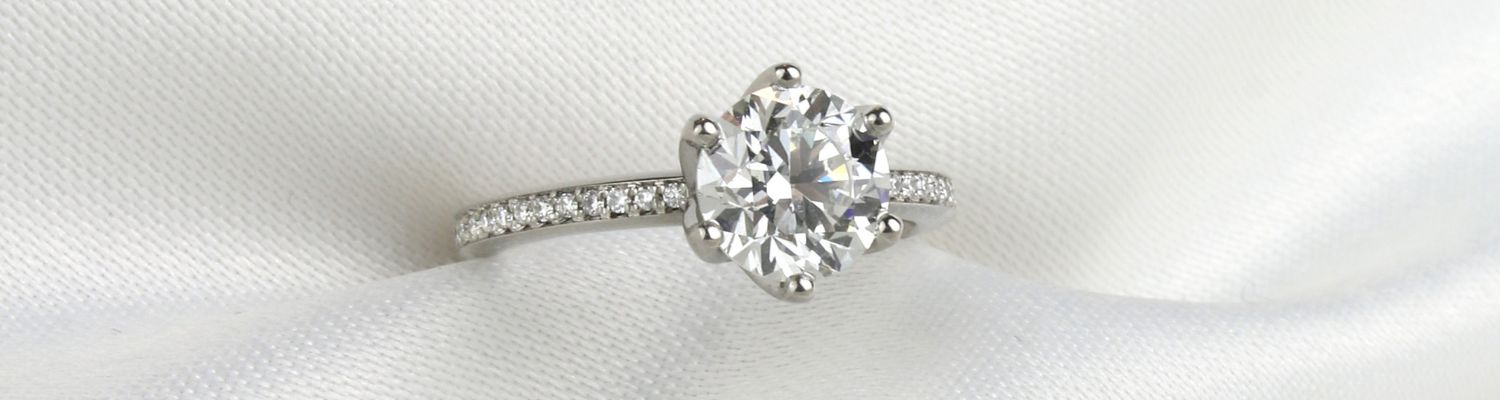
![2.00 carat solitaire cushion cut diamond earrings in white gold]() Bestseller2.00 carat solitaire cushion cut diamond earrings in white goldFrom € 6.195,20 (incl. 21% VAT)
Bestseller2.00 carat solitaire cushion cut diamond earrings in white goldFrom € 6.195,20 (incl. 21% VAT) -
![2.00 carat solitaire earrings in white gold with asscher cut diamonds]() Bestseller2.00 carat solitaire earrings in white gold with asscher cut diamondsFrom € 8.675,70 (incl. 21% VAT)
Bestseller2.00 carat solitaire earrings in white gold with asscher cut diamondsFrom € 8.675,70 (incl. 21% VAT) -
![2.00 carat solitaire radiant cut diamond earrings in white gold]() Bestseller2.00 carat solitaire radiant cut diamond earrings in white goldFrom € 7.187,40 (incl. 21% VAT)
Bestseller2.00 carat solitaire radiant cut diamond earrings in white goldFrom € 7.187,40 (incl. 21% VAT) -
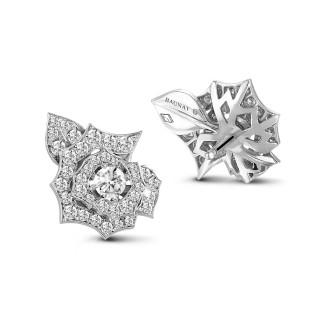
![1.00 carat diamond rose design earrings in white gold]() NewPrincess Delphine1.00 carat diamond rose design earrings in white goldFrom € 18.016,90 (incl. 21% VAT)
NewPrincess Delphine1.00 carat diamond rose design earrings in white goldFrom € 18.016,90 (incl. 21% VAT) -
![Flower Earrings with Marquise cut Red Ruby Petals in white gold]() Flower Earrings with Marquise cut Red Ruby Petals in white goldFrom € 3.109,70 (incl. 21% VAT)
Flower Earrings with Marquise cut Red Ruby Petals in white goldFrom € 3.109,70 (incl. 21% VAT)
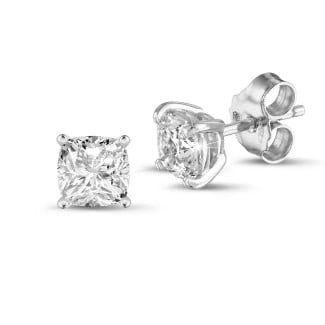



The 33.19 carats Krupp Diamond - once owned by Vera Krupp - was the first diamond Richard bought for her. He paid 305,000 US dollars (in 1968).
Cut, grade and the ring setting
The Krupp Diamond is described in gemological sources as an Asscher cut, Type IIa stone, with records noting very high colour and clarity grades. References cite a D colour grade and a VS1 clarity in several catalogues, attributes that place it among the technically finest large white diamonds. Type IIa diamonds have very little nitrogen, which often contributes to exceptional transparency in large white stones.
The stone was mounted in an Art Deco–inspired platinum ring, a setting that matched the Asscher’s geometric facets. The centre was flanked by tapered baguette side stones that emphasised the step-cut geometry, producing a restrained, architectural silhouette rather than the intense sparkle of brilliant cuts. Contemporary descriptions note a relatively large culet and the step facets that create the Asscher’s hall-of-mirrors effect; these traits make the stone visually distinct when set in the low-profile platinum mountings popular in mid-century high jewellery.
For non-specialists, the combination of Asscher cut, D colour and VS1 clarity explains the Krupp’s appeal. An Asscher cut of this size highlights clarity and symmetry rather than sheer scintillation, so high colour and clarity grades help preserve an even, luminous appearance. Being Type IIa increases the stone’s appeal to collectors because such diamonds are relatively rare among large historic gems. Together, the gemological profile and the Art Deco setting create the museum-quality presence that made the Krupp a natural showpiece in Elizabeth Taylor’s collection.
Taylor wore the ring in some of her movies, during her interview on Larry King Live in 2003 and at almost every acte de présence. But her most famous diamond was without any doubt the 69.42 carats pear-shaped diamond - the so-called Taylor-Burton Diamond - which Burton bought at an auction for more than 1 million US dollars. The diamond was originally worn in a ring. 'But even for me it was too big.', Taylor said. 'So we've asked Cartier to design a necklace.' She wore the new design during the Oscars in 1970. It’s one of the most well-known necklaces in history.
After her death, all of her jewels were auctioned at Christie’s New York for about 106 million euros, an absolute record. It was the most lucrative auction of jewelry ever. The masterpiece was the necklace 'Peregrina', also a present from her ex-husband Richard Burton. This jewel was part of the Spanish Crown Jewels in the 16th century and auctioned for about 9 million euros.
Other highlights from Taylor’s collection
Beyond her best-known diamonds, Elizabeth Taylor’s Christie’s sale revealed a broad selection of high jewellery and objets d’art. One standout non-diamond lot was a Bulgari emerald suite, a matched grouping that included a necklace, bracelet and earrings, each piece notable for deep, richly saturated emeralds and classical Bulgari design. The suite drew attention for both its provenance and its craftsmanship and ranked among the more closely watched items in the catalogue.
The Peregrina necklace, long linked to Taylor and Burton, is notable for a provenance that stretches back to the Spanish crown jewels in the 16th century. It passed through royal and private hands before becoming a signature piece in Taylor’s wardrobe. Other non-diamond highlights included select paintings and personal effects that reflected Taylor’s taste for historic works and bespoke objects; these pieces attracted collectors interested in celebrity provenance as much as intrinsic artistic value.
Taken together, the non-diamond lots showed that the 2011 sale was not only a dispersal of sparkling stones but a curated release of emblematic pieces from a collection assembled over decades. The variety and quality of the non-diamond material widened the auction’s appeal, drawing collectors of high jewellery, historic artefacts and celebrity memorabilia alike.
The Krupp / Elizabeth Taylor Diamond: provenance and auction history
follows a dramatic path from private ownership through theft, recovery and auction. Originally owned by German actress Vera Krupp, the stone appears in public records from the mid-20th century before the events that shaped its later fame.
In 1959 the Krupp Diamond made headlines after a burglary in which it was stolen from Vera Krupp. The case crossed borders and eventually involved the United States Federal Bureau of Investigation, which recovered the main stone along with several accompanying diamonds. The recovery returned the gem to Krupp and added a sensational chapter to its early history.
Nearly ten years later, in 1968, Richard Burton bought the Krupp Diamond as a gift for Elizabeth Taylor, starting a new, highly public chapter in the jewel’s life. Burton’s purchase reflected the couple’s well-known taste for lavish presents and helped push the gem further into the public eye. Taylor wore the diamond on several public occasions, which increased its renown.
The diamond remained among Taylor’s best-known possessions until her estate was dispersed. At Christie’s sale of Elizabeth Taylor’s jewels in December 2011, the Krupp Diamond was offered amid intense media attention as part of a larger auction that set records for a single-owner jewellery estate. The stone’s presence in that sale reinforced collector interest and helped establish price benchmarks for historic gems with strong provenance.
Today the Krupp/Elizabeth Taylor Diamond is remembered for its size and beauty and for the series of events around it: an early-owner theft and recovery, a high-profile mid-century purchase and a museum-quality estate sale. That sequence of ownership and episodes is a large part of why the stone remains one of the better-known historic diamonds.
-
Fabienne Rauw
-
BAUNAT Antwerp
-
-
Fabienne, manager of the German market is able to guide every client with finding the right jewel. She takes care of most of the German orders, but also takes other task on her plate. Thanks to her six years of experience at BAUNAT she acquainted well with the product and the marketing around it. Her degree in PR ensures that BAUNAT is well presented across all media channels. For anyone looking into a new investment opportunity, Fabienne is the perfect guide in this process. No question will be left unanswered, and she will help you every step of the way.
Selected Bespoke Projects
• Eternal Bloom bespoke engagement concept - Role: project lead for client briefing and prototype coordination. Fabienne translated personal design references into a 3D-printed prototype, supervised stone selection and ensured the finished piece matched the client’s vision and comfort preferences.
• Personalized anniversary necklace - Role: design coordinator and quality overseer. She managed the custom design process from the initial sketch to final polishing, liaising between client and workshop to preserve proportions and finish.
• Reimagined heirloom ring restoration and redesign - Role: client consultant and technical coordinator. Fabienne guided the client through options to modernize setting details while keeping sentimental elements, delivering a wearable result that respected the original piece.
Her hands-on involvement in bespoke commissions ensures each custom order has a clear brief, careful prototype review and close follow-up with the workshop, so clients receive a tailored jewel that meets both aesthetic and practical expectations.
Professional enquiries
For speaking engagements, press requests or research collaborations, please send your message to BAUNAT’s communications team with the subject line: "Fabienne Rauw - Professional Enquiry." Include a brief description of the request and any relevant dates or documents. The communications team will route enquiries to Fabienne and provide guidance on next steps.
Fabienne, manager of the German market is able to guide every client with finding the right jewel. She takes care of most of the German orders, but also takes other task on her plate. Thanks to her six years of experience at BAUNAT she acquainted well with the product and the marketing around it. Her degree in PR ensures that BAUNAT is well presented across all media channels. For anyone looking into a new investment opportunity, Fabienne is the perfect guide in this process. No question will be left unanswered, and she will help you every step of the way.
Selected Bespoke Projects
• Eternal Bloom bespoke engagement concept - Role: project lead for client briefing and prototype coordination. Fabienne translated personal design references into a 3D-printed prototype, supervised stone selection and ensured the finished piece matched the client’s vision and comfort preferences.
• Personalized anniversary necklace - Role: design coordinator and quality overseer. She managed the custom design process from the initial sketch to final polishing, liaising between client and workshop to preserve proportions and finish.
• Reimagined heirloom ring restoration and redesign - Role: client consultant and technical coordinator. Fabienne guided the client through options to modernize setting details while keeping sentimental elements, delivering a wearable result that respected the original piece.
Her hands-on involvement in bespoke commissions ensures each custom order has a clear brief, careful prototype review and close follow-up with the workshop, so clients receive a tailored jewel that meets both aesthetic and practical expectations.
Professional enquiries
For speaking engagements, press requests or research collaborations, please send your message to BAUNAT’s communications team with the subject line: "Fabienne Rauw - Professional Enquiry." Include a brief description of the request and any relevant dates or documents. The communications team will route enquiries to Fabienne and provide guidance on next steps.