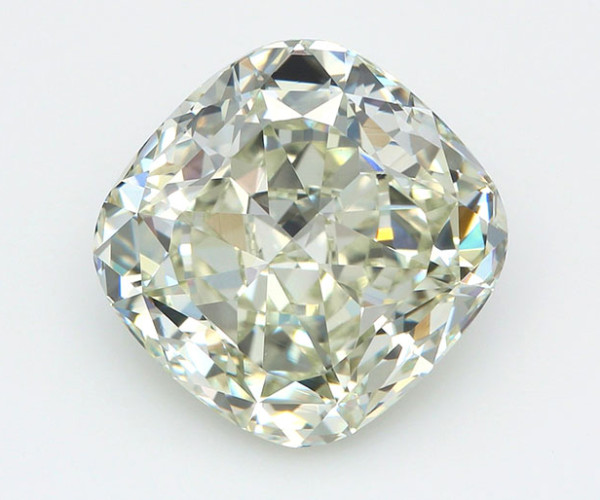








Features:
-
Category:
-
Posted at:
-
Author:
- Fabienne Rauw
-
BAUNAT Antwerpen
-


-
Reading time:4 minutes
What is a diamond loupe and when to use it?
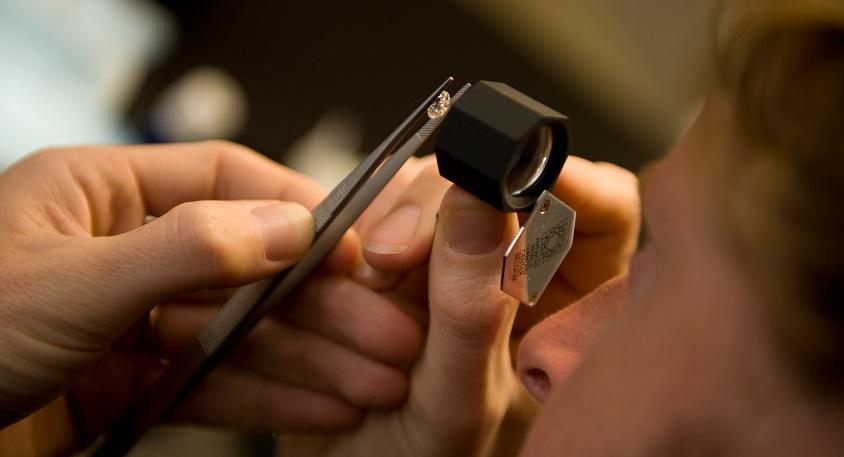
When spontaneously thinking of a magnification device - a loupe, one sometimes imagines the loupes our grandparents used to read small prints and newspapers or the ones used by collectors to see the minute details in paintings and stamps.
Diamond loupes are slightly different in that they are small and super portable. They can come in a variety of strengths and formats.
A proper loupe has to be a 10 power triplet - meaning it has three lenses that are fused together in order to eliminate distortion at the edges and colour fringing. These loupes are the most sold on the market and the most used by the industry. The GIA for instance always refers to a loupe which has 10x magnification when describing the grade of the clarity for a stone.
You can also find up to 30x magnifying loupes on the market, but those aren’t as commonly used since it is rather for very small goods and therefore used by sorters or buyers in offices.
Although the diamond loupe doesn’t replace the microscope for in depth viewing, it does remain a crucial tool used daily by the diamond and jewellery industry worldwide, to see all major inclusions and characteristics of a diamond when buying and selling diamonds.
Read summary
What's the importance of a diamond loupe in evaluating precious stones?
A diamond loupe is a crucial tool in the jewelry industry that allows professionals and buyers to examine diamonds' characteristics up close. Unlike regular magnifying glasses, diamond loupes are compact, portable devices typically featuring a 10x magnification triplet design with three fused lenses that eliminate distortion and color fringing. This specific magnification level is the industry standard, used by organizations like GIA for clarity grading.
While examining diamonds for purchase, a loupe helps evaluate key characteristics including cut quality, symmetry, polish, and internal inclusions. It's also useful for verifying laser inscriptions on diamond girdles that link to certification numbers. Though not as powerful as microscopes, loupes remain essential for quick, practical diamond assessment in buying and selling situations. BAUNAT welcomes clients to their offices to examine diamonds using loupes, complementing their certified diamond offerings with hands-on viewing opportunities.
Most viewed diamond jewels
-
![1.00 carat solitaire cluster ring in white gold with marquise diamond]() BestsellerNew1.00 carat solitaire cluster ring in white gold with marquise diamondFrom € 4.851,40 (incl. 27% VAT)
BestsellerNew1.00 carat solitaire cluster ring in white gold with marquise diamondFrom € 4.851,40 (incl. 27% VAT) -
![0.95 carat diamond rose design ring in white gold]() NewPrincess Delphine0.95 carat diamond rose design ring in white goldFrom € 17.665,70 (incl. 27% VAT)
NewPrincess Delphine0.95 carat diamond rose design ring in white goldFrom € 17.665,70 (incl. 27% VAT) -
![1.00 carat solitaire ring with an asscher cut diamond in white gold]() Bestseller1.00 carat solitaire ring with an asscher cut diamond in white goldFrom € 5.181,60 (incl. 27% VAT)
Bestseller1.00 carat solitaire ring with an asscher cut diamond in white goldFrom € 5.181,60 (incl. 27% VAT) -
![1.00 carat solitaire ring with a cushion diamond and hidden halo in white gold]() BestsellerNew1.00 carat solitaire ring with a cushion diamond and hidden halo in white goldFrom € 4.419,60 (incl. 27% VAT)
BestsellerNew1.00 carat solitaire ring with a cushion diamond and hidden halo in white goldFrom € 4.419,60 (incl. 27% VAT) -
![0.15 carat solitaire ring with a oval cut diamond in white gold]() New0.15 carat solitaire ring with a oval cut diamond in white goldFrom € 2.438,40 (incl. 27% VAT)
New0.15 carat solitaire ring with a oval cut diamond in white goldFrom € 2.438,40 (incl. 27% VAT)


Buying a diamond
When looking at buying a diamond, you can of course simply look at a certificate by a well-known laboratory to know the details of the diamond, but you can also have a look at the stone yourself and delve into the wonders of colour, clarity, cut grades and more. That is when a loupe comes in handy. It is small and light and can be carried anywhere.
When buying a diamond, there are several aspects that need to be taken into consideration. The external characteristics that one needs to look at are: the cut of the stone, its symmetry and polish. You may also be interested in seeing how large or small the table is, as some people do prefer either one or the other when buying a diamond.
Then you need to look at internal characteristics of the stone and identify its inclusions and define whether you like them or not.
The loupe is also very practical when trying to quickly identify whether the stone has a laser inscription on its girdle thereby giving you directly its identification number, associated to a certificate by a laboratory.
BAUNAT certainly uses certificates from reputed labs, but should you wish to have a look at diamonds in person, BAUNAT would be delighted to welcome you to one of their offices and help you understand diamonds and how to look at them.
-
Fabienne Rauw
-
BAUNAT Antwerpen
-
-
.
.