







Features:
-
Category:
-
Posted at:
-
Author:
- Marie Jaillant
-
Marie Jaillant – Showroom Manager Paris
-


-
Reading time:13 minutes
In this article:
- The tradition of wedding rings
- Origins and the Vena Amoris myth
- Which hand is the wedding ring on in different religions?
- Which countries wear wedding rings on the left vs right?
- Christian traditions
- Protestantism traditions
- Jewish traditions
- Islamic traditions
- Islamic traditions — madhhab positions and halal-friendly metals
- How strong is the influence of one's home country?
- Frequently asked Questions
Which hand does a wedding ring go on: a global perspective
When it comes to weddings, one of the questions that often arises is, "which hand does a wedding ring go on?" This seemingly simple query can have a variety of answers depending on cultural, religious, and personal preferences. In this blog post, we'll explore the traditions behind wedding rings and which hand they are traditionally worn on across different cultures and religions, from Christianity to Buddhism.
Read summary
The hand you wear your wedding ring on—right or left—depends on religious, cultural, and regional customs. Christians typically wear engagement rings on the left and wedding rings on the right. Protestants follow this custom but move the wedding ring from right to left upon a spouse's death. Jewish brides wear wedding rings on the right index finger during the ceremony and then move them to the left ring finger. Islamic traditions vary; in some regions, rings are worn on the right, while in others, they are worn on the left. Your choice ultimately depends on personal and cultural factors.
5 Questions to Find Her Perfect Engagement Ring
Are you planning to propose? Finding the right engagement ring is a defining step. Every ring is handcrafted in Antwerp from the finest materials by skilled artisans. Discover what engagement ring fits her personality.
Most viewed diamond jewels
-
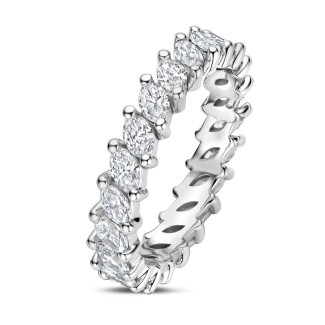
![1.75 carat full-set eternity ring with marquise cut diamonds in white gold]() Bestseller1.75 carat full-set eternity ring with marquise cut diamonds in white goldFrom € 7.586,70 (incl. 21% VAT)
Bestseller1.75 carat full-set eternity ring with marquise cut diamonds in white goldFrom € 7.586,70 (incl. 21% VAT) -
![0.26 carat half-set eternity ring in white gold - matches with all rings from the Fancy Shapes collection]() Bestseller0.26 carat half-set eternity ring in white gold - matches with all rings from the Fancy Shapes collectionFrom € 2.904,00 (incl. 21% VAT)
Bestseller0.26 carat half-set eternity ring in white gold - matches with all rings from the Fancy Shapes collectionFrom € 2.904,00 (incl. 21% VAT) -
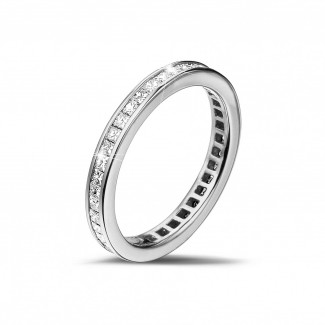
![0.90 carat eternity ring (full set) in white gold with princess diamonds]() Bestseller0.90 carat eternity ring (full set) in white gold with princess diamondsFrom € 3.956,70 (incl. 21% VAT)
Bestseller0.90 carat eternity ring (full set) in white gold with princess diamondsFrom € 3.956,70 (incl. 21% VAT) -
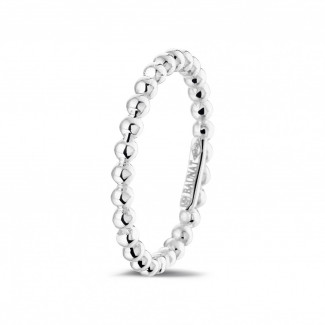
![Stackable beaded ring in white gold]() Stackable beaded ring in white goldFrom € 1.742,40 (incl. 21% VAT)
Stackable beaded ring in white goldFrom € 1.742,40 (incl. 21% VAT) -
![0.22 carat half-set eternity ring in white gold - matches with specific rings from the BAUNAT Iconic collection]() Bestseller0.22 carat half-set eternity ring in white gold - matches with specific rings from the BAUNAT Iconic collectionFrom € 3.206,50 (incl. 21% VAT)
Bestseller0.22 carat half-set eternity ring in white gold - matches with specific rings from the BAUNAT Iconic collectionFrom € 3.206,50 (incl. 21% VAT)


.
The tradition of wedding rings
Origins and the Vena Amoris myth
One influential idea was the vena amoris, literally the 'vein of love' - the notion that a special vein ran from the fourth finger of the left hand to the heart. Classical and medieval writers repeated versions of this claim, which helped popularise that finger for betrothal rings. Modern anatomy shows no unique vein connecting that finger to the heart, so the vena amoris is best understood as a romantic myth whose cultural effect persisted.
Medieval Europe added ritual detail to ring placement. Several sources describe a staged bestowal during marriage rites in which a ring moved across the hand - from thumb to index, then middle and finally to the ring finger - symbolising the couple's passage through social and spiritual roles toward partnership. These sequential gestures appear in liturgical manuals and matrimonial customs from the later Middle Ages.
Over the centuries the fourth finger became established in many Western communities, reinforced by Roman-era stories, medieval ritual and later civil and church practice. Today the vena amoris remains a cultural explanation for the ring finger's association with love, while the medieval procession survives mainly in historical accounts rather than as a common modern practice.
Which hand is the wedding ring on in different religions?
Which countries wear wedding rings on the left vs right?
- Western Europe and the Americas (commonly left): United Kingdom, Ireland, United States, Canada, Australia, New Zealand, France, Italy, Portugal, Spain, the Netherlands and much of Latin America typically use the left ring finger. In parts of Latin America both hands may be used depending on local custom.
- Central and Eastern Europe (commonly right): Russia, Poland, Ukraine, Greece and many Balkan states usually wear the wedding band on the right hand; here the practice is linked to Orthodox Christian custom and regional tradition.
- Scandinavia and Germany (mixed): Sweden, Norway and Denmark commonly favour the left hand; Germany and Austria vary by region and family practice, so both hands are seen.
- Middle East and North Africa (mixed): Turkey, Romania, Egypt and several Levantine countries often use the right hand, while other countries in the region follow left-hand use under Western influence. National and local customs differ.
- South Asia (variable): India and Pakistan show mixed practice. Choice can reflect regional, religious or astrological beliefs, but many modern couples follow personal preference and wear rings on the left.
- Jewish communities: In many Jewish ceremonies the groom gives the bride the ring on the right index finger; after the ceremony some brides move it to the left ring finger.
- Muslim-majority countries: Customs vary by country. For example, Jordanian couples often use the right hand, while in Iran left-hand use is common. Local tradition and religious guidance both play a role.
Practical notes: some couples wear the engagement ring on one hand during the engagement and move it during or after the ceremony; others keep both rings together on the same finger. These choices are personal and often follow family or regional practice.
Christian traditions
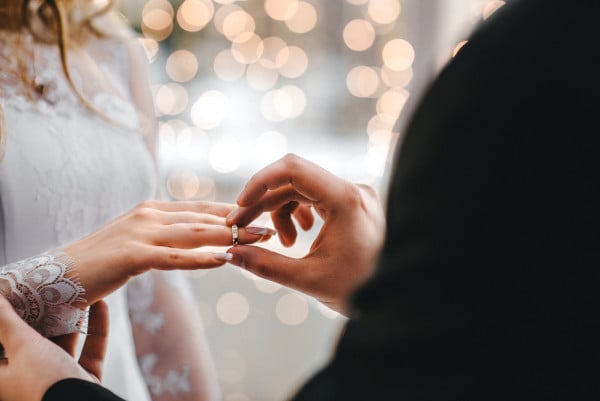
So, which hand you choose for your engagement and wedding ring as a Christian depends on where you live. More and more women also wear both rings on the same finger
Protestantism traditions
The wedding ring moves from right to left when the spouse dies. This tradition comes from old folklore that believes the left-hand side to be associated with evil.
Wedding rings are so heavy that it takes two people to bear them. Sometimes three.
Jewish traditions
Islamic traditions
Islamic traditions — madhhab positions and halal-friendly metals
Main madhhab tendencies:
- Hanafi: Women are generally permitted to wear rings. Men are often advised to avoid gold based on hadith, so non-gold metals are commonly chosen. Finger choice tends to follow custom.
- Shafi'i: Similar allowances for women; gold for men is commonly discouraged and local practice determines which hand is used.
- Maliki: Emphasises community custom; women’s rings are accepted and finger preference varies regionally.
- Hanbali: Conservative views often discourage gold for men and draw on prophetic traditions when advising about fingers; women’s use of rings is widely accepted.
These summaries show broad tendencies rather than strict rules; individual scholars and communities may give more specific advice. When questions arise about permissibility, couples often consult a local scholar or community authority familiar with their legal tradition.
Halal-friendly metals for men
Because some scholars advise against gold for men, many Muslim men choose other precious or durable metals that are widely accepted. Popular options include platinum and titanium, valued for durability and a premium appearance, and stainless steel, known for affordability and low maintenance. Each metal has trade-offs: platinum is durable and hypoallergenic but heavier; titanium is light and very strong but harder to resize; stainless steel resists tarnish but is less prestigious than precious metals.
For couples who want to personalise rings without conflicting with local practice, engraving a date, short blessing or neutral inscription is common. If religious phrases are considered for engraving, it is sensible to consult a knowledgeable local authority about appropriateness in the relevant community.
How strong is the influence of one's home country?
Confused? Just choose which tradition you want to follow when deciding whether to wear your wedding ring on the right or the left. Don't forget to take other aspects such as comfort and personal convenience into consideration.

A brief overview
Frequently asked Questions
What is the correct hand for my engagement ring?
The correct hand and finger for your engagement ring or wedding ring will depend on your faith, your region and practical considerations. The choice for your ring is completely personal.
Learn more about the correct hand for your engagement ring or ask BAUNAT’s diamond experts for advice.
Engagement ring which hand/engagement ring which hand Muslim/engagement ring which hand Christian
The engagement ring: on which hand do I wear it? The engagement ring: on which hand do I wear it as a Muslim? The engagement ring: on which hand do I wear it as a Christian?
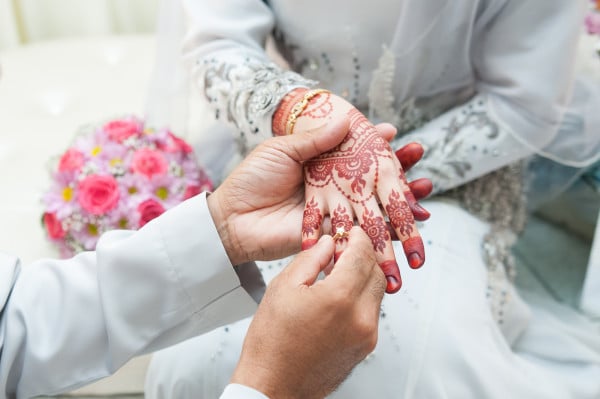
In most cultures, people wear both the engagement ring and wedding ring on the left-hand ring finger. As a Christian, you can also wear the engagement ring on the left hand and the wedding ring on the right hand. In countries of the Islam culture, the hand on which rings are worn varies from country to country. Jordan Muslims wear their wedding ring on the right hand, but in Iran people choose the left hand.
How to wear your engagement ring and wedding ring?
In most Western cultures, the engagement ring is worn on the ring finger of the left hand. In the past, people believed that this finger was the 'artery of love' that was connected directly to the heart. After marriage in some countries, the engagement ring is moved to the middle finger of the left hand to make room for the wedding ring on the ring finger. Here, most people wear both rings on the left hand, although some prefer to wear the wedding ring on the right-hand ring finger.
-
Marie Jaillant
-
Marie Jaillant – Showroom Manager Paris
-
-
Marie is the Showroom Manager and one of the Diamond Jewellery Advisors at BAUNAT’s Paris showroom. She has successfully guided numerous clients through bespoke jewellery projects, ensuring each creation meets the highest standards of craftsmanship and design. With a deep understanding of the local jewellery landscape, Marie provides tailored advice that balances Parisian elegance with BAUNAT’s commitment to timeless, high-quality natural diamond jewellery.
Marie is the Showroom Manager and one of the Diamond Jewellery Advisors at BAUNAT’s Paris showroom. She has successfully guided numerous clients through bespoke jewellery projects, ensuring each creation meets the highest standards of craftsmanship and design. With a deep understanding of the local jewellery landscape, Marie provides tailored advice that balances Parisian elegance with BAUNAT’s commitment to timeless, high-quality natural diamond jewellery.