







Features:
-
Category:
-
Posted at:
-
Author:
- An Van Puyvelde
-
An Van Puyvelde - Order & Administration Manager
-


-
Reading time:13 minutes
In this article:
Can you fix a broken diamond ring with a crack?
A diamond ring is more than just jewellery; it's a reflection of love, commitment, and your unique style. Whether it's an engagement ring or a treasured heirloom, discovering damage to it can be upsetting. But there’s good news – with the right approach and skill, it can be beautifully restored. In this blog, you'll discover how a diamond ring can break and the best ways to repair it back to perfection.
Read summary
How can you protect and repair a damaged diamond ring?
A diamond ring, despite its durability, can experience various types of damage including band breaks, loose prongs, chipped diamonds, and loose stones. While diamonds are incredibly hard, they can still be damaged under specific conditions. The key is proper maintenance and storage - keeping diamond jewelry separate to prevent scratching and regular professional checks every 6-12 months.
If damage occurs, professional repair is essential. Expert jewelers can solder broken bands, retip prongs, and secure loose stones. However, prevention is always better than cure. Clean your diamond jewelry carefully at home using gentle methods, and avoid harsh brushes or sharp instruments.
For additional security, consider ring insurance to cover potential loss, theft, or damage. Remember that what might appear to be cracks could simply be light reflections, so professional assessment is valuable for proper diagnosis and repair.
5 Questions to Find Her Perfect Engagement Ring
Are you planning to propose? Finding the right engagement ring is a defining step. Every ring is handcrafted in Antwerp from the finest materials by skilled artisans. Discover what engagement ring fits her personality.
Most viewed diamond jewels
-
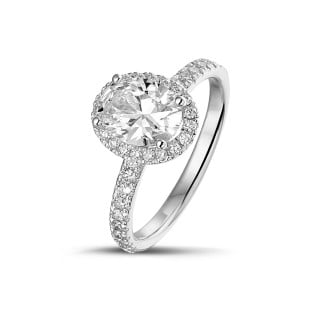
![1.00Ct halo ring in white gold with oval diamond]() Bestseller1.00Ct halo ring in white gold with oval diamondFrom USD 5.210,00 (excl. VAT)
Bestseller1.00Ct halo ring in white gold with oval diamondFrom USD 5.210,00 (excl. VAT) -
![1.00 carat solitaire cluster ring in white gold with marquise diamond]() BestsellerNew1.00 carat solitaire cluster ring in white gold with marquise diamondFrom USD 4.320,00 (excl. VAT)
BestsellerNew1.00 carat solitaire cluster ring in white gold with marquise diamondFrom USD 4.320,00 (excl. VAT) -
![0.95 carat diamond rose design ring in white gold]() NewPrincess Delphine0.95 carat diamond rose design ring in white goldFrom USD 15.720,00 (excl. VAT)
NewPrincess Delphine0.95 carat diamond rose design ring in white goldFrom USD 15.720,00 (excl. VAT) -
![1.00 carat solitaire ring with an asscher cut diamond in white gold]() Bestseller1.00 carat solitaire ring with an asscher cut diamond in white goldFrom USD 4.620,00 (excl. VAT)
Bestseller1.00 carat solitaire ring with an asscher cut diamond in white goldFrom USD 4.620,00 (excl. VAT) -
![1.00 carat solitaire ring with a cushion diamond and hidden halo in white gold]() BestsellerNew1.00 carat solitaire ring with a cushion diamond and hidden halo in white goldFrom USD 3.940,00 (excl. VAT)
BestsellerNew1.00 carat solitaire ring with a cushion diamond and hidden halo in white goldFrom USD 3.940,00 (excl. VAT)


.
Different types of ring damage
1. Broken ring band
The most common type of damage happens when the band of a ring snaps or cracks, often catching you off guard. You might be going about your day, enjoying life, when a sudden accidental knock sends your cherished piece of jewellery into a state of disrepair. Whether it’s from everyday wear and tear or that unexpected moment, it’s a reminder to cherish our treasures while being mindful of their fragility.2. Broken prong on diamond ring
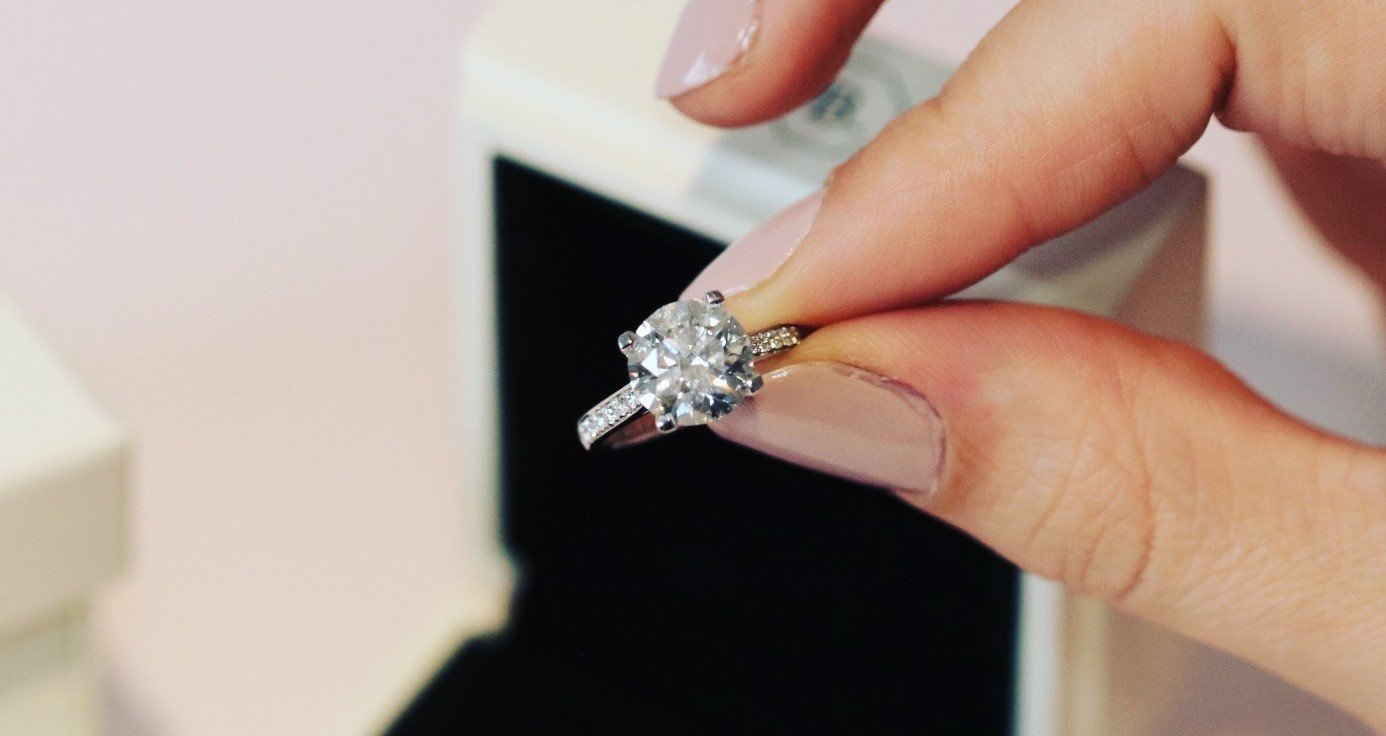
Prongs are the small metal clasps that keep your diamond securely in place on your ring. If one of them breaks, the diamond could loosen and even fall out. To avoid losing something so valuable, it’s a good idea to check the prongs regularly and make sure they’re doing their job keeping your diamond safe and sound!3. Damaged diamonds
First of all, let’s put you at ease but telling you that, in principle, only another diamond can scratch your diamond. Diamond cutters even use industrial diamonds to cut rough diamonds into different shapes for your jewels. Cutting a diamond consists of five steps. In addition, it is very important to only buy diamond jewellery with a diamond certificate. This is true for your diamond engagement ring as well.Diamonds are renowned for their hardness, but they can still get chipped, cracked, or scratched. Of course, when you hit the diamond forcefully at a specific angle with a steel hammer, the diamond will split into a thousand little pieces. Therefore, do not try to find out the authenticity of your diamond by scratching it with another material. A real diamond will not get scratched, but a little piece can accidentally chip.
Because only another diamond can scratch your diamond, it is important that you do not keep your diamond engagement ring in the same jewellery box as your other diamond jewellery. When you do not wear your diamond engagement ring for a period, store it in a separate jewellery box or the little box it came in. That way, you avoid your pieces of diamond jewellery from rubbing against each other and getting little cracks as a result.
4. Loose stones
As time goes by, the settings that hold your precious gemstones can gradually loosen, much like the way a cherished memory can fade if not tended to. This subtle shift increases the risk of losing a stone, reminding us to regularly check and care for our beloved jewellery, ensuring each gem stays secure and sparkling.
Band breaks and reinforcement options
Look for notches, visible thinning, a band that becomes oval rather than round, or persistent discomfort when sliding the ring on and off. Those are early signs the shank is wearing thin and may break if ignored.
Common reinforcement methods
- Adding a new shank: a jeweller can replace the worn section or fit a new shank that restores width and strength while matching the ring’s style. - Soldering repairs: a clean solder and reprofile can rejoin a broken band and restore continuity. - Material reinforcement: sometimes a harder metal insert or a partial shank in a stronger alloy is added internally to strengthen the area without changing the outward look.
When reinforcement is recommended
If you spot thinning, lead an active lifestyle, or the ring has a narrow profile that concentrates stress, reinforcement is worth considering before a full break occurs. A master jeweller can advise whether a local repair is enough or a new shank or internal
Distinguishing between cracks and reflections
Why diamonds can crack: fracture toughness explained
Diamond fracture toughness is low compared with many metals. Typical values used in trade literature sit around 2.0 MPa·m1/2, which is small next to common engineering metals. That gap helps explain why a diamond can shrug off surface wear yet still chip under a concentrated blow.
In practical terms, a focused strike to a small area - a princess-cut corner or a thin, exposed girdle where the stone meets the setting - can create a stress concentration that overcomes the diamond’s fracture toughness and causes a chip. Pointed shapes like marquise or pear concentrate force at the tips, so those areas deserve attention. These spots are the most vulnerable in day-to-day wear.
Remember: Mohs hardness measures scratch resistance, not how easily a stone will fracture. You can rub a diamond across many materials without leaving a scratch, but a single hard knock in the right spot can still cause damage. For that reason, the stone’s shape, the setting profile and whether the girdle or culet are exposed all affect real-world risk. Numeric fracture toughness figures are consistent with the technical overviews commonly cited in gemmological discussions.
Ring repair: getting your broken ring fixed
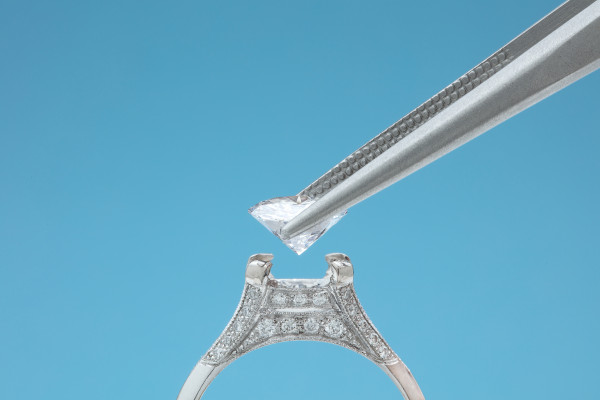
From expertly soldering broken bands to securely retipping prongs and tightening loose stones, a professional can provide the necessary care to maintain the sentimental value and aesthetics of your ring. Ultimately, trusting experts with your ring repair ensures that your beloved pieces are restored to their former glory.
If your ring is damaged: immediate next steps
- Stop wearing the ring to avoid further damage or loss. - Do not attempt forceful DIY removal if the stone is loose; levering or hammering at settings can enlarge hidden fractures. - Place the ring in a soft, secure container such as a padded jewellery box or cloth pouch. - Bring the ring to a master jeweller for a professional assessment and mention any knocks or incidents that may have caused the damage. - Be aware that some breaks are hidden under settings and may only become visible once the stone is removed for inspection; this can change repair options.
Polishing, recutting and replacement: how the options differ
Polishing: when it helps
Polishing is the least invasive option. It removes minor surface blemishes, fine scratches and very small chips that affect face-up appearance without changing the stone’s overall dimensions much. A good polish keeps the original proportions, so certification details remain relevant for most purposes. Polishing works when damage is superficial or limited to facet edges and the stone’s symmetry and table are intact.
Limits of polishing
Polishing cannot remove deep chips or fractures that extend below the facet plane, nor can it reshape a badly distorted girdle. If the damaged area is large or lies at a critical facet junction, polishing may reduce visibility but will not restore structural integrity or full brilliance.
Recutting: what it means and the tradeoffs
Recutting removes damaged material and reshapes the stone. Choose this when chips or fractures penetrate deeply, when facet junctions are compromised, or when polishing would leave the stone deformed. Recutting can restore sound structure and may improve light performance, but it reduces carat weight.
Typical weight-loss and visual consequences
Weight loss from recutting depends on damage severity, its location and the stone’s original geometry. Small edge chips on a round might cost only a fraction of a percent in weight, while removing a large girdle fracture or reshaping a fancy cut can reduce weight more noticeably. Recutting also changes facet angles and table size, which can alter brilliance and appearance compared with the original cut. For example, trimming a damaged princess-corner shortens the corner; a round with a sizeable girdle chip may need a subtle change in girdle thickness to restore a sound profile.
Replacement: when recut is not feasible
Replacement is practical when fractures are extensive, when recutting would leave the stone too small or out of proportion, or when keeping the original certification and provenance matters. If the stone’s original proportions carry sentimental or resale value, sourcing a matching stone or replacing it may be the better choice.
How to decide: practical criteria
- Size and location of damage: tiny surface chips can often be polished; deep chips at corners, tips or girdles commonly require recut or replacement.
- Cut shape: pointed and squared shapes (pear, marquise, princess) are more likely to need recutting after significant corner damage.
- Certification and provenance: if preserving certified carat and proportions is important, replacement may be preferable to extensive recutting.
- Visual versus structural concern: if the issue is mainly cosmetic, polishing may suffice; if structural integrity is at risk, consider recutting or replacement.
Concrete example: a small chip on a round brilliant near the girdle can often be polished out with minimal weight loss, whereas a corner chip on a princess cut will more often lead to recutting that shortens the corner and reduces weight by a more noticeable amount. Discuss options with a master gem cutter so you understand the expected tradeoffs before approving work.
Prevention over cure: regular maintenance of your jewellery
Regular maintenance of your jewellery is choosing prevention over cure!
Consider ring insurance for peace of mind
Remember, regular maintenance is key to preserving your jewellery's beauty and longevity. If you're unsure about any repair, always consult a professional jeweller. And don't forget to consider ring insurance for added protection.
For those looking to ensure their diamond jewellery remains in pristine condition, book a consultation with one of our expert jewellers at BAUNAT today. We'll help you with repairs, maintenance, and even selecting new, exquisite pieces to add to your jewellery collection.
-
An Van Puyvelde
-
An Van Puyvelde - Order & Administration Manager
-
-
An supervises BAUNAT’s order processing and logistics, working closely with the internal order team to ensure a seamless customer experience. She plays a key role in coordinating production timelines and maintaining clear communication with clients throughout the entire process. With a strong focus on precision and reliability, An is dedicated to delivering each piece on time while keeping customers fully informed, contributing to BAUNAT’s high standard of service and customer satisfaction.
An supervises BAUNAT’s order processing and logistics, working closely with the internal order team to ensure a seamless customer experience. She plays a key role in coordinating production timelines and maintaining clear communication with clients throughout the entire process. With a strong focus on precision and reliability, An is dedicated to delivering each piece on time while keeping customers fully informed, contributing to BAUNAT’s high standard of service and customer satisfaction.