







Features:
-
Category:
-
Posted at:
-
Author:
- Fabienne Rauw
-
BAUNAT Antwerp
-


-
Reading time:13 minutes
In this article:
Buying diamond jewellery as an investment?
As you know, diversity in your investment portfolio is very important. With diamond jewellery, you don’t just earn intrinsic value, but also craftsmanship and emotional value.
Read summary
How can diamond jewelry serve as a smart investment choice while offering personal enjoyment?
Diamond jewelry presents a unique investment opportunity that combines financial stability with aesthetic pleasure. Unlike volatile stocks or low-yield savings accounts, diamonds maintain steady value appreciation while offering protection against inflation. The investment value stems from three key components: the intrinsic worth of the precious materials, the craftsmanship involved in creating the piece, and the emotional value that often appreciates over time.
What makes diamond jewelry particularly attractive as an investment is its practicality - you can wear and enjoy your investment while it potentially increases in value. Additionally, storing and securing diamond jewelry is relatively simple and cost-effective compared to other investments. When purchasing, working with certified diamond experts who evaluate the 4C's (carat, clarity, color, and cut) ensures you're making a sound investment. Choose retailers with GIA or IGI certificates to guarantee authenticity and maximize potential resale value.
Most viewed diamond jewels
-
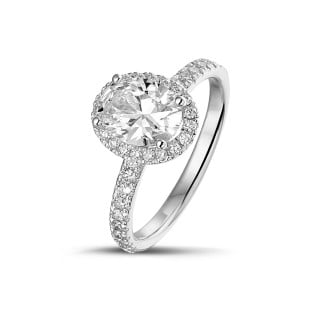
![1.00Ct halo ring in white gold with oval diamond]() Bestseller1.00Ct halo ring in white gold with oval diamondFrom USD 5.210,00 (excl. VAT)
Bestseller1.00Ct halo ring in white gold with oval diamondFrom USD 5.210,00 (excl. VAT) -
![1.00 carat solitaire cluster ring in white gold with marquise diamond]() BestsellerNew1.00 carat solitaire cluster ring in white gold with marquise diamondFrom USD 4.320,00 (excl. VAT)
BestsellerNew1.00 carat solitaire cluster ring in white gold with marquise diamondFrom USD 4.320,00 (excl. VAT) -
![0.95 carat diamond rose design ring in white gold]() NewPrincess Delphine0.95 carat diamond rose design ring in white goldFrom USD 15.720,00 (excl. VAT)
NewPrincess Delphine0.95 carat diamond rose design ring in white goldFrom USD 15.720,00 (excl. VAT) -
![1.00 carat solitaire ring with an asscher cut diamond in white gold]() Bestseller1.00 carat solitaire ring with an asscher cut diamond in white goldFrom USD 4.620,00 (excl. VAT)
Bestseller1.00 carat solitaire ring with an asscher cut diamond in white goldFrom USD 4.620,00 (excl. VAT) -
![1.00 carat solitaire ring with a cushion diamond and hidden halo in white gold]() BestsellerNew1.00 carat solitaire ring with a cushion diamond and hidden halo in white goldFrom USD 3.940,00 (excl. VAT)
BestsellerNew1.00 carat solitaire ring with a cushion diamond and hidden halo in white goldFrom USD 3.940,00 (excl. VAT)


.
Why is buying diamond jewellery a smart move?
Buying diamond jewellery is much more lucrative than conventional investments such as a savings book. In addition, with this type of stable investments you also take much less risks than with stocks. Where stocks can suddenly plummet, diamond continues to undergo a steady rise.
It is important to be realistic about market behaviour. Diamonds do not produce dividends or rental income like some other asset classes, and pricing can be opaque and regional. Historical performance shows periods of steady demand and price stability, but also intervals of weaker pricing and adjustment. Unlike listed stocks or government bonds, diamond prices are influenced by jewellery fashion, regional demand shifts and the structure of secondary markets, which means short-term volatility and liquidity constraints can occur.
Compared with stocks or gold, diamonds can be less liquid and harder to price transparently. They can perform well over a long horizon when bought wisely, yet they are not a guaranteed outperformer. For investors, the sensible approach is to treat diamonds as a long-term, diversifying holding and to buy with an eye to resale-friendly attributes and documentation rather than expecting quick market-beating returns.
There are also few or no additional costs involved in diamond jewellery. You also need to make little effort to keep them safe. With a repository and insurance, you are rid of it. For example, buying a diamond jewel is a valuable savings account that you can enjoy in the long term.
What do I win with an investment in diamond jewellery?
Buying diamond jewellery equals investing in intrinsic value. This is why your investment is not exposed to hyperinflation or valuation. So, you opt for long-term certainty.
If the intrinsic values of precious metal and gemstone are combined into a jewel, they become even more valuable. This is also due to the craftsmanship that the materials are processed with. In addition, the next buyer pays a lot more for the emotional value of an aesthetic jewel like an engagement ring.
You can easily combine your lucrative investment with practical use. Wearing the jewels can sometimes even increase the value. This way everyone sees your valuable investment.
With an investment in diamonds you also have your investment in your hand. It is tangible and you can view it at any time. This way, you can be sure that your investment is handled the right way, cause you’re doing it yourself.
How resale and liquidity work — where you actually sell diamonds
Liquidity for diamond jewellery is real, but it is not instant. Turning a jewel into cash usually involves a trade-off between speed and price: the faster you sell, the larger the likely discount to what you paid. Knowing the main sales channels and taking a few preservation steps up front improves the outcome.
Channels you can use
- Private sale to a buyer: Selling directly to a private buyer, through personal networks or specialised marketplaces, often nets the highest price because there is no dealer margin. The downside is a longer time-to-sale and the need to show authenticity and paperwork. Negotiation takes time and clear terms help avoid disputes.
- Jewellers and trade buyback: Many jewellers will buy back jewellery or offer trade-in credit. This route is convenient and fast, but typically pays less than a private sale because the buyer must resell the item with a margin. It is a practical choice when speed or convenience matters more than maximising proceeds.
- Auction houses: Auctions suit rare, collectible or designer pieces where bidding can lift the price. Fees and reserve processes apply and sale above reserve is not guaranteed. Expect a multi-week process from consignment to hammer.
- Online marketplaces and specialist platforms: Reputable online platforms for pre-owned jewellery reach a wide audience and balance speed with competitive pricing. Platforms that verify certificates and handle shipping and escrow reduce transaction risk. Costs vary by platform fee structure.
- Specialised diamond exchanges and wholesale trade: For loose, high-quality stones, trade channels and diamond exchanges offer the most transparent pricing to professionals. Access is generally limited to trade members, but consigning through a trusted dealer to these channels can improve realisation for high-quality loose stones.
Typical resale discounts and what to expect
Secondhand jewellery often sells below the original retail price. Industry practice commonly shows resale discounts in the order of 15 to 25 percent for set jewellery, with wider variance when pieces carry large designer mark-ups or non-standard settings. Loose diamonds usually fetch better prices than the same stone in an expensive custom mounting, since settings are not always recovered in resale. Rare exceptional stones or well-documented vintage items can outperform typical discounts, while small stones or heavily modified pieces may fall below the usual ranges.
Practical steps to improve resale outcomes
- Keep and transfer the original laboratory certificate with the stone; buyers pay meaningful premiums for a verifiable GIA or AGS report.
- Preserve provenance and invoices; a clear purchase history increases buyer confidence.
- Avoid overly expensive or bespoke settings when resale is a priority; plain, classic mountings are easier to trade.
- If resale liquidity is the main objective, consider buying loose stones or choose settings that let the stone be removed and sold separately.
- Obtain an independent pre-sale valuation to set realistic expectations and to use as a negotiation tool.
- Photograph the item clearly and store paperwork separately from the jewel to prevent loss.
Quick checklist: documents, starting points and expected timelines
- Documents to keep: original lab report, purchase invoice, warranty and insurance papers, any restoration or appraisal reports.
- Where to start: for speed, approach reputable jewellers or online resale platforms; for best price, prepare for a private sale or consignment with an auction house or specialist reseller.
- Expected time-to-sale scenarios: immediate (days) via jeweller or trade buyback at a discount; short term (weeks) via online marketplaces or private sale with active marketing; longer term (several weeks to months) for auction consignments or finding the right private buyer.
By planning ahead and keeping documentation intact, you increase the chance of converting a diamond jewel back to cash on competitive terms.
How do I invest easily and quickly in diamond jewellery?
Buying diamonds easily and quickly? Then you should contact a diamond expert. This way, you’ll get a lot of assurance. They evaluate the 4C’s: carat, clarity, colour and cut. That way you don’t have to make an effort yourself to count on a reliable result. Find an expert with certificates from GIA of IGI and trust the right trader. You still want to resell easily? Then you can just deal with all your transactions online.
Investment-grade diamonds — a practical buying checklist
If your main objective is liquidity and capital preservation, choose diamonds with the broadest market appeal and verifiable documentation. The checklist below summarises the attributes professional buyers look for and why they matter.
Checklist (what to prefer and why)
- Shape: prefer round brilliant. The round brilliant has the largest buyer pool and is the most liquid shape. Fancy shapes can be attractive but narrow the resale audience.
- Cut quality: aim for Excellent or Ideal cut grades; a triple-excellent (Excellent for cut, polish and symmetry) commands a premium because light performance drives perceived value.
- Carat bands: select near-whole benchmarks where possible (for example 0.50, 1.00, 2.00 carats). Price bands at these checkpoints are well recognised in trade and aid resale comparability.
- Colour and clarity sweet spots: choose commonly traded ranges that balance price and demand. Extremely rare top grades can be harder to trade in smaller markets, while very low grades reduce the buyer pool. The best liquidity typically sits in parameters buyers recognise and can value quickly.
- Certificates: insist on a recognised laboratory report such as GIA or IGI, HRD. Originals increase buyer confidence and materially improve resale prospects.
- Natural vs lab-grown: prefer natural diamonds for investment purposes. Lab-grown stones follow different pricing dynamics and currently carry higher downside risk as an investment.
- Avoid highly personalised or niche specifications: unusual fluorescence, extreme proportions or experimental cuts may hurt liquidity because they reduce comparability.
Short examples
- Typical liquid example: a 1.00ct round brilliant, Excellent cut, strong symmetry and an original GIA report. This combination is widely recognised and easier to price and resell.
- Less liquid example: a bespoke pendant with a small, irregularly shaped stone set into a heavy custom mounting. Resale buyers will typically price out the mounting and the net realisation can be substantially lower.
Actionable tips at purchase
- Require the original lab report at sale and keep an authenticated copy in a separate place.
- Ask the seller for provenance and the original invoice.
- If resale is a priority, favour plain, classic mountings that do not obscure the stone.
- If in doubt, get an independent pre-purchase appraisal focused on resale comparability rather than retail aesthetics.
Following these rules does not guarantee short-term price gains, but it improves liquidity and the chances of recovering value when you decide to sell.
-
Fabienne Rauw
-
BAUNAT Antwerp
-
-
Fabienne, manager of the German market is able to guide every client with finding the right jewel. She takes care of most of the German orders, but also takes other task on her plate. Thanks to her six years of experience at BAUNAT she acquainted well with the product and the marketing around it. Her degree in PR ensures that BAUNAT is well presented across all media channels. For anyone looking into a new investment opportunity, Fabienne is the perfect guide in this process. No question will be left unanswered, and she will help you every step of the way.
Selected Bespoke Projects
• Eternal Bloom bespoke engagement concept - Role: project lead for client briefing and prototype coordination. Fabienne translated personal design references into a 3D-printed prototype, supervised stone selection and ensured the finished piece matched the client’s vision and comfort preferences.
• Personalized anniversary necklace - Role: design coordinator and quality overseer. She managed the custom design process from the initial sketch to final polishing, liaising between client and workshop to preserve proportions and finish.
• Reimagined heirloom ring restoration and redesign - Role: client consultant and technical coordinator. Fabienne guided the client through options to modernize setting details while keeping sentimental elements, delivering a wearable result that respected the original piece.
Her hands-on involvement in bespoke commissions ensures each custom order has a clear brief, careful prototype review and close follow-up with the workshop, so clients receive a tailored jewel that meets both aesthetic and practical expectations.
Professional enquiries
For speaking engagements, press requests or research collaborations, please send your message to BAUNAT’s communications team with the subject line: "Fabienne Rauw - Professional Enquiry." Include a brief description of the request and any relevant dates or documents. The communications team will route enquiries to Fabienne and provide guidance on next steps.
Fabienne, manager of the German market is able to guide every client with finding the right jewel. She takes care of most of the German orders, but also takes other task on her plate. Thanks to her six years of experience at BAUNAT she acquainted well with the product and the marketing around it. Her degree in PR ensures that BAUNAT is well presented across all media channels. For anyone looking into a new investment opportunity, Fabienne is the perfect guide in this process. No question will be left unanswered, and she will help you every step of the way.
Selected Bespoke Projects
• Eternal Bloom bespoke engagement concept - Role: project lead for client briefing and prototype coordination. Fabienne translated personal design references into a 3D-printed prototype, supervised stone selection and ensured the finished piece matched the client’s vision and comfort preferences.
• Personalized anniversary necklace - Role: design coordinator and quality overseer. She managed the custom design process from the initial sketch to final polishing, liaising between client and workshop to preserve proportions and finish.
• Reimagined heirloom ring restoration and redesign - Role: client consultant and technical coordinator. Fabienne guided the client through options to modernize setting details while keeping sentimental elements, delivering a wearable result that respected the original piece.
Her hands-on involvement in bespoke commissions ensures each custom order has a clear brief, careful prototype review and close follow-up with the workshop, so clients receive a tailored jewel that meets both aesthetic and practical expectations.
Professional enquiries
For speaking engagements, press requests or research collaborations, please send your message to BAUNAT’s communications team with the subject line: "Fabienne Rauw - Professional Enquiry." Include a brief description of the request and any relevant dates or documents. The communications team will route enquiries to Fabienne and provide guidance on next steps.