







Features:
-
Category:
-
Posted at:
-
Author:
- Fabienne Rauw
-
BAUNAT Antwerp
-


-
Reading time:9 minutes
In this article:
Rare pink diamond as safe investment for the super-rich
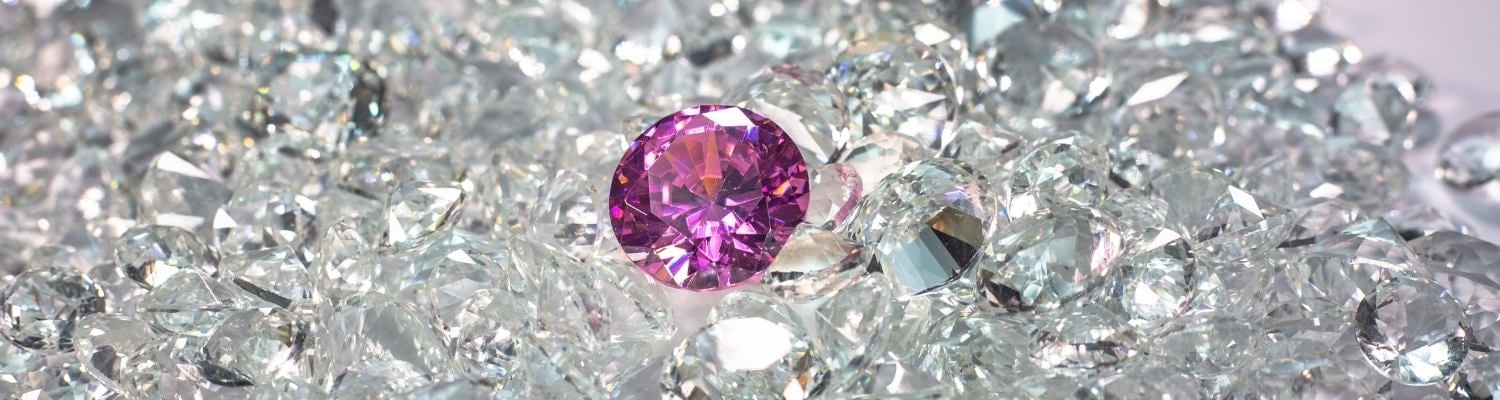
The world’s elite is now investing its millions in rare coloured diamonds, a stable and alternative investment. They look at a coloured diamond as a reliable, tangible, investment they can use to show off their wealth. Coloured diamonds in general, but pink diamonds in particular have shown a tremendous increase in value over the past 10 years. In 2002, the average price per carat for a pink diamond was around $ 13.000,- and this year the price peaked at $ 78.000,- per carat. That is a rise of 20% per year thanks to the ever rising demand for coloured diamonds proving that pink diamonds are a girl’s best friend.
Read summary
Why are pink diamonds becoming the ultimate investment for the wealthy elite?
Pink diamonds have emerged as a remarkable investment vehicle for the ultra-wealthy, showing exceptional value growth over the past decade. From 2002 to recent years, the average price per carat skyrocketed from $13,000 to $78,000 - an impressive 20% annual increase. This dramatic rise is exemplified by the Graff Pink, a 24.78-carat diamond that sold for €43 million at Sotheby's Geneva. Chinese investors particularly favor pink diamonds from Australia's Argyle mine, often choosing them over traditional investments like real estate or stocks. Experts now rank colored diamonds among the safest investment options, second only to gold, making them both a status symbol and a secure store of wealth.
Most viewed diamond jewels
-
![Ring in white gold with ‘fancy pink‘ pear shaped diamond and taper cut diamonds]() Ring in white gold with ‘fancy pink‘ pear shaped diamond and taper cut diamondsFrom USD 2.800.650,00 (excl. VAT)
Ring in white gold with ‘fancy pink‘ pear shaped diamond and taper cut diamondsFrom USD 2.800.650,00 (excl. VAT) -
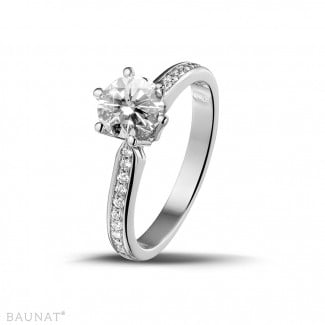
![1.00 carat solitaire diamond ring in white gold with side diamonds]() Bestseller1.00 carat solitaire diamond ring in white gold with side diamondsFrom USD 3.950,00 (excl. VAT)
Bestseller1.00 carat solitaire diamond ring in white gold with side diamondsFrom USD 3.950,00 (excl. VAT) -
![1.00 carat solitaire double halo ring with a cushion diamond in white gold]() BestsellerNew1.00 carat solitaire double halo ring with a cushion diamond in white goldFrom USD 4.890,00 (excl. VAT)
BestsellerNew1.00 carat solitaire double halo ring with a cushion diamond in white goldFrom USD 4.890,00 (excl. VAT) -
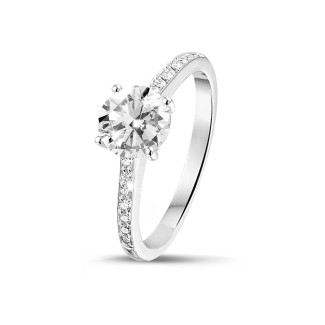
![1.00 carat solitaire diamond ring in white gold with side diamonds]() Bestseller1.00 carat solitaire diamond ring in white gold with side diamondsFrom USD 3.420,00 (excl. VAT)
Bestseller1.00 carat solitaire diamond ring in white gold with side diamondsFrom USD 3.420,00 (excl. VAT) -
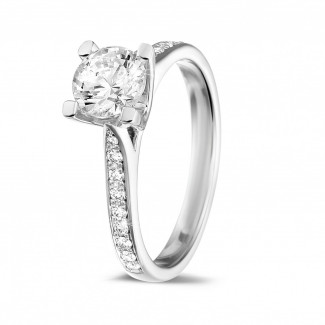
![1.00 carat solitaire ring in white gold with four prongs and side diamonds]() Bestseller1.00 carat solitaire ring in white gold with four prongs and side diamondsFrom USD 3.110,00 (excl. VAT)
Bestseller1.00 carat solitaire ring in white gold with four prongs and side diamondsFrom USD 3.110,00 (excl. VAT)

Record high prices are quite common at the moment. The Graff Pink, a very rare 24.78 carat intense pink diamond, sold by Sotheby’s in Geneva for a whopping 43 million euros, setting an absolute world record. Especially pink diamonds from the Argyle mine in Australia are coveted. The Chinese are hoarding them as if their lives depended on it. Instead of putting their money in real estate or stocks, they invest their capital, sometimes all of it, in coloured diamonds. Inarguably a sensible decision, since coloured diamonds are seen as one of the safest investments at the moment, followed closely by gold.
Why pink diamonds are rare - and what that means for investors
The Argyle mine in Western Australia was the main source of the world’s supply of intense pink diamonds for decades. Its phased closure removed a significant share of that supply, tightening availability for the most sought‑after Argyle‑type pinks. For investors this matters because low historical production, verifiable provenance and steady collector demand create a scarcity premium that does not apply to more common diamond colours.
Scarcity is not the only driver. Colour intensity, size and clarity interact to determine market value: vivid or intense pinks of larger carat weight are far rarer than smaller stones with a similar hue, and stones with verified Argyle origin often trade at a premium because collectors prize that provenance. Scarcity can also increase price volatility; auction results for headline stones may spike, while smaller or less well‑documented stones can show wider bid‑ask spreads.
A balanced view recognises both the upside from constrained supply and the attendant risks. The Argyle closure amplified scarcity, but investors should prioritise independently certified natural gems with clear provenance and plan for a long‑term horizon rather than seeking rapid turnover. Provenance‑driven premiums exist, yet they require documentation and market access to be realised on resale.
All different diamond colours you can find here. We will gladly help you choose the right color for you and advise you on your investment.
How pink diamonds have performed: market returns and auction evidence
Market returns for high‑end coloured diamonds, and pink stones in particular, have often outpaced several traditional assets over multi‑year periods. Independent observers and market reports show sustained appreciation for fancy coloured diamonds versus gold and broad equity indices, with the strongest gains concentrated in the rarest hues and highest colour intensities. Comparisons between coloured‑diamond indices and those for gold or stocks indicate that carefully selected coloured stones have delivered higher long‑term percentage gains and a lower correlation with equities, which can make them a useful addition for portfolio diversification. These findings are most relevant for natural, untreated stones with strong colour intensity and documented provenance, since those attributes typically attract the largest scarcity premium at auction.
Auction results give the clearest, verifiable evidence of demand and price formation. A few headline sales over the past two decades show how rarity, size and provenance translate into prices. The Graff Pink, an intense pink of 24.78 carats, set a world record when sold at Sotheby’s Geneva, demonstrating that collectors will pay substantial premiums for exceptional size combined with top colour. The Pink Legacy also sold for very high prices at a Christie’s sale, showing that historic provenance and museum‑quality characteristics push values above ordinary market levels. Specialist auctions have likewise recorded strong price‑per‑carat performance for Argyle‑origin pinks with vivid saturation, confirming the particular appeal of that provenance. Auction hammer prices and price‑per‑carat figures create transparent benchmarks that buyers, dealers and appraisers use to value comparable stones.Taken together, price indices and auction evidence show a pattern: rare, natural, untreated pink diamonds with top‑tier colour intensity and documented origin have been among the better‑performing diamond subcategories in recent cycles, and they often behave differently from gold or equities. Performance is concentrated at the extreme end of the market; not every pink stone will track the headline rates. For investors, provenance, certification and colour intensity are the principal determinants of long‑term price performance, and auction records provide the most objective reference points when assessing comparable material.
How investors should verify and buy: checklist and resale realities
Checklist before purchase
- Independent laboratory report confirming the stone is natural and untreated, issued by a recognised laboratory such as GIA or an equivalent authority. The report should state whether any colour treatments have been applied.
- Clear provenance documentation, especially for Argyle‑origin stones, including mine numbers, seller records and any prior auction history where available. Provenance has a material effect on price for pink diamonds.
- Full technical description: exact carat weight, colour grade and intensity, clarity grade, cut proportions and fluorescence notes.
- Confirmed chain of title and a written sales contract that specifies returns, guarantees and any after‑sales services.
Why certification matters
Natural pink diamonds derive value from intrinsic, rare colour. Treatments, enhancements or lab‑grown alternatives follow very different market price patterns. A recognised laboratory report reduces uncertainty by confirming whether the stone is natural and untreated and by providing the technical grading that underpins pricing. Without independent certification, pricing becomes speculative and resale is harder.
Resale channels and practical liquidity considerations
Resale usually happens through three channels: established auction houses, specialist dealer networks and private sales. Auctions offer transparent pricing but include seller commissions and the risk that a single lot may not reach the desired price if buyer appetite is limited at that moment. Dealer networks and private sales can be quicker, but prices depend on the dealer’s buyer access and margin. For most investors a multi‑year holding horizon is realistic; jewellery markets are less liquid than public equities, and selling a high‑value, rare coloured diamond often takes time and professional marketing. Using reputable intermediaries and matching documentation to auction comparables improves resale prospects.
Red flags to avoid
- No independent laboratory report or ambiguous certification language.
- Missing or vague provenance, particularly for stones claimed as Argyle origin without supporting documentation.
- Prices substantially below market comparables for similar size and intensity, which can indicate undisclosed issues or misrepresentation.
Following this checklist helps protect value and ensures an investor buys the specific attributes - natural origin, strong intensity and documented provenance - that underpin long‑term market performance.
-
Fabienne Rauw
-
BAUNAT Antwerp
-
-
Fabienne, manager of the German market is able to guide every client with finding the right jewel. She takes care of most of the German orders, but also takes other task on her plate. Thanks to her six years of experience at BAUNAT she acquainted well with the product and the marketing around it. Her degree in PR ensures that BAUNAT is well presented across all media channels. For anyone looking into a new investment opportunity, Fabienne is the perfect guide in this process. No question will be left unanswered, and she will help you every step of the way.
Selected Bespoke Projects
• Eternal Bloom bespoke engagement concept - Role: project lead for client briefing and prototype coordination. Fabienne translated personal design references into a 3D-printed prototype, supervised stone selection and ensured the finished piece matched the client’s vision and comfort preferences.
• Personalized anniversary necklace - Role: design coordinator and quality overseer. She managed the custom design process from the initial sketch to final polishing, liaising between client and workshop to preserve proportions and finish.
• Reimagined heirloom ring restoration and redesign - Role: client consultant and technical coordinator. Fabienne guided the client through options to modernize setting details while keeping sentimental elements, delivering a wearable result that respected the original piece.
Her hands-on involvement in bespoke commissions ensures each custom order has a clear brief, careful prototype review and close follow-up with the workshop, so clients receive a tailored jewel that meets both aesthetic and practical expectations.
Professional enquiries
For speaking engagements, press requests or research collaborations, please send your message to BAUNAT’s communications team with the subject line: "Fabienne Rauw - Professional Enquiry." Include a brief description of the request and any relevant dates or documents. The communications team will route enquiries to Fabienne and provide guidance on next steps.
Fabienne, manager of the German market is able to guide every client with finding the right jewel. She takes care of most of the German orders, but also takes other task on her plate. Thanks to her six years of experience at BAUNAT she acquainted well with the product and the marketing around it. Her degree in PR ensures that BAUNAT is well presented across all media channels. For anyone looking into a new investment opportunity, Fabienne is the perfect guide in this process. No question will be left unanswered, and she will help you every step of the way.
Selected Bespoke Projects
• Eternal Bloom bespoke engagement concept - Role: project lead for client briefing and prototype coordination. Fabienne translated personal design references into a 3D-printed prototype, supervised stone selection and ensured the finished piece matched the client’s vision and comfort preferences.
• Personalized anniversary necklace - Role: design coordinator and quality overseer. She managed the custom design process from the initial sketch to final polishing, liaising between client and workshop to preserve proportions and finish.
• Reimagined heirloom ring restoration and redesign - Role: client consultant and technical coordinator. Fabienne guided the client through options to modernize setting details while keeping sentimental elements, delivering a wearable result that respected the original piece.
Her hands-on involvement in bespoke commissions ensures each custom order has a clear brief, careful prototype review and close follow-up with the workshop, so clients receive a tailored jewel that meets both aesthetic and practical expectations.
Professional enquiries
For speaking engagements, press requests or research collaborations, please send your message to BAUNAT’s communications team with the subject line: "Fabienne Rauw - Professional Enquiry." Include a brief description of the request and any relevant dates or documents. The communications team will route enquiries to Fabienne and provide guidance on next steps.