







Features:
-
Category:
-
Posted at:
-
Author:
- Fabienne Rauw
-
BAUNAT Antwerp
-


-
Reading time:11 minutes
In this article:
How do I invest smartly? Buy diamonds!
How can I easily buy and sell diamonds?
How can you diversify your investment portfolio? By buying loose diamonds. They are a stable personal estate and they offer a lot of assurance. Discover the advantages of investing in diamonds here.
Read summary
Are diamonds a smart investment choice for portfolio diversification?
Diamonds represent one of the most stable investment options within raw materials, offering both security and potential returns. While you can invest in diamond jewelry for special occasions like engagement rings, loose diamonds provide more flexibility as a pure investment. These precious stones typically yield around 15% annual returns and show remarkable resilience during economic downturns, making them an excellent hedge against market volatility.
Investing in diamonds is straightforward when working with certified experts from renowned institutions like GIA and IGI. You maintain control over your investment by choosing the quantity and specifications that match your budget. Common diamonds offer good liquidity, as they can be sold to individuals, jewelers, or industrial buyers. For rare diamonds, auction houses may provide the best returns through specialized markets.
To ensure a smooth investment experience, partner with reputable diamond experts who can guide your purchase and eventual sale while providing proper documentation.
Most viewed diamond jewels
-
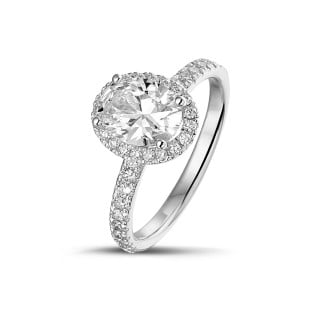
![1.00Ct halo ring in white gold with oval diamond]() Bestseller1.00Ct halo ring in white gold with oval diamondFrom € 5.578,10 (incl. 21% VAT)
Bestseller1.00Ct halo ring in white gold with oval diamondFrom € 5.578,10 (incl. 21% VAT) -
![1.00 carat solitaire cluster ring in white gold with marquise diamond]() BestsellerNew1.00 carat solitaire cluster ring in white gold with marquise diamondFrom € 4.622,20 (incl. 21% VAT)
BestsellerNew1.00 carat solitaire cluster ring in white gold with marquise diamondFrom € 4.622,20 (incl. 21% VAT) -
![0.95 carat diamond rose design ring in white gold]() NewPrincess Delphine0.95 carat diamond rose design ring in white goldFrom € 16.831,10 (incl. 21% VAT)
NewPrincess Delphine0.95 carat diamond rose design ring in white goldFrom € 16.831,10 (incl. 21% VAT) -
![1.00 carat solitaire ring with an asscher cut diamond in white gold]() Bestseller1.00 carat solitaire ring with an asscher cut diamond in white goldFrom € 4.936,80 (incl. 21% VAT)
Bestseller1.00 carat solitaire ring with an asscher cut diamond in white goldFrom € 4.936,80 (incl. 21% VAT) -
![1.00 carat solitaire ring with a cushion diamond and hidden halo in white gold]() BestsellerNew1.00 carat solitaire ring with a cushion diamond and hidden halo in white goldFrom € 4.210,80 (incl. 21% VAT)
BestsellerNew1.00 carat solitaire ring with a cushion diamond and hidden halo in white goldFrom € 4.210,80 (incl. 21% VAT)


.
How much profit do diamonds have?
Because of their intrinsic value, diamonds are crisis resistant. Even in the exceptional case of a decline, they decline the least of all raw materials. In this case you can just wait until they rise again. On average, diamonds yield a return of about 15% per year.
Two illustrative scenarios
Case A - Common retail-quality stone
Imagine a 1.00 ct round brilliant, colour G/H and clarity SI1, bought from a reputable retailer or dealer. These stones appeal to a large pool of buyers and typically resell through specialist dealers or trade platforms. Assumptions: purchase from a dealer, held for several years, resale via a specialist dealer or marketplace, and full grading documentation available. Outcome: dealer offers will commonly sit below the original retail price to allow for margin and resale risk; net proceeds therefore reflect a dealer markdown rather than retail parity. Selling via a marketplace may narrow that gap if demand is strong and presentation is excellent. Fees to expect include grading verification, marketplace or broker fees, and any shipping and insurance costs. These examples depend on market conditions and the stone’s exact features.
Case B - Investment-grade stone
Consider a larger investment-grade diamond, for example around 1.50 to 2.00 ct with top colour and clarity, bought through a specialist and accompanied by an authoritative grading report. Such stones attract collector and auction interest. Assumptions: purchased from a specialist source, held longer, and sold at auction or to a private collector. Outcome: auctions or private collector sales can sometimes achieve premiums above dealer offers for exceptional stones; results vary with timing, market appetite and provenance. Expect extra steps such as independent verification, auction commission and specialist photography. These scenarios are illustrative and show a range of possible outcomes rather than guaranteed returns.
Common fees to anticipate
- Independent grading or verification fees
- Auction commission or marketplace selling fees
- Dealer markups and markdowns when selling to or via trade professionals
All numerical examples here are illustrative. For up-to-date market trends and historical price data, consult industry summaries and diamond market reports when considering an investment.
How can I easily buy and sell diamonds?
It is best to have a certified diamond expert to do all the work. They provide the right papers and bring everything in order. Which certificates do diamond experts need? These are from internationally renowned diamond institutions such as GIA and IGI. They show that your expert is reliable. In addition, you can easily buy your diamonds online. This way you buy where and when you want.
How much do I invest in diamonds? You buy diamonds to your own preference. You decide how much you want to invest and then have the diamond dealer make a proposal based on your budget. So, you decide exactly how much you invest.
How can I resell an investment in diamonds? Sales can often be left to the diamond expert. They find a buyer for you and ensure that you get the right price. The selective liquidity of diamonds means that the more common diamonds can be sold very easily. That's the kind that you probably chose. Did you invest in a rare type of diamond? Then the liquidity is less and you better go to an auction. There the value is determined by speculation.
How resale works: channels, timing and expected spreads
When you sell diamonds, it helps to know the main channels and what each one trades off. Speed, fees and realistic prices differ between routes.
- Auction houses: Auctions put stones in front of collectors and dealers who may pay a premium for rare or highly desirable gems. The benefit is broad visibility, which can push prices above dealer offers for exceptional items. Downsides include variable results, listing and buyer fees, and the chance a stone sells below expectation if demand is weak.
- Specialist diamond dealers: Dealers and wholesalers buy often and can complete transactions quickly. For common retail-quality stones this is usually the fastest and most reliable option. Expect a wholesale-level offer that reflects dealer margins and resale risk; the advantage is liquidity and speed.
- Trade platforms and marketplaces: Online platforms connect sellers to a wide pool of buyers and typically offer listing tools and escrow services. They balance reach and convenience, but platform fees and the need for strong photos and documentation are factors. Final prices tend to fall between dealer offers and auction results.
- Private sale: Selling directly to a private buyer can yield good prices when you find the right collector or end user. This route can cut some fees, but it takes time and requires careful vetting; provenance and trust matter.
Typical timelines
Immediate to days: Specialist dealers and some trade platforms can buy quickly once paperwork and inspection are complete. Weeks to months: Private sales and marketplace listings may take longer while you find the right buyer. Months: Auctions usually require cataloguing and a bidding period, so expect a longer timeline when using that route.
Expected spreads (quality-dependent)
Retail to dealer: commonly a clear markdown, reflecting dealer margins and resale risk. Auction or collector sale: can exceed dealer offers for rare or desirable stones, though results are less certain. Marketplace/private sale: often sits between dealer and auction outcomes, depending on exposure and demand. These ranges illustrate possible outcomes; final prices depend on the stone’s quality, size, certification and market interest at the time of sale.
Required documents and why they matter
Grading reports from recognised laboratories such as GIA or IGI are important. A lab report links the stone’s characteristics to an independently verifiable record, which shortens due diligence and raises buyer confidence. Keep the original invoice and any prior appraisals or provenance notes. Buyers and platforms use these to confirm identity, measurements and features quickly.
Practical seller checklist
- Certificate and lab report number, with clear scans or images of the document.
- Original invoice or proof of purchase where available.
- High-quality photos showing the stone from multiple angles and, if relevant, any inclusions or distinguishing marks.
- Notes on provenance or previous appraisals.
- Confirmation that measurements and proportions on listings match the certificate.
Preparing these items in advance speeds the resale process and reduces friction with buyers, whether you choose a dealer, platform, private sale or auction.
Certification, provenance and avoiding fraud
Reliable documentation is the basis of a liquid diamond investment. Independent grading reports from recognised laboratories, such as GIA or IGI HRD, are the primary reference buyers use to verify a stone’s attributes. On any certificate, check the lab report number, measurements, weight and the plotted clarity diagram to ensure they match the physical stone.
Verification steps
- Confirm the report online where laboratories allow lookup by report number.
- Compare proportions, table and depth percentages, and the plotted inclusion map with photos or a loupe inspection to ensure consistency.
- For high-value stones, consider independent verification from a qualified gemmologist before sale to remove doubts that can reduce offers.
Common red flags
- Missing or inconsistent documentation, for example a certificate that does not match the stone’s listed measurements.
- Vague provenance or inability to provide a prior invoice or purchase record.
- Certificates from unknown labs with no verifiable lookup method.
Keeping clear records, good-quality images and verifiable certificates reduces friction in resale and builds buyer confidence. For investment-grade purchases, prioritise stones with transparent provenance and laboratory reports that buyers can independently verify.
-
Fabienne Rauw
-
BAUNAT Antwerp
-
-
Fabienne, manager of the German market is able to guide every client with finding the right jewel. She takes care of most of the German orders, but also takes other task on her plate. Thanks to her six years of experience at BAUNAT she acquainted well with the product and the marketing around it. Her degree in PR ensures that BAUNAT is well presented across all media channels. For anyone looking into a new investment opportunity, Fabienne is the perfect guide in this process. No question will be left unanswered, and she will help you every step of the way.
Selected Bespoke Projects
• Eternal Bloom bespoke engagement concept - Role: project lead for client briefing and prototype coordination. Fabienne translated personal design references into a 3D-printed prototype, supervised stone selection and ensured the finished piece matched the client’s vision and comfort preferences.
• Personalized anniversary necklace - Role: design coordinator and quality overseer. She managed the custom design process from the initial sketch to final polishing, liaising between client and workshop to preserve proportions and finish.
• Reimagined heirloom ring restoration and redesign - Role: client consultant and technical coordinator. Fabienne guided the client through options to modernize setting details while keeping sentimental elements, delivering a wearable result that respected the original piece.
Her hands-on involvement in bespoke commissions ensures each custom order has a clear brief, careful prototype review and close follow-up with the workshop, so clients receive a tailored jewel that meets both aesthetic and practical expectations.
Professional enquiries
For speaking engagements, press requests or research collaborations, please send your message to BAUNAT’s communications team with the subject line: "Fabienne Rauw - Professional Enquiry." Include a brief description of the request and any relevant dates or documents. The communications team will route enquiries to Fabienne and provide guidance on next steps.
Fabienne, manager of the German market is able to guide every client with finding the right jewel. She takes care of most of the German orders, but also takes other task on her plate. Thanks to her six years of experience at BAUNAT she acquainted well with the product and the marketing around it. Her degree in PR ensures that BAUNAT is well presented across all media channels. For anyone looking into a new investment opportunity, Fabienne is the perfect guide in this process. No question will be left unanswered, and she will help you every step of the way.
Selected Bespoke Projects
• Eternal Bloom bespoke engagement concept - Role: project lead for client briefing and prototype coordination. Fabienne translated personal design references into a 3D-printed prototype, supervised stone selection and ensured the finished piece matched the client’s vision and comfort preferences.
• Personalized anniversary necklace - Role: design coordinator and quality overseer. She managed the custom design process from the initial sketch to final polishing, liaising between client and workshop to preserve proportions and finish.
• Reimagined heirloom ring restoration and redesign - Role: client consultant and technical coordinator. Fabienne guided the client through options to modernize setting details while keeping sentimental elements, delivering a wearable result that respected the original piece.
Her hands-on involvement in bespoke commissions ensures each custom order has a clear brief, careful prototype review and close follow-up with the workshop, so clients receive a tailored jewel that meets both aesthetic and practical expectations.
Professional enquiries
For speaking engagements, press requests or research collaborations, please send your message to BAUNAT’s communications team with the subject line: "Fabienne Rauw - Professional Enquiry." Include a brief description of the request and any relevant dates or documents. The communications team will route enquiries to Fabienne and provide guidance on next steps.