







Features:
-
Category:
-
Posted at:
-
Author:
- Stephanie Hesters
-
BAUNAT Antwerp
-


-
Reading time:10 minutes
In this article:
Advice for the purchase of your diamond jewellery
Buying jewelry is an important investment that implies a smart buying decision, informed and rational. You will find below the main information to know before buying a diamond jewel.
Read summary
How can you make a smart diamond jewelry purchase?
When investing in diamond jewelry, understanding the 4C's - carat, cut, color, and clarity - is essential as these factors determine a diamond's value. While carat measures weight, cut influences sparkle and brilliance, making it the most crucial factor. Natural color ranges from colorless (most prestigious) to various hues, with D, E, and F grades being the rarest. Clarity depends on the presence of natural inclusions.
A certificate from respected laboratories like GIA, HRD, or IGI provides formal documentation of these qualities and serves as the diamond's identification. The stone's shape (round, princess, marquise, oval, or pear) comes down to personal preference, while the mounting and setting enhance its overall appearance.
For the best investment, focus on a well-cut, certified diamond that maximizes brilliance and beauty, regardless of size.

Most viewed diamond jewels
-
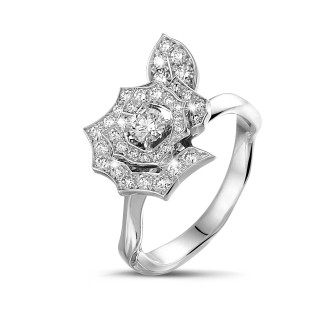
![0.95 carat diamond rose design ring in white gold]() NewPrincess Delphine0.95 carat diamond rose design ring in white goldFrom € 16.831,10 (incl. 21% VAT)
NewPrincess Delphine0.95 carat diamond rose design ring in white goldFrom € 16.831,10 (incl. 21% VAT) -
![0.50 carat diamond rose design ring in white gold]() NewPrincess Delphine0.50 carat diamond rose design ring in white goldFrom € 10.563,30 (incl. 21% VAT)
NewPrincess Delphine0.50 carat diamond rose design ring in white goldFrom € 10.563,30 (incl. 21% VAT) -
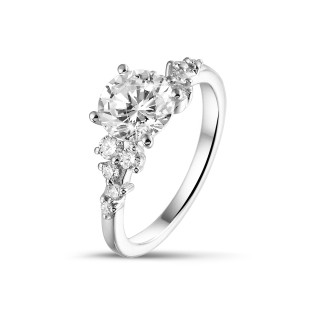
![1.00 carat solitaire cluster ring in white gold with a round diamond]() Bestseller1.00 carat solitaire cluster ring in white gold with a round diamondFrom € 4.343,90 (incl. 21% VAT)
Bestseller1.00 carat solitaire cluster ring in white gold with a round diamondFrom € 4.343,90 (incl. 21% VAT) -
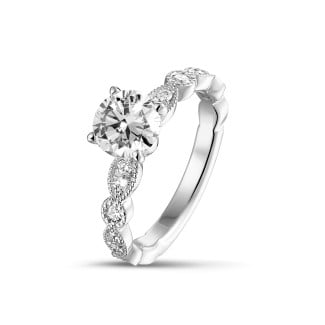
![1.00 carat solitaire stackable ring in white gold with a round diamond with marquise design]() 1.00 carat solitaire stackable ring in white gold with a round diamond with marquise designFrom € 4.380,20 (incl. 21% VAT)
1.00 carat solitaire stackable ring in white gold with a round diamond with marquise designFrom € 4.380,20 (incl. 21% VAT) -
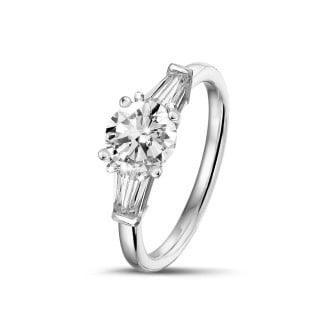
![1.00 carat trilogy ring in white gold with a round diamond and tapered baguettes]() Bestseller1.00 carat trilogy ring in white gold with a round diamond and tapered baguettesFrom € 7.332,60 (incl. 21% VAT)
Bestseller1.00 carat trilogy ring in white gold with a round diamond and tapered baguettesFrom € 7.332,60 (incl. 21% VAT)

Learning about the 4C’s
The 4C’s consist of carat, cut, color and clarity. 4C’s are important because they determine the intrinsic value of the diamond.
The weight of a diamond is measured in carat, each carat has 100 points and one carat equals to 0.20 grams. Although the largest diamond is not necessarily the most expensive.
Unlike the form aspect (princess, marquise, radiant, oval and emerald), the size refers to the proportion of the stone. A well-cut diamond will be more sparkly; it will offer the greatest shine and will have more fire.
Color is the only component of the 4C’s imposed by nature. The prestige of a diamond depends on its color (colorless). The colors E, D and F are very rare.
The clarity is influenced by the presence of inclusions, due to the presence of minor natural material traces.
The purchase must take into account all of the 4C’s. However, no matter whether the diamond is large or small, the cut remains the most important factor in releasing all of the brilliance and beauty that a diamond has to offer.
Practical buyer’s guide: 5 steps to a confident purchase
Buying a diamond should be both an emotional and a well-informed decision. This practical guide sets out clear steps you can use to compare offers, check quality and complete the purchase with confidence. Keep the checklist close when you speak with sellers, review certificates and inspect photos or videos.
Diamond jewellery buying checklist: 5 practical steps
1. Confirm metal purity and hallmarking
Baunat works exclusively with 18Kt and higher. Confirm the metal type, its purity and the visible hallmark on the piece. The correct metal and finishing affect durability and appearance, so verify these details before you buy.
2. Check the setting and mounting suitability
Examine how the setting affects the face-up appearance and the security of the stone. Some settings reduce visible surface or make cleaning harder. Avoid tension settings for loose stones; they have a higher risk of stones coming loose over time.
3. Understand return, resizing and warranty policies
Clarify the seller’s return, resizing and warranty terms before you finalise the purchase. Confirm whether resizing is possible for the chosen design and how the warranty covers manufacturing or setting faults. Request these terms in writing rather than relying on verbal assurances.
4. Confirm stone guarantees and aftercare support
Ask if the diamond carries a guarantee, an inscribed report number or 20 years care options. Knowing what post-purchase support is available, including professional cleaning and inspection, makes maintenance simpler and protects your purchase.
5. How to evaluate a certificate quickly
Start by confirming the lab name and the unique report number printed on the certificate. Check that the carat weight, reported measurements and the report number match the seller’s listing and any photos. If a cut grade is present, treat it as a strong indicator of performance; when absent, pay closer attention to proportions and images. Authenticate the report by entering the unique report number on the issuing laboratory’s verification page. Warning signs include mismatched numbers, missing details or a lab name that is hard to verify. If no certificate exists, request additional in-hand documentation and consider choosing a certified alternative.
Conclusion
A methodical approach reduces uncertainty when buying diamond jewellery. Use the checklist, verify certificates and ask for clear photos and written policies. If anything remains unclear, ask an expert for help so you can proceed with confidence.
The certificat
The certificat by an independent and renowned gemological laboratory delivers formal evidence in writing of the qualities of the diamond. The certificat is the identification of the diamond. This document gives a precise summary of the scores awarded to the diamond for each of the 4C's and is thus a representation of it's value. Certificats by GIA, HRD and IGI are equal in value.
Certificate authentication mini-guide
Match the certificate number on the document to the number quoted by the seller. Enter that report number on the laboratory’s online verification tool to confirm the report is genuine. Check the lab name, carat weight and the report’s description of the stone; these should align with the seller’s listing and any photos. Red flags include a missing report number, discrepancies between listed and documented weights, or a lab name that is hard to verify online. If a seller cannot supply a verifiable certificate, ask for additional proof of the stone’s identity or choose a certified alternative to avoid uncertainty.
The shape
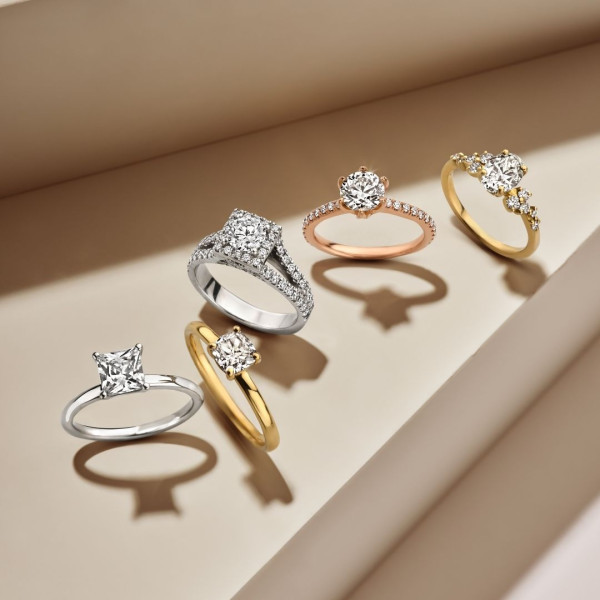
The stone shape is a matter of style and personal taste. Everyone can find a stone shape of their taste: round, princess, marquise, oval or pear.
The mounting and the setting play a very important role, but the visible surface from the top is the key factor. A polished diamond of reasonable size, and certified by a laboratory as "very good" or "excellent" will be an excellent choice.
Brillance and beauty
The ability to reflect light is a feature that contributes to the beauty, radiance and brilliance of the gem. Through its brilliance, the gem captures the eye, showing all its glory. The jewelry honors the sparkler and adds a final touch revealing its elegance and natural charm.
On the BAUNAT website, you will find a selection of quality jewelry with diamonds, be it a necklace, a ring or a pair of earrings. The BAUNAT experts are at your disposal to answer all of your questions.
Case: Certificate mismatch - what went wrong
A customer ordered a round brilliant that matched the online description but, on receipt, the report number on the paper document did not match the engraving on the girdle. The mismatch showed the document did not belong to that stone. The buyer withheld final acceptance until the seller produced the correct, verifiable report and up-to-date photos showing the inscribed number. Lesson: always confirm the report number on the stone and authenticate it with the issuing laboratory.
Case: Sizing surprise and how it was resolved
A customer ordered a ring in their usual size but found the fit tighter than expected because the shank was thicker than standard. The issue was resolved by agreeing on a resizing under the store’s policy and choosing a shank profile that matched the customer’s comfort needs. Lesson: ask about shank thickness and whether the design affects fit before purchase, and confirm resizing options in writing.
-
Stephanie Hesters
-
BAUNAT Antwerp
-
-
As the Head of Diamond Buying at BAUNAT, Stephanie has an extensive knowledge of the diamond and the evolution of diamond prices. Thanks to her broad product knowledge gained throughout her years at BAUNAT and the Diamond Foundation Course by De Beers, Stephanie advises our customers interested in the investment side of diamonds to optimize every investment. To support her skills she has a bachelor’s degree in Business Management together with her master’s in Communication.
About Stephanie Hesters (also known as Stephanie Lasters)
Stephanie Hesters, sometimes listed online as Stephanie Lasters, is Head of Diamond Buying at BAUNAT. She manages diamond sourcing and valuation, advises clients on market trends and pricing, and helps those looking for investment-grade stones. She completed the Diamond Foundation Course by De Beers and holds a bachelor’s degree in Business Management and a master’s in Communication.
Selected projects & collaborations
• Eternal Bloom Collection with Princess Delphine of Saxe-Coburg (2026), curator and project lead - guided creative direction and diamond selection for an exclusive collection that blends classical motifs with contemporary craftsmanship.
• Investment Diamonds Advisory Series (2024), author and presenter - developed client-facing guides and presentations on diamond valuation and market dynamics for private buyers and collectors.
• BAUNAT Editorial Features and Product Launches (2022–2025), contributor - worked with design and marketing teams to shape product narratives and ensure technical accuracy in launch materials and editorial content.
As the Head of Diamond Buying at BAUNAT, Stephanie has an extensive knowledge of the diamond and the evolution of diamond prices. Thanks to her broad product knowledge gained throughout her years at BAUNAT and the Diamond Foundation Course by De Beers, Stephanie advises our customers interested in the investment side of diamonds to optimize every investment. To support her skills she has a bachelor’s degree in Business Management together with her master’s in Communication.
About Stephanie Hesters (also known as Stephanie Lasters)
Stephanie Hesters, sometimes listed online as Stephanie Lasters, is Head of Diamond Buying at BAUNAT. She manages diamond sourcing and valuation, advises clients on market trends and pricing, and helps those looking for investment-grade stones. She completed the Diamond Foundation Course by De Beers and holds a bachelor’s degree in Business Management and a master’s in Communication.
Selected projects & collaborations
• Eternal Bloom Collection with Princess Delphine of Saxe-Coburg (2026), curator and project lead - guided creative direction and diamond selection for an exclusive collection that blends classical motifs with contemporary craftsmanship.
• Investment Diamonds Advisory Series (2024), author and presenter - developed client-facing guides and presentations on diamond valuation and market dynamics for private buyers and collectors.
• BAUNAT Editorial Features and Product Launches (2022–2025), contributor - worked with design and marketing teams to shape product narratives and ensure technical accuracy in launch materials and editorial content.