










Black Friday
Code: BLACKFRIDAY2026
This Black Friday, elevate your diamond jewel with a complimentary upgrade in Colour, Clarity or Cut. Enjoy an exceptional diamond at no additional cost. Exclusive offer until 30 November 2026.


When it comes to fine jewellery, every detail matters — right down to the clasp. A bracelet clasp is not merely a functional component; it is an integral part of the overall aesthetic and can significantly enhance the elegance and security of your cherished pieces. For jewellery enthusiasts, fashion lovers, and discerning bracelet wearers, understanding the various types of clasps can elevate your appreciation and selection of these exquisite accessories.
A bracelet clasp is more than just a functional component—it's an essential design element that ensures both security and elegance. The right clasp can significantly enhance your jewelry's aesthetics while keeping precious pieces safely on your wrist.
Several clasp options exist, each with distinct advantages. The carabiner and spring ring clasps offer simplicity and reliability for delicate bracelets. Box clasps provide maximum security for wider bracelets and can incorporate gemstones. Magnetic clasps combine convenience with security, while toggle clasps create distinctive visual appeal.
When selecting a clasp, consider both practical aspects—how often you'll wear the bracelet and how easily you can operate the mechanism—and aesthetic elements that complement the overall design. At BAUNAT, custom-made bracelets allow you to personalize every detail, including the perfect clasp for your unique style.

.
A lobster clasp works with a small hinged arm that opens when a lever is pressed and snaps back over a jump ring or eyelet when released. The mechanism is compact and reliable, which is why it is so commonly used on modern chains and bracelets.
Typical uses and where it's found: Lobster clasps appear on chain bracelets, charm bracelets and pendant necklaces. They suit pieces worn daily because the mechanism is durable and can be made to match delicate or more robust designs.
Practical notes on dexterity and recommended bracelet types: Lobster clasps come in a range of sizes; smaller versions need finer motor control, while medium and large sizes are easier to handle. For charm bracelets and heavier chains a medium or larger lobster clasp improves usability without changing the look.
Quick pros/cons: Very secure when sized correctly. Versatile across many styles. Smaller variants can be fiddly for people with reduced dexterity.
A barrel clasp fastens by screwing two threaded halves together to form a continuous cylinder. The screw action hides the mechanism inside a bead-like form, producing a neat, uninterrupted line that is visually discreet.
Typical uses and where it's found: Barrel clasps are common on beaded bracelets and necklaces, particularly with pearls and gemstone strands where a subtle cylindrical finish is preferred.
Practical notes on dexterity and recommended bracelet types: Barrel clasps require a steady hand to align and twist the halves; they suit bracelets that are put on and taken off less frequently or by someone using both hands.
Quick pros/cons: Clean, discreet profile that preserves the look of beaded strands. Secure once tightened. Less convenient for one-handed fastening and can cross-thread if handled roughly.
A hook clasp uses a curved wire that slips into an eye or loop to close, while a fishhook clasp adds a small locking tongue that slides into a slender box for extra security. Both rely on shape rather than springs and offer a straightforward mechanical solution.
Typical uses and where it's found: Hook and fishhook variants appear on vintage-style pieces, pearl bracelets and lightweight chains. The fishhook's added tongue makes it a common choice for pearls and heirloom jewellery where a low-profile but secure closure is needed.
Practical notes on dexterity and recommended bracelet types: Hook clasps are easy to manipulate and often possible to fasten one-handed; fishhook clasps need a little more precision but give extra safety. They pair well with delicate, traditional designs.
Quick pros/cons: Simple, low-maintenance mechanism. Fishhook improves security without adding bulk. Plain hooks can slip if not properly seated.
Slide clasps (also called tube or box-slide) lock by inserting a tongue into a recessed channel and are commonly used for multi-strand bracelets. Fold-over clasps hinge closed over a bar or lip and are standard on many watch bracelets. Multi-strand clasps combine several channels or hooks to keep multiple rows aligned.
Typical uses and where it's found: Slide and multi-strand clasps suit bracelets made from several rows of beads, pearls or chains. Fold-over clasps are frequent on rigid bracelets and metal link straps where a flat, secure closure is needed.
Practical notes on dexterity and recommended bracelet types: Slide and multi-strand closures require careful alignment of each strand when fastening but create a neat, integrated finish. Fold-over clasps usually include a secondary safety and are simple to operate once aligned.
Quick pros/cons: Slide and multi-strand options keep multiple strands tidy and secure. Fold-over clasps are robust and low-profile for wider bracelets. Both types can be fiddly until you become familiar with their alignment and locking action.
When selecting a bracelet clasp, consider both the aesthetic and practical aspects. Think about how often you will wear the bracelet, the level of security you require, and how easily you can operate the clasp. Additionally, the clasp should complement the overall design and craftsmanship of the bracelet, enhancing its beauty and functionality.
Clasp sizes are usually described as small, medium or large rather than fixed millimetre standards, but as a rule of thumb: small clasps suit fine chains and delicate bracelets, medium clasps suit most everyday chain and charm bracelets, and large clasps are for heavy chain work or pieces with substantial weight. When choosing a lobster or spring ring clasp, make sure the scoop or lever is proportionate to the bracelet links so the clasp can engage without forcing the eyelet.
For those with limited hand mobility, magnetic clasps and larger lobster clasps are generally easiest to manage one-handed. Toggle and bolo clasps can also be simple to operate, but they need correct sizing to lock securely under tension.
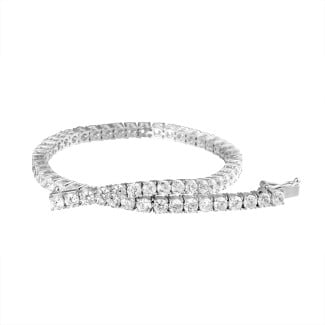
See also our guide on How to put on a tennis bracelet.
Magnetic clasps are easiest for one-handed fastening but can be larger and therefore more visible. Lobster and fold-over clasps offer a balance between security and everyday usability. Spring rings are compact and discreet but can be harder to operate at very small sizes. Toggle and bolo styles are attractive and can be secure when proportioned correctly, though toggles rely on the right bar-to-eyelet ratio. Barrel and slide/multi-strand clasps give a tidy finish for beads and pearls but usually need two-handed dexterity.
Regularly test any clasp before wearing by giving it a gentle tug to ensure the mechanism holds. Listen for a clear click on closures that should snap shut, and check threaded closures for smooth rotation without cross-threading. Avoid exposing mechanisms to saltwater and aggressive chemicals, and if a clasp shows signs of loosening, seek professional attention rather than makeshift repairs. For magnetic clasps, keep magnets free of ferrous debris and check that the holding strength still suits the bracelet's weight.
Fabienne, manager of the German market is able to guide every client with finding the right jewel. She takes care of most of the German orders, but also takes other task on her plate. Thanks to her six years of experience at BAUNAT she acquainted well with the product and the marketing around it. Her degree in PR ensures that BAUNAT is well presented across all media channels. For anyone looking into a new investment opportunity, Fabienne is the perfect guide in this process. No question will be left unanswered, and she will help you every step of the way.
• Eternal Bloom bespoke engagement concept - Role: project lead for client briefing and prototype coordination. Fabienne translated personal design references into a 3D-printed prototype, supervised stone selection and ensured the finished piece matched the client’s vision and comfort preferences.
• Personalized anniversary necklace - Role: design coordinator and quality overseer. She managed the custom design process from the initial sketch to final polishing, liaising between client and workshop to preserve proportions and finish.
• Reimagined heirloom ring restoration and redesign - Role: client consultant and technical coordinator. Fabienne guided the client through options to modernize setting details while keeping sentimental elements, delivering a wearable result that respected the original piece.
Her hands-on involvement in bespoke commissions ensures each custom order has a clear brief, careful prototype review and close follow-up with the workshop, so clients receive a tailored jewel that meets both aesthetic and practical expectations.
For speaking engagements, press requests or research collaborations, please send your message to BAUNAT’s communications team with the subject line: "Fabienne Rauw - Professional Enquiry." Include a brief description of the request and any relevant dates or documents. The communications team will route enquiries to Fabienne and provide guidance on next steps.
Choosing a diamond ring is not an easy task. What factors do I have to take into account? Let the experts at BAUNAT guide you.
How do I choose the perfect metal for diamond jewellery? White gold or platinum? Find out more at BAUNAT.
Choosing a diamond ring is not an easy task. What factors do I have to take into account? Let the experts at BAUNAT guide you.
This Black Friday, elevate your diamond jewel with a complimentary upgrade in Colour, Clarity or Cut. Enjoy an exceptional diamond at no additional cost. Exclusive offer until 30 November 2026.


