







Features:
-
Category:
-
Posted at:
-
Author:
- An Van Puyvelde
-
An Van Puyvelde - Order & Administration Manager
-


-
Reading time:8 minutes
In this article:
- The Allure of Black Diamonds
- The Origin of Black Diamonds: A Celestial Connection
- Types of Black Diamonds: Natural, Treated and Lab-Grown
- What Does a Black Diamond Signify?
- The Rising Demand for Black Diamond Engagement Rings
- The Value of Black Diamonds
- Structure, Toughness and Working Carbonado
- Black Diamonds in Handcrafted BAUNAT Jewellery
BAUNAT’s Black Diamond Engagement Rings - A Unique Way to Express Love
Read summary
Are Black Diamond Engagement Rings the Perfect Choice for Unconventional Couples?
Looking for a unique symbol of love? BAUNAT offers exquisite black diamond engagement rings that blend tradition with contemporary style. These rare gems, known as carbonados, originate from Brazil and the Central African Republic, with theories suggesting they arrived via meteorite millions of years ago.
Black diamonds symbolize passion, energy, and power, making them increasingly popular for engagement rings despite their unconventional appearance. Though they absorb light differently than colorless diamonds, their rarity makes them highly desirable.
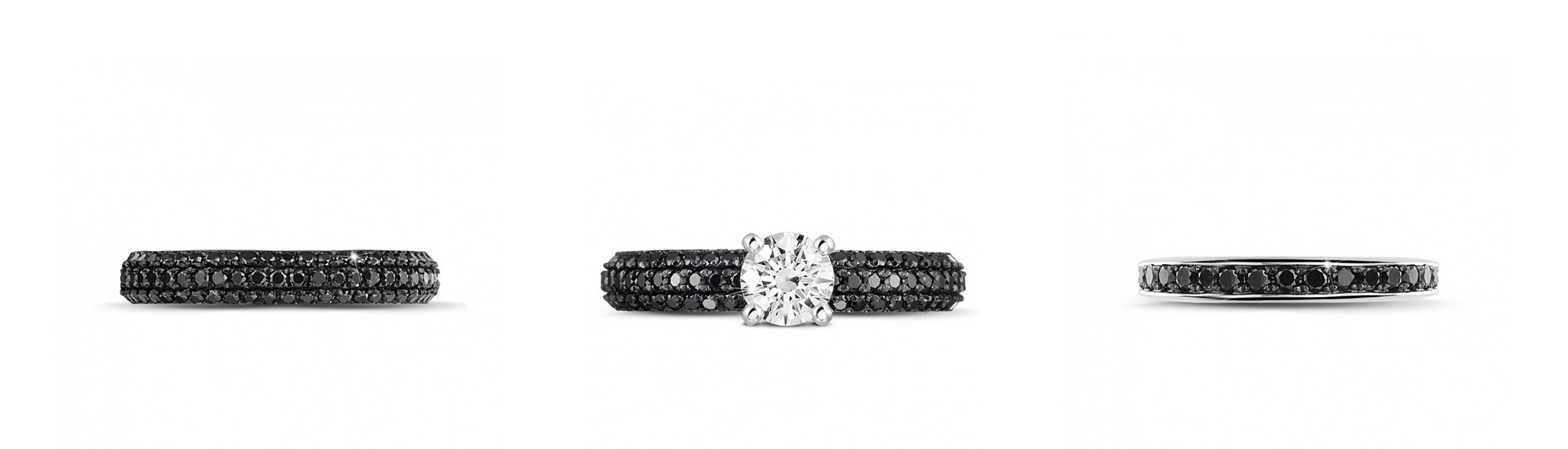
When selecting your black diamond jewelry, consider pairing it with white gold or platinum to create a striking contrast that showcases the stone's unique beauty. BAUNAT's handcrafted pieces from Antwerp can be customized to your specifications, ensuring your ring perfectly captures your distinctive love story.
Most viewed diamond jewels
-
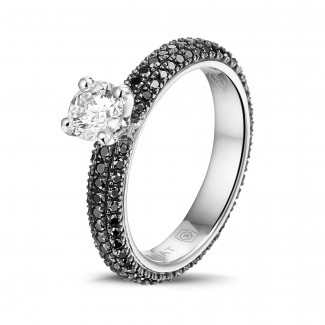
![0.50 carat solitaire ring (half set) in white gold with black diamonds]() 0.50 carat solitaire ring (half set) in white gold with black diamondsFrom USD 5.100,00 (excl. VAT)
0.50 carat solitaire ring (half set) in white gold with black diamondsFrom USD 5.100,00 (excl. VAT) -
![0.50 carat solitaire ring (full set) in white gold with black diamonds]() 0.50 carat solitaire ring (full set) in white gold with black diamondsFrom USD 6.050,00 (excl. VAT)
0.50 carat solitaire ring (full set) in white gold with black diamondsFrom USD 6.050,00 (excl. VAT) -
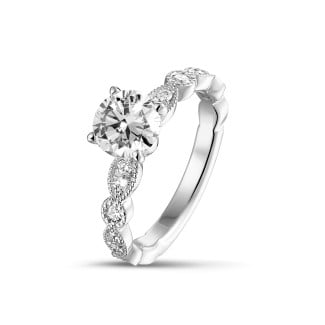
![1.00 carat solitaire stackable ring in white gold with a round diamond with marquise design]() 1.00 carat solitaire stackable ring in white gold with a round diamond with marquise designFrom USD 4.100,00 (excl. VAT)
1.00 carat solitaire stackable ring in white gold with a round diamond with marquise designFrom USD 4.100,00 (excl. VAT) -
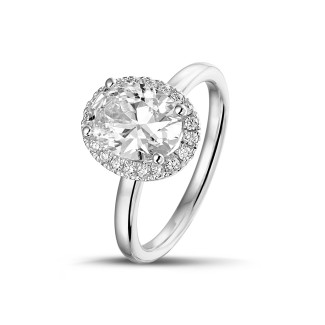
![1.00Ct halo ring in white gold with oval diamond]() Bestseller1.00Ct halo ring in white gold with oval diamondFrom USD 4.690,00 (excl. VAT)
Bestseller1.00Ct halo ring in white gold with oval diamondFrom USD 4.690,00 (excl. VAT) -
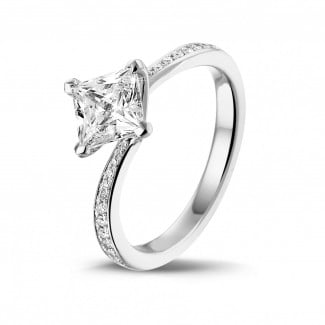
![1.00 carat solitaire ring in white gold with princess diamond and side diamonds]() Bestseller1.00 carat solitaire ring in white gold with princess diamond and side diamondsFrom USD 3.940,00 (excl. VAT)
Bestseller1.00 carat solitaire ring in white gold with princess diamond and side diamondsFrom USD 3.940,00 (excl. VAT)
The Allure of Black Diamonds

The Origin of Black Diamonds: A Celestial Connection
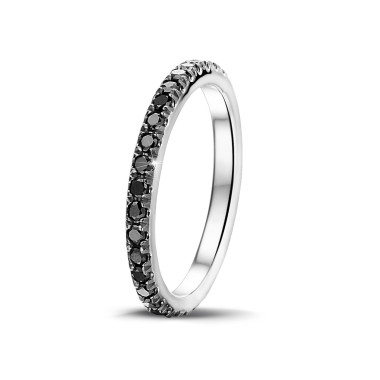
Types of Black Diamonds: Natural, Treated and Lab-Grown
Black diamonds you’ll see for sale generally belong to one of three groups: natural carbonado, treated black diamonds, and lab-grown black diamonds. Natural carbonado are true polycrystalline stones formed in nature; they keep the complex mineral mix of their origin and occur only in a few places. Treated black diamonds begin as natural stones but receive surface or structural procedures to intensify or even out the black colour. Lab-grown black diamonds are produced in controlled conditions to reproduce the black look without being mined.Common treatment methods and what they mean
Dyeing or impregnation uses the stone’s pores and tiny fractures introduce colourants; the result can be an even black surface, but it may wear or change with aggressive cleaning. Irradiation alters colour by changing the crystal lattice; the change can be stable, but it is an artificial modification that should be disclosed. High-pressure, high-temperature treatment (HPHT) can also darken or alter a diamond by affecting internal defects; it is a laboratory process used to improve or standardise appearance. Each method changes how a stone looks and has implications for disclosure, long-term stability and market value, which is why clear information about treatments matters to buyers.Rarity and pricing implications
Natural carbonado remain the rarest of the three categories, and that scarcity usually carries a higher relative premium compared with treated or lab-grown alternatives. Treated black diamonds are common in retail because treatment lets more stones present a uniform black face. Lab-grown black diamonds can reproduce the visual effect at scale, placing them in a different supply and price bracket than natural carbonado. Expect noticeable differences in rarity and relative value between natural carbonado, treated stones and lab-grown options.BAUNAT’s sourcing and disclosure practice
BAUNAT records the nature of the stones used in its jewellery so customers can make an informed choice. When a piece contains a natural carbonado this appears in the stone information; if a black diamond has been treated or is lab-grown, that is stated as well. This factual approach sets clear expectations without making a blanket value judgment across categories.
What Does a Black Diamond Signify?

The Rising Demand for Black Diamond Engagement Rings
The Value of Black Diamonds
The Majestic Black Diamonds in History
Structure, Toughness and Working Carbonado
Carbonado is not a single crystal like most gem diamonds but a polycrystalline aggregate: a mosaic of tiny diamond crystallites bound with other carbon phases. That microstructure brings notable porosity and a fine-grained texture, and importantly it increases fracture toughness compared with many monocrystalline gem diamonds. Toughness describes resistance to crack propagation; hardness measures resistance to surface indentation. Carbonado can be hard at the microscopic scale while resisting breakage better than some single-crystal stones.
Those material differences matter when preparing carbonado for jewellery. Cutting and polishing are often more challenging because the stone’s many internal boundaries react differently under a cutter; achieving a high polish or faceted finish can require specialised techniques and experienced lapidaries. Historically, the toughness and aggregate structure led many carbonados to industrial use rather than gemstone use. Today, when carbonado is set in rings, cutters and setters take extra care with sawing, shaping and the final polish to reveal the best surface without creating stress points.
For settings and long-term wear, the distinction between toughness and hardness guides sensible choices. A setting that protects the girdle and major facets reduces the chance of impact damage to any faceted or shaped carbonado. Bezel styles and protective prongs that surround the stone provide that physical security while still showing the dark sparkle; by contrast, designs that leave the stone very exposed increase the likelihood of contact with hard surfaces. We do not recommend tension settings; choose mountings that cradle and protect the stone and that allow a professional setter to secure it without uneven stress.
Care note
Carbonado benefits from the same basic care as other diamonds: gentle cleaning with mild soap and water, avoid harsh chemicals that could affect surface treatments, and periodic inspection by a trusted jeweller to confirm the setting remains secure. Black Diamonds in Handcrafted BAUNAT Jewellery

Choosing the Perfect Metal for Your Black Diamond
With this updated information about black diamonds and BAUNAT’s collection of black diamond engagement rings, we hope you'll be inspired to embrace your unique love story with our handcrafted pieces. After all, BAUNAT is all about unveiling natural beauty.


-
An Van Puyvelde
-
An Van Puyvelde - Order & Administration Manager
-
-
An supervises BAUNAT’s order processing and logistics, working closely with the internal order team to ensure a seamless customer experience. She plays a key role in coordinating production timelines and maintaining clear communication with clients throughout the entire process. With a strong focus on precision and reliability, An is dedicated to delivering each piece on time while keeping customers fully informed, contributing to BAUNAT’s high standard of service and customer satisfaction.
An supervises BAUNAT’s order processing and logistics, working closely with the internal order team to ensure a seamless customer experience. She plays a key role in coordinating production timelines and maintaining clear communication with clients throughout the entire process. With a strong focus on precision and reliability, An is dedicated to delivering each piece on time while keeping customers fully informed, contributing to BAUNAT’s high standard of service and customer satisfaction.