





Features:
-
Category:
-
Posted at:
-
Author:
- Kim Wouters
-
BAUNAT Antwerp
-


-
Reading time:10 minutes
In this article:
Investing in Sparkles: Transforming Gifts into Assets through Jewelry and Diamonds
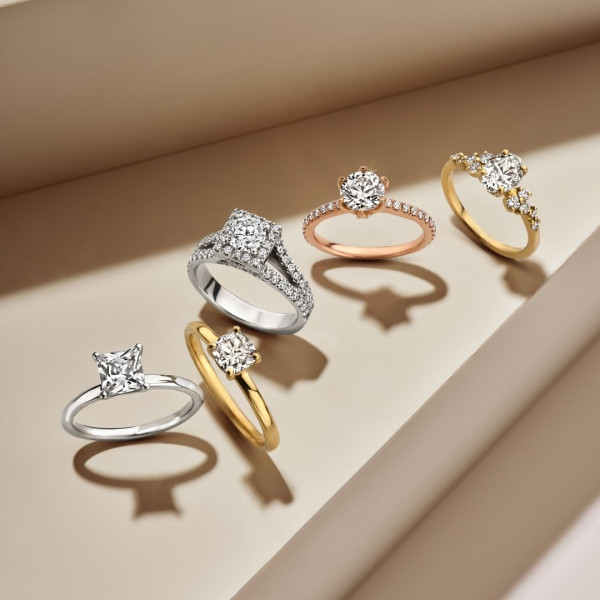
Delighting in the purchase of jewelry and diamonds is an affair many individuals enjoy. Irrespective of the reason - be it a significant event, a gift, or a simple personal indulgence - justifying such purchases seems needless to us. Apart from being spectacular adornments, these pieces often tell a historical tale, having been handed down through generations. Their enduring value and the fluctuating prices make them ideal investment options. Here's why.
Read summary
Can jewelry and diamonds be more than beautiful gifts?
Looking to diversify your investments? Jewelry and diamonds offer a unique opportunity to transform beautiful gifts into valuable assets. Financial experts recommend splitting investments into thirds: real estate, fixed-interest securities, and movable assets or commodities - where jewelry and diamonds shine.
These sparkly investments provide several advantages: they require no formal registration, offering anonymity; they protect against inflation and market crashes; and they're universally recognized as alternative currencies that maintain value globally. As portable, low-maintenance items, they're practical investments that can be safely stored with minimal costs.
BAUNAT specializes in diamond jewelry investments, offering expert guidance and competitive pricing for those looking to allocate part of their portfolio to these precious assets that combine aesthetic beauty with long-term value.

Most viewed diamond jewels
-
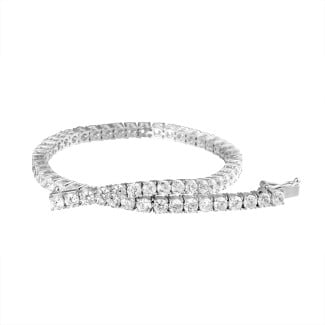
![3.50 carat diamond tennis bracelet in white gold]() Bestseller3.50 carat diamond tennis bracelet in white goldFrom USD 6.160,00 (excl. VAT)
-
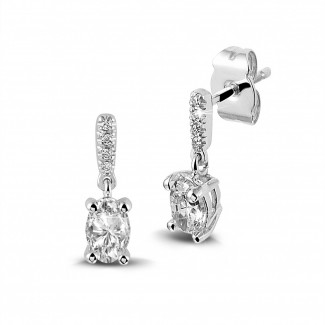
![0.94 carat earrings in white gold with oval diamonds]() 0.94 carat earrings in white gold with oval diamondsFrom USD 3.580,00 (excl. VAT)
-
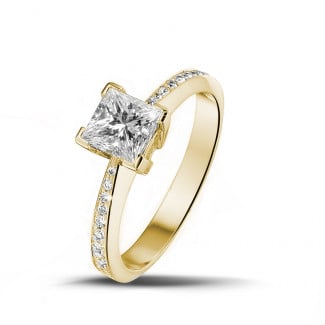
![1.00 carat solitaire ring in yellow gold with princess diamond and side diamonds]() Bestseller1.00 carat solitaire ring in yellow gold with princess diamond and side diamondsFrom USD 3.650,00 (excl. VAT)
-
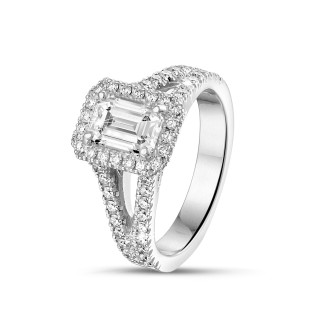
![1.00 carat solitaire ring in white gold with an emerald cut diamond and side diamonds]() Bestseller1.00 carat solitaire ring in white gold with an emerald cut diamond and side diamondsFrom USD 6.660,00 (excl. VAT)
-
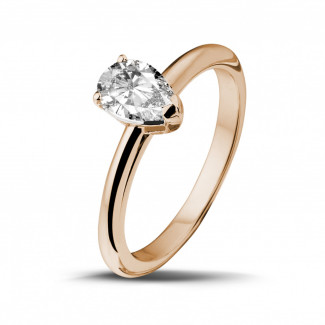
![1.00 carat solitaire ring in red gold with pear shaped diamond]() 1.00 carat solitaire ring in red gold with pear shaped diamondFrom USD 4.130,00 (excl. VAT)
.
Unveiling the Investment Potential of Gifts
Investments are highly commended as they provide a certain amount of economic security, particularly in tough times. However, identifying the right investment avenues can be challenging, especially if financial jargon confounds you.
An elementary agreement among most people is that investments should be well-distributed, allowing for risk diversification. A generally recommended investment mix comprises of one-third in real estate, another third in fixed-interest securities, and the remaining in movable assets or commodities. Commodities are commercial goods or raw materials that institutions or individuals trade. This is where jewelry and diamonds appear on the scene, serving as the ideal movable commodities with an array of advantages outweighing the downsides.
Concrete examples and realistic risk considerations
To show how jewellery investments can play out, consider two scenarios. First, an investor buys a certified 1.2 carat round brilliant diamond in a simple mounting and sells it to a reputable dealer after two years. The sale is quick and avoids listing or consignment costs, but the dealer’s purchase price reflects wholesale pricing and the seller receives a noticeably lower net amount than the original retail outlay. Second, a comparable certified stone is consigned to a specialist auction. After a marketing period and competitive bidding, the hammer price approaches broader market values, but the seller waits several months and pays consignor fees and any marketing charges before receiving proceeds. These contrasts show the trade-off between speed and net price: rapid liquidity usually means accepting a lower net, while patient routes can approach market value but carry time and fee uncertainty.
Risks specific to jewellery investments deserve frank acknowledgement. Market demand can shift with fashion and collector preferences; what is sought after today may lose appeal over years. Vintage pieces with provenance can command premiums, but contemporary designs may depreciate unless linked to a recognised maker or shown rarity. Condition issues, undocumented modifications or missing certificates can substantially reduce resale value. To reduce these risks, favour certified stones with verifiable documentation, keep thorough provenance and maintenance records, and consider diversification across styles and types rather than concentrating capital in one piece.
Finally, while jewellery and diamonds are portable and durable, they are not as liquid as cash or listed securities. Treat them as part of a broader, diversified allocation rather than a primary source of emergency liquidity. For investors who want to move beyond emotional value and focus on asset performance, combining careful due diligence with conservative expectation-setting yields the most reliable outcomes.
Valuation & Exit Strategies for Jewelry and Diamonds
Realistic expectations about valuation and exit mechanics are important when you treat jewellery and diamonds as investment assets. There are three common valuation perspectives, each useful for a different decision. Certified appraisal value is an expert assessment often used for insurance or replacement; it describes condition and replacement cost but rarely equals what a buyer will pay on the secondary market. Market asking prices are what sellers list on dealer sites, online platforms or in boutiques; these figures can include retail margins, design premiums and dealer mark-ups and therefore often sit above what a motivated buyer will actually pay. Replacement value shows what it would cost to recreate or repurchase an equivalent item new and can be helpful for cost-basis calculations, but it is not a reliable indicator of resale proceeds.
Resale channels differ in reach, speed and net proceeds. Selling to a specialist dealer or reputable jeweller usually delivers a fast sale and immediate payment, but dealers buy at wholesale levels to leave room for resale, so net receipts tend to be lower than retail. Auction houses, especially specialist jewellery auctions, can reach top market prices for rare or desirable pieces when competition is strong, yet consignments usually incur seller commissions and can take weeks to months from consignment to final sale. Consignment with a boutique or gallery can connect distinctive pieces with the right collectors but often involves an extended timeline and consignment fees. Online marketplaces broaden exposure and may reduce intermediary fees, but they require professional photography, careful listing and can add cross-border logistics and platform charges.
Transaction costs and price slippage matter when estimating potential returns. Expect a material gap between retail and likely resale net proceeds: dealer buy prices are typically well below retail, auction consignments deduct seller commissions and marketing fees, and online sales introduce listing and payment processing costs. These ranges depend on the piece, its certification and market demand, but allowing for some slippage prevents overly optimistic return expectations. If immediate liquidity is the priority, dealer sales give speed at the expense of price. If maximising proceeds matters more, auctions or patient private sales can approach market value but require time and accept uncertainty.
Timeline expectations vary by channel. A direct sale to a dealer or institution can be completed in days, while auction consignments and targeted private sales can take weeks or months to reach a satisfactory result. For rare or high-value items, plan for a multi-month process; everyday pieces typically move faster but for lower net proceeds.
Practical preparation improves outcomes. Before selling, assemble the piece’s certificate and any prior appraisals, gather provenance or receipts, and obtain high-resolution, professional photographs. A current condition report and an independent appraisal focused on resale (not just insurance replacement) help set realistic price expectations. Keep records of servicing or stone replacements, and be transparent about provenance to preserve buyer confidence.
Action checklist before sale
- Locate the original certificate/report and note any document numbers.
- Secure prior appraisals, receipts or provenance documents.
- Commission professional photos that show hallmarks and condition details.
- Obtain a current, independent resale-focused appraisal for high-value pieces.
- Compare likely net proceeds across channels (dealer, auction, consignment, online) before choosing a route.
- Confirm all costs and estimated timelines with the chosen buyer or platform.
Being clear which valuation metric matters for your objective, and matching that objective to the appropriate resale channel, makes it more realistic to convert jewellery and diamonds into cash while protecting expected value.
Why Jewelry and Diamonds Make The Cut for Investment?
Several reasons make jewelry and diamonds suitable for investment purposes.
Jewelry and diamonds provide anonymity as no formal registration is required to acquire them. They serve as a shield against inflation, financial meltdowns, and prospective market crashes. Globally, they are highly esteemed and carry invariable emotional value. Thus, both gold and diamonds are the only universally acknowledged alternative currencies that uphold their worth everywhere.
Another crucial factor is the minimal maintenance costs associated with these small, portable, and safely storeable items.
In essence, jewels and diamonds are inherently fabulous, but considering them as an investment amplifies their overall worth.
Authentication, Certification & Buying Safeguards
When acquiring jewellery or diamonds with investment intent, verification matters as much as the item itself. Certificates from recognised gemological laboratories list a stone’s core attributes and provide a starting point for valuation. A typical diamond report shows carat weight, colour grade, clarity grade and cut grade, and includes a unique report or serial number. Verify that the report number matches any inscription on the stone’s girdle where applicable, and confirm the report through the issuing laboratory’s verification service.
Provenance and documentation add tangible value. Ask for invoices, previous appraisals, restoration or servicing records, and any ownership history that confirms lawful provenance. Pieces with documented history tend to trade more readily and attract more confident buyers.
To verify a certificate, consult the issuing laboratory’s database or online verification tool. If the report number cannot be authenticated, treat it as a red flag and ask for further proof. For high-value purchases, consider an independent appraisal from a certified appraiser who specialises in resale valuations rather than insurance replacement values. Independent verification reduces the risk of overpaying or acquiring misrepresented stones.
Contractual protections matter. Insist on a written invoice that clearly describes the item, lists the certificate/report number, gives the seller’s contact details and documents any return, buyback or warranty terms. A transparent invoice reduces disputes and provides legal recourse if information proves inaccurate. Watch for red flags such as sellers who cannot provide a certificate, refuse to disclose provenance, or give evasive answers about origin and previous ownership.
Buyer checklist
- Confirm certificate fields: carat, colour, clarity, cut grade and report number.
- Verify the report number with the issuing laboratory.
- Request provenance documents, receipts and any servicing records.
- Obtain an independent resale-focused appraisal for high-value items.
- Secure a written invoice with full item description and seller details.
- Beware missing certificates, inconsistent paperwork or pressured sales tactics.
Taking these steps protects both the financial and emotional value of a jewellery purchase and makes future resale more straightforward.
BAUNAT: Your Guide to Jewelry and Diamond Investments
Thinking about allocating one-third of your wealth to jewels and diamonds and seeking guidance? BAUNAT boasts a comprehensive knowledge in diamond jewelry and diamonds. Our team guarantees you the best price in terms of investment. Reach out to us directly for assistance in your investment exploration.
-
Kim Wouters
-
BAUNAT Antwerp
-
-
Kim, BAUNAT-certified is quite the Jill of all trades. After being submerged into all aspects of the brand, and being responsible for customer success, order & sales, office management, product management, she has become an expert in everything diamond and jewellery related. Apart from this product expertise, Kim’s master’s degree in communications makes her an excellent Diamond Jewellery Advisor to help you discover your personal taste and make sure all your expectations are exceeded.
Kim, BAUNAT-certified is quite the Jill of all trades. After being submerged into all aspects of the brand, and being responsible for customer success, order & sales, office management, product management, she has become an expert in everything diamond and jewellery related. Apart from this product expertise, Kim’s master’s degree in communications makes her an excellent Diamond Jewellery Advisor to help you discover your personal taste and make sure all your expectations are exceeded.