








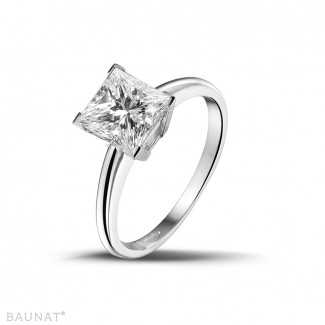
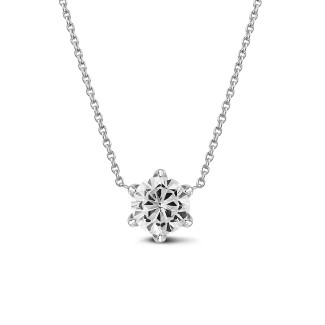
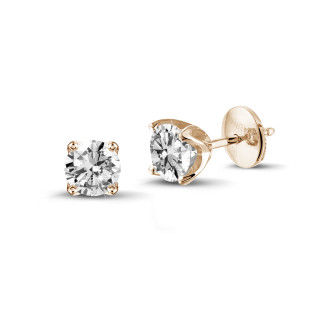
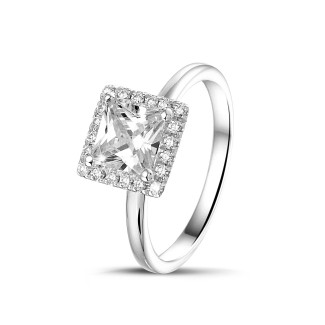


New in: Eternal Bloom Collection
Princess Delphine of Saxe-Coburg for BAUNAT
BAUNAT is proud to unveil the Eternal Bloom Collection, an exclusive collaboration with Her Royal Highness Princess Delphine of Saxe-Coburg, Princess of Belgium.


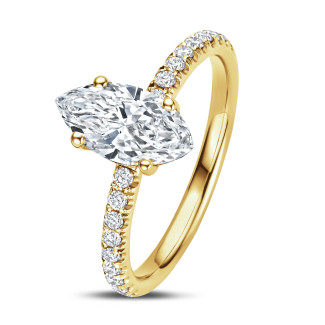
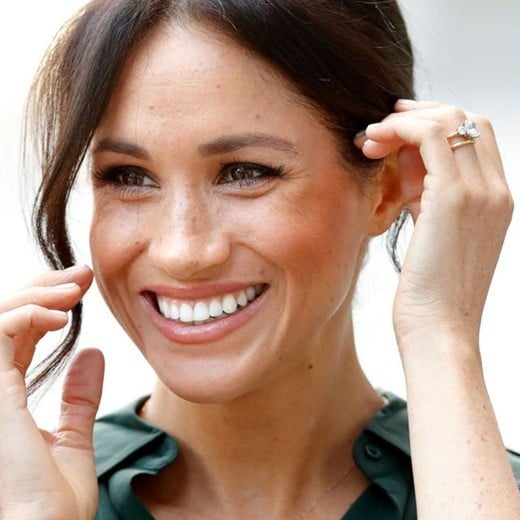
Diamonds have long been symbols of love, commitment, and timeless elegance, and the diamonds of Botswana hold a reputation unmatched in both quality and ethics. From gracing the engagement ring of Meghan Markle to uplifting the economy of an entire nation, Botswana’s diamonds exemplify more than beauty. For those who seek luxury with meaning, Botswana diamonds are a testament to ethical sourcing and unparalleled craftsmanship.
Wondering why Botswana diamonds have gained global recognition, even attracting Prince Harry for Meghan Markle's engagement ring? Botswana has transformed into one of Africa's most prosperous economies largely thanks to its diamond industry, with the Jwaneng mine producing around 10 million carats annually. The country's diamonds are not only beautiful but also conflict-free, with revenues responsibly reinvested in education, infrastructure, and healthcare—particularly HIV/AIDS prevention programs managed by Debswana, a joint venture between the government and De Beers.
When you purchase Botswana diamonds, you're supporting sustainable development in a country where over 70% of government revenue comes from mineral exports. Despite facing challenges like high unemployment and the need for economic diversification, Botswana represents ethical diamond sourcing that benefits local communities—making these gems not just symbols of love but also of social responsibility.

.
Choosing a diamond from Botswana shows the social and ecological responsibility which Prince Harry and Meghan displayed, considering diamond mining in Botswana contributed to the country’s transformation into one of Africa’s most prosperous economies.
The cushion cut refers to the diamond’s cut. This shape is a variation of the square princess cut with rounded corners. The cushion cut is now becoming increasing more popular when buying diamond jewellery. BAUNAT can offer this shape upon request.
Read more about the cushion cut diamond or request the ideal shape from BAUNAT.
BAUNAT only offers 100% natural diamonds. This means no treated, artificial or clarity intensified diamonds.
BAUNAT only works together with the most renowned certificates of the diamond industry worldwide: GIA, HRD & IGI.
BAUNAT NV has a zero-tolerance policy towards conflict diamonds. We only buy diamonds through the most respected diamond manufacturers.
The diamonds we select are high quality and offer the greatest brilliance in proportion to their cost.
We select the diamonds that sparkle to their maximum but pay no additional cost for prestige or rarity. Diamonds used by BAUNAT have a VS2 or SI1 score on the purity scale, and have a G or H colour. They also have an exceptional cut.
Diamonds with this result only have minor impurities that are impossible to see with the naked eye for a consumer.
Diamonds with this result have a very nice white colour without a yellow complexion.
1. Colour and clarity
BAUNAT offers 2 possible quality combinations:
G colour - VS2 clarity
H colour - SI1 clarity
Both combinations guarantee a diamond with a beautiful white colour without yellow complexion. VS2 diamonds contain inclusions that are not or hardly discernible to the naked eye. With SI1 diamonds, it is possible that inclusions can be very slightly discernible, but only under good conditions. In addition, all diamonds we select have a great shine because of their high score in terms of the quality of the cut.
The first combination (G-VS2) will be a little brighter than the second, because of the difference in colour and purity. The second combination can only be found in the jewellery category ‘Classics’ with a minimum of 0.30 ct diamonds.
2. Cut
In terms of the cut grade, we can distinguish different parameters, depending on the diamond shape:
a. Round diamonds
The cut can be divided in three parameters:
The Cut grade will always be awarded at least a 'VG' (Very Good) rating. On the parameters of Polish and Symmetry, in most cases you will receive at least 2 times VG or better. Please note that the above mentioned cut grade is the minimum; it can also be that you receive a higher quality (EX cut).
b. Other shapes (princess, oval, cushion, etc.)
All other diamond shapes (round diamonds excluded) have two parameters in terms of cut:
You will receive at least 1X VG 1xG, but in most cases 2xVG or better. Please note that the above mentioned Polish & Symmetry grade is the minimum; it can also be that you receive a higher quality (EX polish).
BAUNAT does not only select its diamonds based on the 4 C's you find on the diamond's certificate, but judges the quality of produced light. Because our headquarters are in the heart of the diamond world centre, we can carefully check every diamond. Ultimately we choose the diamonds based on the light they radiate. In other words, we only work with diamonds that shine better than the theoretical proprieties of their certificate (4 C's) would predict.
The combination of our know-how and methods and the fact that diamond industry prices are based on the 4 C's allow us to offer the best price-quality ratio. Only diamonds with a maximal shine will be chosen. A diamond's radiance results from the white light, the movement of light, and the coloured light it reflects.
Diamonds are placed in jewellery pieces in a specific way, so that the table (the top flat part of the diamond) is visible. The bottom part of the diamond, which ends in a cone, usually isn't visible. For instance, in a ring, the bottom part disappears inside the ring. This way, light only enters the diamond from the top of the stone. Because of the specific light refraction of diamonds and the mirror effect of the bottom sides, light will come back out the top of the diamond in all the colours of the rainbow. This process is only maximised if the diamond is cut perfectly, has perfect proportions and if all angles and sides were cut according to the mathematical model of 58 sides.
The diamond will only shine its best if the light is controlled. Otherwise, the light gets lost or disappears in another corner of the diamond.
The cutting process is of course a very difficult, risky and time-consuming process and requires years of expertise. Because all the diamond's growing nerves aren't visible, the work can't be computerised, and is always done by hand. Years of training are required.
Our jewels can carry any shape and size of diamonds: round, princess (square), pear (teardrop) and many others (on demand, see ‘TAILOR MADE’).
Related information:
1. More information on colour, clarity and cut
3. Is a diamond a good investment? BAUNAT's expertise in D-E-F colour diamonds
Conflict diamonds are diamonds that come from conflict areas, where local militia try to use diamonds to finance their activities. The Kimberley Process Certification System was set up to stop these diamonds to enter the world market by controlling the origin of diamonds from conflict areas.
The Kimberley Process is an international system that regulates the diamond business to guarantee that the diamonds come from conflict-free areas. The Kimberley Certificate guarantees your diamond is not a 'conflict' diamond. It was determined that as from 2008, 99.9% of diamond transactions concerned non-conflict diamonds.
Obviously BAUNAT NV has a zero-tolerance policy towards conflict diamonds. We only buy diamonds through the most respected diamond manufacturers who act in line with the standards set up by the Kimberley Process.
Via this link, you find more information concerning conflict diamonds and the Kimberley Process Certification System.
Fabienne, manager of the German market is able to guide every client with finding the right jewel. She takes care of most of the German orders, but also takes other task on her plate. Thanks to her six years of experience at BAUNAT she acquainted well with the product and the marketing around it. Her degree in PR ensures that BAUNAT is well presented across all media channels. For anyone looking into a new investment opportunity, Fabienne is the perfect guide in this process. No question will be left unanswered, and she will help you every step of the way.
Fabienne, manager of the German market is able to guide every client with finding the right jewel. She takes care of most of the German orders, but also takes other task on her plate. Thanks to her six years of experience at BAUNAT she acquainted well with the product and the marketing around it. Her degree in PR ensures that BAUNAT is well presented across all media channels. For anyone looking into a new investment opportunity, Fabienne is the perfect guide in this process. No question will be left unanswered, and she will help you every step of the way.
Every now and then, nature grants us a diamond of immense value. Find out more about the 10 biggest diamonds in the world.
Marilyn Monroe was well aware that diamonds are a girl’s best friends. Looking for a similar model, inspired on her legendary engagement ring? Take a look in the BAUNAT...
Beyonce’s engagement ring currently tops the list of most expensive rings in Hollywood. Discover more about celebrity diamond engagement rings with BAUNAT
BAUNAT is proud to unveil the Eternal Bloom Collection, an exclusive collaboration with Her Royal Highness Princess Delphine of Saxe-Coburg, Princess of Belgium.