







Features:
-
Category:
-
Posted at:
-
Author:
- Fabienne Rauw
-
BAUNAT Antwerp
-


-
Reading time:6 minutes
In this article:
The effect of chlorine and saltwater on your jewellery
Anyone who wears an engagement or wedding ring all the time, knows that they can sometimes suffer as a result of conditions. You might be wondering what can damage gold, silver or platinum, depending on what your ring is made of. Salt and chlorine, in particular, can damage expensive jewellery. When you swim in the sea or a pool, you are advised to take your jewellery off.
Read summary
Can I wear my engagement ring in the pool?
Chlorine and saltwater can damage your jewellery, including gold, silver, diamonds, and gemstones. Chlorine can cause discolouration and weaken metals, while saltwater can erode soldered parts and stain diamonds, making them dull. To avoid damage, remove your engagement ring when swimming. Regular cleaning and professional checks can help maintain your jewellery's condition.
5 Questions to Find Her Perfect Engagement Ring
Are you planning to propose? Finding the right engagement ring is a defining step. Every ring is handcrafted in Antwerp from the finest materials by skilled artisans. Discover what engagement ring fits her personality.
Most viewed diamond jewels
-
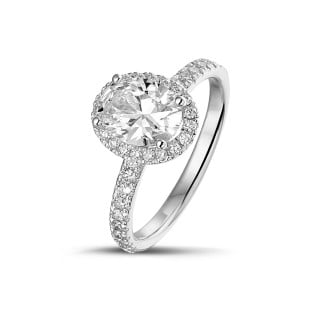
![1.00Ct halo ring in white gold with oval diamond]() Bestseller1.00Ct halo ring in white gold with oval diamondFrom € 5.578,10 (incl. 21% VAT)
Bestseller1.00Ct halo ring in white gold with oval diamondFrom € 5.578,10 (incl. 21% VAT) -
![1.00 carat solitaire cluster ring in white gold with marquise diamond]() BestsellerNew1.00 carat solitaire cluster ring in white gold with marquise diamondFrom € 4.622,20 (incl. 21% VAT)
BestsellerNew1.00 carat solitaire cluster ring in white gold with marquise diamondFrom € 4.622,20 (incl. 21% VAT) -
![0.95 carat diamond rose design ring in white gold]() NewPrincess Delphine0.95 carat diamond rose design ring in white goldFrom € 16.831,10 (incl. 21% VAT)
NewPrincess Delphine0.95 carat diamond rose design ring in white goldFrom € 16.831,10 (incl. 21% VAT) -
![1.00 carat solitaire ring with an asscher cut diamond in white gold]() Bestseller1.00 carat solitaire ring with an asscher cut diamond in white goldFrom € 4.936,80 (incl. 21% VAT)
Bestseller1.00 carat solitaire ring with an asscher cut diamond in white goldFrom € 4.936,80 (incl. 21% VAT) -
![1.00 carat solitaire ring with a cushion diamond and hidden halo in white gold]() BestsellerNew1.00 carat solitaire ring with a cushion diamond and hidden halo in white goldFrom € 4.210,80 (incl. 21% VAT)
BestsellerNew1.00 carat solitaire ring with a cushion diamond and hidden halo in white goldFrom € 4.210,80 (incl. 21% VAT)


Chlorine and jewellery: a bad relationship
Other metals, such as silver, nickel or copper, are sensitive to aggressive chemicals such as chlorine. Your gold ring with diamonds or gemstones can end up severely discoloured.

How much damage does salt water cause to your jewellery?
The diamonds can also get blemished by salt. The facets can get stained, which gives your diamond a dull appearance. Make sure you rinse your diamond jewellery properly after exposure to saltwater.
How can you clean jewellery that has been exposed to chlorine?
- Rinse them off as quickly as possible with clean, fresh water.
- Do not use any aggressive cleaning agents as they may cause more damage to your jewellery.
- Add a few drops of gentle washing-up liquid to lukewarm water.
- Leave your jewellery to soak in the water for 15-20 minutes and rinse under the tap.
- Finally, dry with a non-fibrous cloth.
Additional tips for vacationers
- Leave it at home: iff possible, avoid wearing your most precious pieces during activities that involve exposure to chlorine or saltwater.
- Use protective cases: store your jewellery in waterproof pouches or cases when not in use.
- Regular maintenance: schedule regular check-ups with a professional jeweller to ensure your pieces remain in top condition.
Read more about caring for your diamond jewellery here
Frequently asked Questions
How to clean white gold
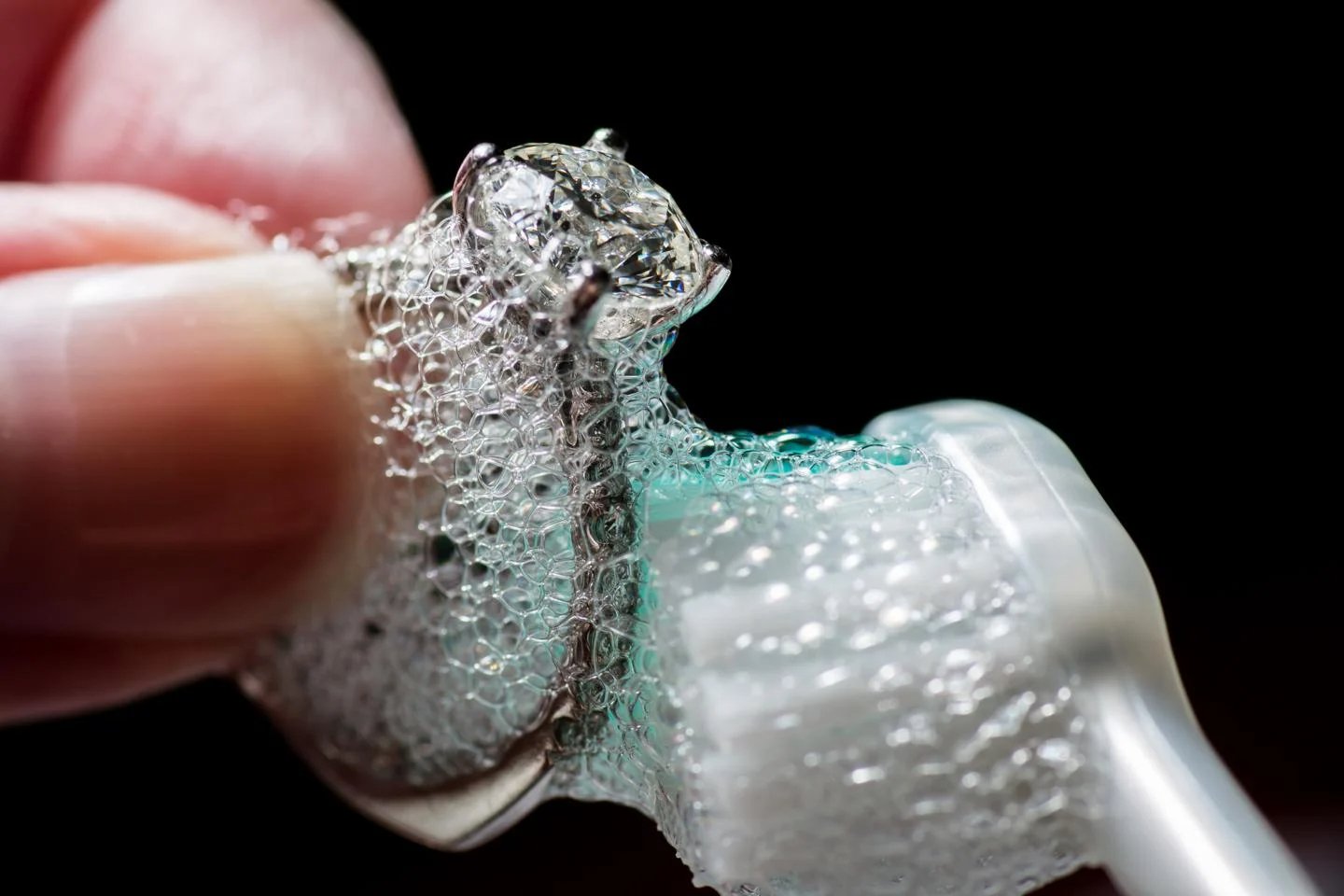
White gold is rhodium-plated for added protection, and to achieve that distinctive white sheen. That layer of rhodium is vulnerable, so you have to take care with rough surfaces, alcohol and other corrosive cleaning agents. To clean white gold, soak the jewellery in warm water with mild dishwashing liquid without ammonia and phosphates. Scrub gently with a soft toothbrush, and rinse in clean warm water. Dry your jewellery with a soft towel. If your white gold jewellery is set with diamonds or gemstones, take special care with the brush so as not to damage the stone.
What is the best way to store my bracelet?
It is best to store your bracelets safely in a locked box. That way they won't get lost or damaged. A separate compartment for necklaces, bracelets, earrings, rings and watches also ensures that they do not get mixed up or tangled up. There are also various hanging systems that are particularly handy for necklaces and bracelets. The ones with feet can be placed on a dressing table or sideboard as a decorative item. Hanging systems are also a good solution for bracelets. With these tips, you can take extra care of your bracelets:
- Do not keep link or charm bracelets together so they do not get tangled.
- Store valuable jewellery such as heirlooms separately in a sealed cloth bag and then in a lockable box.
- Make sure that your precious jewellery is free of dust and grease before storing it.
- Take your bracelet off during sports, when working with your hands and when sunbathing. This way, they will not be damaged.
How do I clean my necklace?
It is a good idea to clean your necklace regularly to keep it looking bright and beautiful. Do not use harsh detergents. Simply mix a little spirit vinegar with lukewarm water in a bowl. Dip the chain in the vinegar mix and remove the tarnish with a soft toothbrush or soft cloth. Remove the jewellery from the bowl. Place it on a dry hand towel (or tea towel) and pat it dry.
-
Fabienne Rauw
-
BAUNAT Antwerp
-
-
Fabienne, manager of the German market is able to guide every client with finding the right jewel. She takes care of most of the German orders, but also takes other task on her plate. Thanks to her six years of experience at BAUNAT she acquainted well with the product and the marketing around it. Her degree in PR ensures that BAUNAT is well presented across all media channels. For anyone looking into a new investment opportunity, Fabienne is the perfect guide in this process. No question will be left unanswered, and she will help you every step of the way.
Selected Bespoke Projects
• Eternal Bloom bespoke engagement concept - Role: project lead for client briefing and prototype coordination. Fabienne translated personal design references into a 3D-printed prototype, supervised stone selection and ensured the finished piece matched the client’s vision and comfort preferences.
• Personalized anniversary necklace - Role: design coordinator and quality overseer. She managed the custom design process from the initial sketch to final polishing, liaising between client and workshop to preserve proportions and finish.
• Reimagined heirloom ring restoration and redesign - Role: client consultant and technical coordinator. Fabienne guided the client through options to modernize setting details while keeping sentimental elements, delivering a wearable result that respected the original piece.
Her hands-on involvement in bespoke commissions ensures each custom order has a clear brief, careful prototype review and close follow-up with the workshop, so clients receive a tailored jewel that meets both aesthetic and practical expectations.
Professional enquiries
For speaking engagements, press requests or research collaborations, please send your message to BAUNAT’s communications team with the subject line: "Fabienne Rauw - Professional Enquiry." Include a brief description of the request and any relevant dates or documents. The communications team will route enquiries to Fabienne and provide guidance on next steps.
Fabienne, manager of the German market is able to guide every client with finding the right jewel. She takes care of most of the German orders, but also takes other task on her plate. Thanks to her six years of experience at BAUNAT she acquainted well with the product and the marketing around it. Her degree in PR ensures that BAUNAT is well presented across all media channels. For anyone looking into a new investment opportunity, Fabienne is the perfect guide in this process. No question will be left unanswered, and she will help you every step of the way.
Selected Bespoke Projects
• Eternal Bloom bespoke engagement concept - Role: project lead for client briefing and prototype coordination. Fabienne translated personal design references into a 3D-printed prototype, supervised stone selection and ensured the finished piece matched the client’s vision and comfort preferences.
• Personalized anniversary necklace - Role: design coordinator and quality overseer. She managed the custom design process from the initial sketch to final polishing, liaising between client and workshop to preserve proportions and finish.
• Reimagined heirloom ring restoration and redesign - Role: client consultant and technical coordinator. Fabienne guided the client through options to modernize setting details while keeping sentimental elements, delivering a wearable result that respected the original piece.
Her hands-on involvement in bespoke commissions ensures each custom order has a clear brief, careful prototype review and close follow-up with the workshop, so clients receive a tailored jewel that meets both aesthetic and practical expectations.
Professional enquiries
For speaking engagements, press requests or research collaborations, please send your message to BAUNAT’s communications team with the subject line: "Fabienne Rauw - Professional Enquiry." Include a brief description of the request and any relevant dates or documents. The communications team will route enquiries to Fabienne and provide guidance on next steps.