







Features:
-
Posted at:
-
Author:
- Fabienne Rauw
-
BAUNAT Antwerp
-


-
Reading time:13 minutes
In this article:
- How are diamonds formed?
- Where are diamonds found?
- Where and how are diamonds mined?
- Lab grown diamonds vs natural diamonds
- The most famous diamonds in the world unveiled
- The composition of diamonds
- The value of a diamond: addressing the 4C’s
- Types of diamond cuts
- Diamonds in jewellery
- Diamond engagement rings: a lasting commitment
- Diamond earrings: versatile elegance
- Diamonds as an investment
- Discover BAUNAT’s diamond jewellery collection
A diamond’s allure: a journey into luxury and craftsmanship
Without a doubt, a diamond is the precious stone that appeals to the imagination of most. It is incredible how carbon compressed for millennia can eventually produce such a beautiful precious stone. Ever since diamond giant De Beers launched the slogan 'Diamonds are Forever' mid last century, diamonds have become an integral part of engagement rings and many other pieces of jewellery. We present you what a diamond is and how it is constructed.
Read summary
What makes diamonds so captivating from formation to finished jewelry?
Diamonds begin their journey as carbon deep in Earth's mantle, formed under extreme pressure and temperatures exceeding 1,000°C about 150km beneath the surface. These precious stones reach us through volcanic eruptions that push them upward, where they're mined through open-pit or underground methods.
The value of diamonds is determined by the famous 4Cs: carat (weight), cut (determining sparkle), color (with D-F being the most colorless), and clarity (measuring inclusions). A diamond's anatomy includes the table (top facet), crown, pavilion, girdle, and culet (bottom point), with each element affecting how light reflects through the stone.
Beyond their beauty, diamonds serve as both symbols of commitment in jewelry and potential investments. BAUNAT offers certified, conflict-free diamonds in various cuts—from classic round brilliants to modern princess cuts—ensuring each piece combines timeless elegance with ethical sourcing.
Most viewed diamond jewels
-
![1.00Ct halo ring in white gold with oval diamond]() Bestseller1.00Ct halo ring in white gold with oval diamondFrom € 5.578,10 (incl. 21% VAT)
Bestseller1.00Ct halo ring in white gold with oval diamondFrom € 5.578,10 (incl. 21% VAT) -
![1.00 carat solitaire cluster ring in white gold with marquise diamond]() BestsellerNew1.00 carat solitaire cluster ring in white gold with marquise diamondFrom € 4.622,20 (incl. 21% VAT)
BestsellerNew1.00 carat solitaire cluster ring in white gold with marquise diamondFrom € 4.622,20 (incl. 21% VAT) -
![0.95 carat diamond rose design ring in white gold]() NewPrincess Delphine0.95 carat diamond rose design ring in white goldFrom € 16.831,10 (incl. 21% VAT)
NewPrincess Delphine0.95 carat diamond rose design ring in white goldFrom € 16.831,10 (incl. 21% VAT) -
![1.00 carat solitaire ring with an asscher cut diamond in white gold]() Bestseller1.00 carat solitaire ring with an asscher cut diamond in white goldFrom € 4.936,80 (incl. 21% VAT)
Bestseller1.00 carat solitaire ring with an asscher cut diamond in white goldFrom € 4.936,80 (incl. 21% VAT) -
![1.00 carat solitaire ring with a cushion diamond and hidden halo in white gold]() BestsellerNew1.00 carat solitaire ring with a cushion diamond and hidden halo in white goldFrom € 4.210,80 (incl. 21% VAT)
BestsellerNew1.00 carat solitaire ring with a cushion diamond and hidden halo in white goldFrom € 4.210,80 (incl. 21% VAT)


How are diamonds formed?
Most of the diamonds we find in jewellery nowadays were formed in the earth's mantle. They arise out of carbon, one of the most important chemical elements in the world. Volcano eruptions transport the magma and it reappears on the surface as large blocks of rock. Even before these eruptions push the diamonds to the surface, the diamonds are formed in the 'diamond stability zone' in the earth's mantle. This requires a temperature exceeding 1,000 degrees Celsius and extremely high pressure. That is only possible deep under the earth's surface, about 150 kilometres under the earth's crust.
Where are diamonds found?

Where and how are diamonds mined?
The importance of conflict free diamonds
The importance of certified diamonds
Opting for certified diamonds offers buyers confidence and peace of mind, knowing that their investment is substantiated by expert scrutiny. This level of assurance not only enhances the intrinsic value of these gems but also ensures that the diamonds meet specific standards, perpetuating an unwavering trust in their unparalleled beauty and worth.
Lab grown diamonds vs natural diamonds
However, the allure of natural diamonds lies in their unique journey from the depths of the Earth to the pinnacle of luxury. Nature bestows each natural diamond with its own story, crafted over billions of years and encompassing geological epochs. It is this narrative, combined with the unrepeatable characteristics inherent to each gem, that imbues natural diamonds from Baunat with their unique selling proposition.
While lab-grown diamonds provide an appealing, ethical choice, the timeless elegance and storied provenance of natural diamonds remain unparalleled, captivating collectors and connoisseurs worldwide with their intrinsic value and historical grandeur.
The most famous diamonds in the world unveiled
Some diamonds have become world-famous over the years. One due to its exceptional size, the other through its unique history. We will present three of the most famous diamonds in the world.
- Koh-i-Noor: The Koh-i-Noor (Mountain of Light) is an Indian diamond weighing 109 carats. Through the centuries, various Indian and Persian generals and kings have owned it. In Hinduism, this stone is thought to have magical powers. Hindus believe that the diamond is a gift from the sun god Surya. Mid-19th century, the diamond fell into British hands and it is now part of the British Crown Jewels.
- The Great Star of Africa: This diamond is also called the Cullinan I, named after the diamond from which it came. This was the raw Cullinan diamond and weighing 3,106 it was the largest diamond ever found. The pear-shaped Great Star of Africa weighs 530 carats and was cut by the famous gem cutter Joseph Asscher from Amsterdam.
- The Hope Diamond: This precious stone was most probably mined in India and it was sold to Louis XIV. The French king renamed the 45.52 carat blue diamond 'The Blue Diamond of the Crown of France'. The Hope Diamond was subsequently stolen and only resurfaced 20 years later. According to Hindustani belief, the goddess Sita cursed the stone saying it would bring the wearer bad luck.
Other world-famous diamonds include the Sancy diamond, the Centenary Diamond, the Golden Jubilee and the Lesotho Brown.
The composition of diamonds


The depth of a diamond
The depth is measured from the culet to the table. To calculate the depth percentage, you divide the height of the stone by the width.
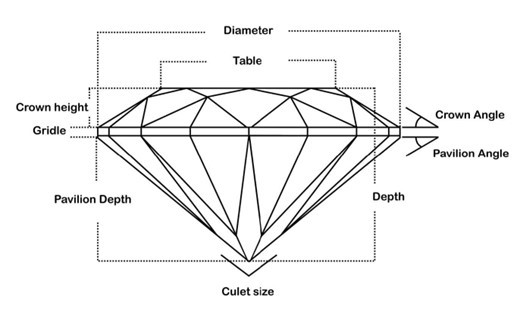
The culet and table

The crown and facets

Pavilion and girdle
The value of a diamond: addressing the 4C’s
In general, coloured diamonds are a lot more expensive than colourless diamonds. This is because they are much rarer. Colourless diamonds are also allocated a colour or gradation because they have nuances. The highest grade of colourlessness starts at D and runs to F. These are colourless diamonds without a yellow tint.


The final C stands for carat. The weight and size of a diamond is expressed in carats, where 1 carat equals 0.2 grams. The higher the carat weight, the higher the price will be. The prices increase exponentially. This means a 2 carat diamond will not simply cost twice the price of a 1 carat diamond with all the same characteristics. The price will more likely be triple.
Types of diamond cuts
- Without doubt, round brilliant cuts are still the most popular diamond shape, certainly for engagement rings. If they are cut perfectly, they are generally worth more than alternative shapes. The cut and the stunning reflection of light mean that brilliant cut diamonds sparkle the most.
- The princess shape is catching up on the brilliant cut. These diamonds are square shaped. This shape is gaining in popularity due to its modern look.
- The pear shape has also been popular in recent years. It is a mix between a round brilliant cut and the marquise. A pear-shaped diamond is an excellent choice for a pair of diamond earrings or a diamond engagement ring. With its pointed end facing the nail, the shape optically lengthens your finger.

Diamond engagement rings: a lasting commitment

Diamond earrings: versatile elegance
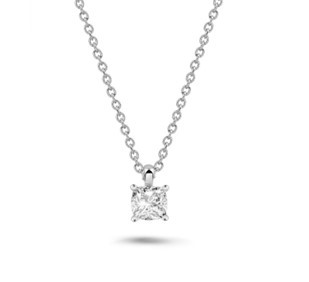
Diamond necklaces: timeless charm

Diamond bracelets: a touch of glamour
Diamonds as an investment
Discover BAUNAT’s diamond jewellery collection
In a world where luxury meets craftsmanship, BAUNAT stands as a symbol of excellence. Our diamonds tell stories of beauty, history, and transcendence, showcasing artistry and passion. Whether you are looking for a symbol of love or an investment in elegance, our diamond jewellery beckons with timeless allure.


-
Fabienne Rauw
-
BAUNAT Antwerp
-
-
Fabienne, manager of the German market is able to guide every client with finding the right jewel. She takes care of most of the German orders, but also takes other task on her plate. Thanks to her six years of experience at BAUNAT she acquainted well with the product and the marketing around it. Her degree in PR ensures that BAUNAT is well presented across all media channels. For anyone looking into a new investment opportunity, Fabienne is the perfect guide in this process. No question will be left unanswered, and she will help you every step of the way.
Selected Bespoke Projects
• Eternal Bloom bespoke engagement concept - Role: project lead for client briefing and prototype coordination. Fabienne translated personal design references into a 3D-printed prototype, supervised stone selection and ensured the finished piece matched the client’s vision and comfort preferences.
• Personalized anniversary necklace - Role: design coordinator and quality overseer. She managed the custom design process from the initial sketch to final polishing, liaising between client and workshop to preserve proportions and finish.
• Reimagined heirloom ring restoration and redesign - Role: client consultant and technical coordinator. Fabienne guided the client through options to modernize setting details while keeping sentimental elements, delivering a wearable result that respected the original piece.
Her hands-on involvement in bespoke commissions ensures each custom order has a clear brief, careful prototype review and close follow-up with the workshop, so clients receive a tailored jewel that meets both aesthetic and practical expectations.
Professional enquiries
For speaking engagements, press requests or research collaborations, please send your message to BAUNAT’s communications team with the subject line: "Fabienne Rauw - Professional Enquiry." Include a brief description of the request and any relevant dates or documents. The communications team will route enquiries to Fabienne and provide guidance on next steps.
Fabienne, manager of the German market is able to guide every client with finding the right jewel. She takes care of most of the German orders, but also takes other task on her plate. Thanks to her six years of experience at BAUNAT she acquainted well with the product and the marketing around it. Her degree in PR ensures that BAUNAT is well presented across all media channels. For anyone looking into a new investment opportunity, Fabienne is the perfect guide in this process. No question will be left unanswered, and she will help you every step of the way.
Selected Bespoke Projects
• Eternal Bloom bespoke engagement concept - Role: project lead for client briefing and prototype coordination. Fabienne translated personal design references into a 3D-printed prototype, supervised stone selection and ensured the finished piece matched the client’s vision and comfort preferences.
• Personalized anniversary necklace - Role: design coordinator and quality overseer. She managed the custom design process from the initial sketch to final polishing, liaising between client and workshop to preserve proportions and finish.
• Reimagined heirloom ring restoration and redesign - Role: client consultant and technical coordinator. Fabienne guided the client through options to modernize setting details while keeping sentimental elements, delivering a wearable result that respected the original piece.
Her hands-on involvement in bespoke commissions ensures each custom order has a clear brief, careful prototype review and close follow-up with the workshop, so clients receive a tailored jewel that meets both aesthetic and practical expectations.
Professional enquiries
For speaking engagements, press requests or research collaborations, please send your message to BAUNAT’s communications team with the subject line: "Fabienne Rauw - Professional Enquiry." Include a brief description of the request and any relevant dates or documents. The communications team will route enquiries to Fabienne and provide guidance on next steps.