















Black Friday
Code: BLACKFRIDAY2026
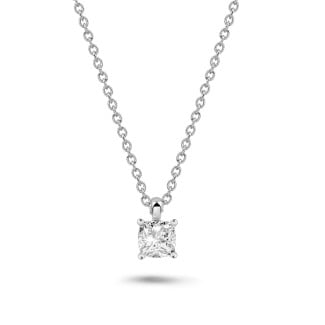
This Black Friday, elevate your diamond jewel with a complimentary upgrade in Colour, Clarity or Cut. Enjoy an exceptional diamond at no additional cost. Exclusive offer until 30 November 2026.


E-commerce means diamonds are now within everyone's grasp. Only the so-called super diamonds are reserved for the lucky few. The Koh-i-Noor diamond, which was set in Queen Elizabeth's crown, belongs in this category. With a worth of at least €140 million, the Koh-i-Noor diamond is of inestimable value.
The Koh-i-Noor diamond, set in Queen Elizabeth's crown and part of the UK's Crown Jewels, is famous for its immense value and historical significance. Found in India and weighing 109 carats after being recut, it ended up in British hands in 1849. Its worth is estimated between €140 to €400 million, with myths of power and curses surrounding it.
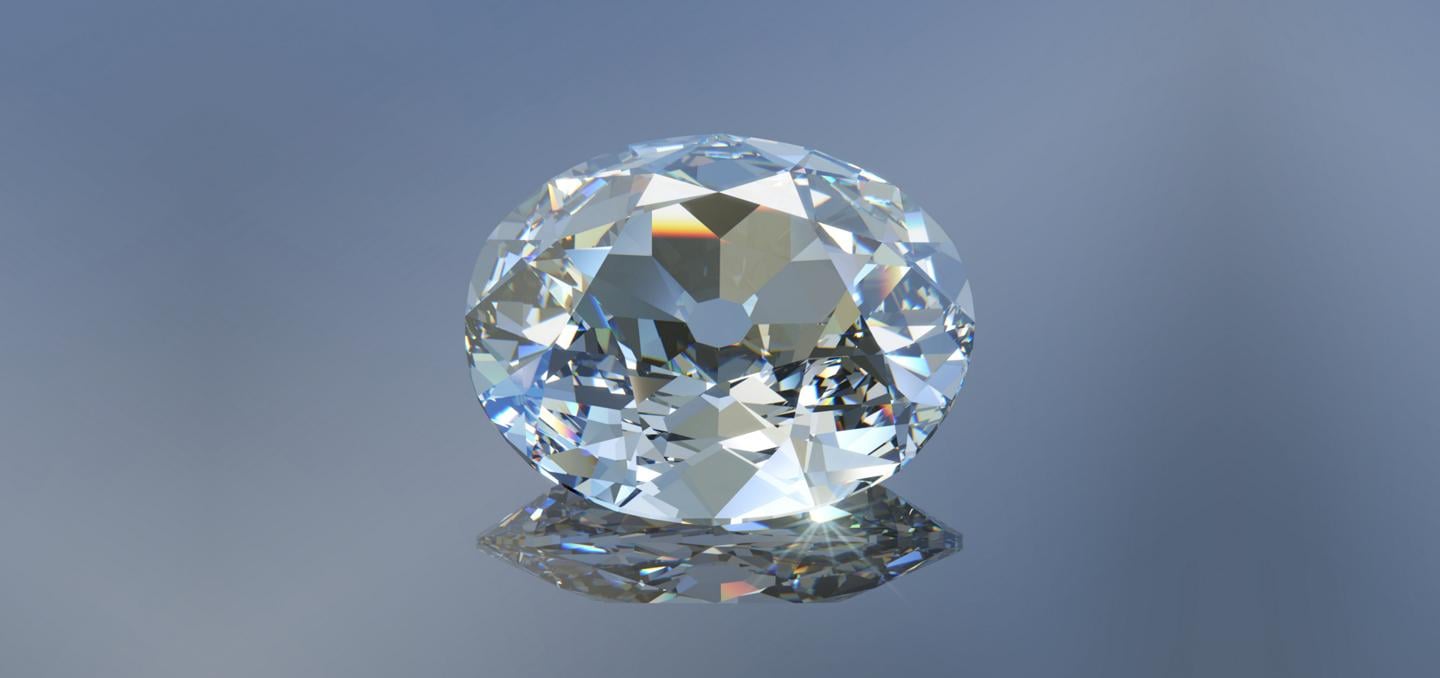
Upon noticing the unique precious stone in the turban, Persian commander Nadir Sjah cried 'Koh-i-Noor', or 'mountain of light'.
Claims that place the Koh‑i‑Noor in much older contexts are treated with caution by modern historians. Suggestions of an unbroken chain back to the fourteenth century rest on interpretations of fragmentary chronicles and later retellings; specialist histories and museum catalogues therefore distinguish between the diamond’s legendary associations and the more limited set of reliably documented custodial transfers. Where primary sources exist they are cited in scholarly accounts, and modern summaries flag where uncertainty remains.
Contemporary records and later gemological summaries agree that cutting work on the Koh-i-Noor began in July 1852 under the direction of Crown-appointed jewellers. Nineteenth-century sources report the pre‑cut weight at roughly 186 old carats, which converts to about 191 metric carats; modern references list the stone’s current weight as 105.602 metric carats, commonly rounded to 105.6 carats in popular accounts. Variations such as 109 carats in some retellings reflect historical reporting conventions and the different carat measures used in the nineteenth century.
Gemological descriptions today characterise the Koh-i-Noor as a brilliant-cut diamond with 66 facets. That total corresponds to the standard pavilion and crown facets of a modern brilliant plus additional small star facets noted in period cutting records. Technical notes from the time mention a modest culet and proportions chosen to increase scintillation and brilliance rather than to preserve maximum weight, which explains the substantial loss of mass during the operation.
Multiple reliable accounts link the work to the Crown’s jewellers in London, with specialist cutters connected to firms in Amsterdam also named in contemporary reports. Cutting began in mid‑July 1852 and proceeded across several weeks under professional supervision; where later histories diverge on exact attributions, they nonetheless agree on the main facts: the recut was authorised by the Crown, handled by experienced craftsmen, and produced a noticeably brighter stone at a reduced weight.
Two common reasons account for differing numbers. First, nineteenth‑century reports used several carat measures and did not always convert to the modern metric carat. Second, journalists and later retellers often rounded figures for readers, producing the 109‑carat and similar figures that appear in some summaries. Modern gemological references and museum catalogues adopt 105.602 metric carats as the authoritative current weight and record the 66‑facet configuration when describing the Koh-i-Noor.
Historical basis: India’s interest in the Koh‑i‑Noor rests on its long association with Indian polities before the nineteenth century and on arguments that the stone left the subcontinent as a result of coercive colonial terms. Formal actions: Indian political figures and parliamentary bodies have periodically requested the stone’s return, notably after independence and in later parliamentary motions and petitions. UK response: British governments have consistently treated the Koh‑i‑Noor as part of the Crown Jewels and have not transferred it, describing its possession as a settled matter within the UK’s constitutional framework.
Historical basis: Pakistan’s claim links to the Punjab region’s historical boundaries and to continuity arguments about ownership prior to British annexation. Formal actions: Pakistani representatives and commentators have raised the issue in political forums and public statements about cultural patrimony. UK response: As with India’s requests, the British position has remained unchanged: the Crown Jewels are not offered for repatriation.
Historical basis: Iran points to Nader Shah’s 1739 seizure from the Mughal court and the stone’s place in Persian accounts of plundered treasures as grounds for interest in the Koh‑i‑Noor. Formal actions: Iranian historians and cultural officials cite the Persian episode when discussing the diamond’s origins; formal diplomatic claims have been less frequent than those from the Indian subcontinent. UK response: The UK has not used that historical episode as a basis for returning items from the Crown collection.
Historical basis: Afghan claims focus on episodes in which gems moved through Afghan rulers’ treasuries during the turbulent mid‑eighteenth and early nineteenth centuries. Formal actions: Afghan assertions appear intermittently in public debate and diplomatic remarks, usually as part of broader conversations about cultural restitution. UK response: The British government has maintained a custodial stance toward the Crown Jewels.
Across claimant nations the statements mix historical, moral and nationalist arguments. British official responses emphasise legal ownership tied to nineteenth‑century transfers and the longstanding inclusion of the diamond in the Crown collection. Commentators and museum professionals frame the question as complex: it raises provenance research, the circumstances of nineteenth‑century transfers, and differing standards for restitution depending on legal and ethical assessments. The section presents those claims factually without adjudicating legal ownership.
The Koh‑i‑Noor has been a public spectacle since the mid‑nineteenth century. It was exhibited at the Great Exhibition of 1851 in London, where visitors and contemporary commentators noted its size and brilliance; press reports from the time recorded crowds and wide public interest in the Crown’s gemstones. After the 1852 recut the diamond featured in a series of crown settings used for state occasions and coronations, most notably in crowns worn by Queen Alexandra, Queen Mary and later Queen Elizabeth the Queen Mother, which made it prominent in royal ceremonial life.
During periods of national threat the Crown Jewels, including the Koh‑i‑Noor, were sometimes moved from public view into secure repositories; wartime records describe deliberate steps taken to protect the regalia. In the modern era the stone forms part of the Jewel House collection at the Tower of London, where it is presented alongside other famous stones and attracts many visitors. Contemporary museum interpretation treats the Koh‑i‑Noor both as an object of gemological interest and as an artefact embedded in complex historical narratives.
The diamond is used in many pieces of exquisite jewellery and comes in various sizes. It is, however, in its smallest form that it catches our interest the most: the diamond ring given in token of love and marriage. The actual history of this tradition transcends the perception of its creation as marketing hyperbole. The modern solitaire is just the most recent step on a long road from the past.
Rings date back several millennia, but those that are given as a token of love are first noted by the comic Roman poet Plautus in the 2nd century BCE. In those times, wedding rings were known for their interior inscriptions that recorded the marriage contracts signed in the presence of the Emperor's image. This custom was continued and Christianized by the 4th century, when priests would not permit weddings anymore without the exchange of rings.
The world’s most famous diamonds are the 45-carat Hope Diamond (and its famous Curse), the mystical Koh-I-Noor Diamond and the 546 carat Golden Jubilee.
The Bokassa Diamond is surrounded by a truly fascinating story. In 1977, a Central African dictator named Jean-Bédel Bokassa declared himself emperor and asked Albert Jolis, the president of a diamond mining operation, for a diamond ring.
Jolis did not have the money to buy such a large stone, however, if he did not deliver one, his company would lose the mining concession in Central Africa. And so he devised a clever solution: Jolis found a large piece of black diamond bolt (a poorly crystalized diamond usually fit only to be crushed into abrasive powder) that curiously resembled Africa in shape. He ordered for the diamond to be polished and mounted on a large ring. A one-quarter carat white diamond was then set roughly where the country is located on the continent.
Jolis presented this "unique" diamond to the clueless Bokassa, who loved it. He thought that the $500 ring was worth over $500,000.
As the Head of Diamond Buying at BAUNAT, Stephanie has an extensive knowledge of the diamond and the evolution of diamond prices. Thanks to her broad product knowledge gained throughout her years at BAUNAT and the Diamond Foundation Course by De Beers, Stephanie advises our customers interested in the investment side of diamonds to optimize every investment. To support her skills she has a bachelor’s degree in Business Management together with her master’s in Communication.
Stephanie Hesters, sometimes listed online as Stephanie Lasters, is Head of Diamond Buying at BAUNAT. She manages diamond sourcing and valuation, advises clients on market trends and pricing, and helps those looking for investment-grade stones. She completed the Diamond Foundation Course by De Beers and holds a bachelor’s degree in Business Management and a master’s in Communication.
• Eternal Bloom Collection with Princess Delphine of Saxe-Coburg (2026), curator and project lead - guided creative direction and diamond selection for an exclusive collection that blends classical motifs with contemporary craftsmanship.
• Investment Diamonds Advisory Series (2024), author and presenter - developed client-facing guides and presentations on diamond valuation and market dynamics for private buyers and collectors.
• BAUNAT Editorial Features and Product Launches (2022–2025), contributor - worked with design and marketing teams to shape product narratives and ensure technical accuracy in launch materials and editorial content.
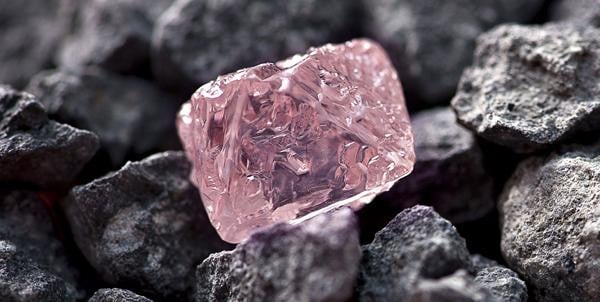
Discover BAUNAT's commitment to quality and service through the story of the 12.76 carat pink diamond, an exceptional find from Australia's Argyle Mine.
On the 26th of June 2014, American astronomers discovered a white dwarf in the sky. This is a very dark star emitting very low temperatures. Find out more at BAUNAT.
The sapphire engagement ring that Prince Charles gave to Lady Diana is one of the most famous rings in the world. Learn more about the ring with BAUNAT.
This Black Friday, elevate your diamond jewel with a complimentary upgrade in Colour, Clarity or Cut. Enjoy an exceptional diamond at no additional cost. Exclusive offer until 30 November 2026.


