







Features:
-
Category:
-
Posted at:
-
Author:
- Stephanie Hesters
-
BAUNAT Antwerp
-


-
Reading time:11 minutes
In this article:
- How do I mix and match a yellow diamond?
- What kinds of yellow diamonds can you find at BAUNAT?
- Understanding yellow-diamond intensity and what it means for price
- Considering a 6‑carat yellow diamond? What to ask your advisor
- Jewellery made to order with yellow diamonds, from BAUNAT
- Learn more about other coloured diamonds
Unveiling the Radiance: Delving into the Beauty of Yellow Diamonds in Jewellery
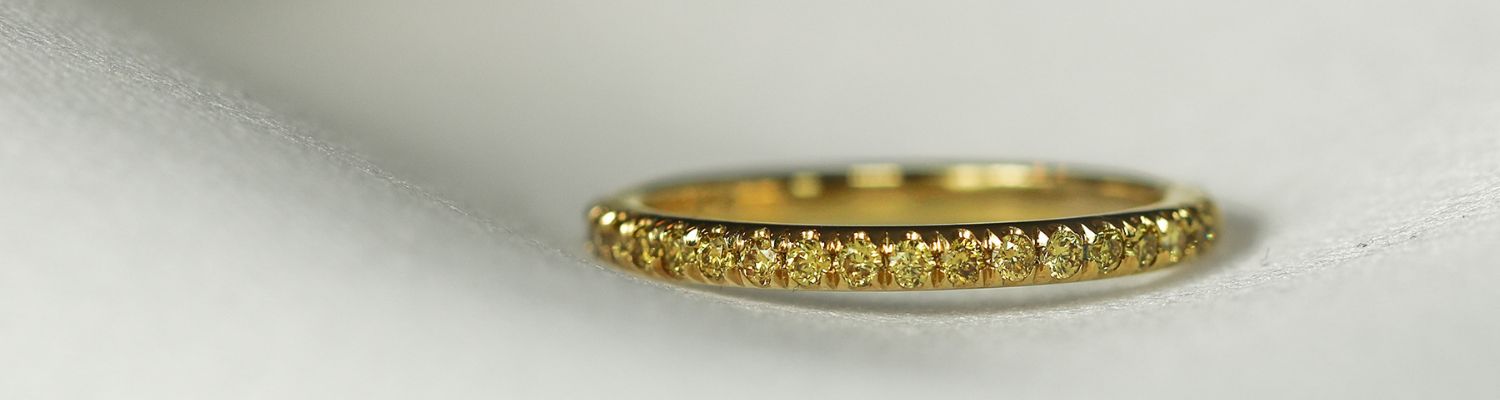
As a Smart Luxury Consumer, discerning choices say a lot about your personality. Color psychology tells us that yellow is a color of positivity, divinity, and creativity. And when we speak about the diamond market, it uniquely resonates with the yellow colored diamond. Notably, yellow diamonds have been experiencing a rise in popularity and are considered an affordable option among naturally colored diamonds.
Read summary
What makes yellow diamonds a smart choice for luxury jewelry buyers?
Yellow diamonds offer a unique blend of beauty, investment value, and affordability within the colored diamond market. Their distinctive hue comes from nitrogen content—the higher the concentration, the more intense the yellow. While not as common as colorless diamonds or as rare as pink or blue varieties, yellow diamonds occupy a special niche that appeals to discerning buyers.
Price-wise, yellow diamonds are generally more accessible than other colored diamonds, making them an attractive investment option. The value increases with the purity and vividness of the yellow tone, following the standard 4Cs quality criteria. Notable examples of exceptional yellow diamonds include the 110-carat Cora Sun-Drop Diamond, which sold for $10.9 million, and the mysteriously disappeared 137-carat Florentine Diamond.
For styling, yellow diamonds pair beautifully with white gold to enhance their color, and can be combined with various gemstones for striking custom pieces.
Most viewed diamond jewels
-
![Exclusive BAUNAT stock sale (no 30 day return) - 0.85 carat eternity ring (full set) in yellow gold with yellow diamonds (Available in size 53)]() Exclusive BAUNAT stock sale (no 30 day return) - 0.85 carat eternity ring (full set) in yellow gold with yellow diamonds (Available in size 53)From USD 2.890,00 (excl. VAT)
Exclusive BAUNAT stock sale (no 30 day return) - 0.85 carat eternity ring (full set) in yellow gold with yellow diamonds (Available in size 53)From USD 2.890,00 (excl. VAT) -
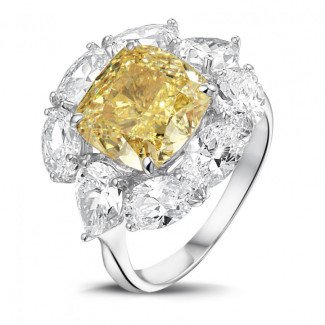
![Entourage ring in white gold with ‘fancy intense yellow’ cushion diamond and oval and pear shaped diamonds]() Entourage ring in white gold with ‘fancy intense yellow’ cushion diamond and oval and pear shaped diamondsFrom USD 100.060,00 (excl. VAT)
Entourage ring in white gold with ‘fancy intense yellow’ cushion diamond and oval and pear shaped diamondsFrom USD 100.060,00 (excl. VAT) -
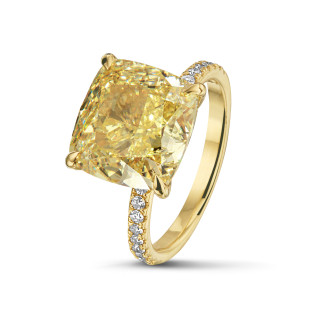
![7.07ct solitaire ring in yellow gold with ‘fancy intense yellow’ cushion diamond and side stones]() 7.07ct solitaire ring in yellow gold with ‘fancy intense yellow’ cushion diamond and side stonesFrom USD 26.720,00 (excl. VAT)
7.07ct solitaire ring in yellow gold with ‘fancy intense yellow’ cushion diamond and side stonesFrom USD 26.720,00 (excl. VAT) -
![1.00Ct solitaire ring in white gold with Marquise diamond]() Bestseller1.00Ct solitaire ring in white gold with Marquise diamondFrom USD 3.910,00 (excl. VAT)
Bestseller1.00Ct solitaire ring in white gold with Marquise diamondFrom USD 3.910,00 (excl. VAT) -
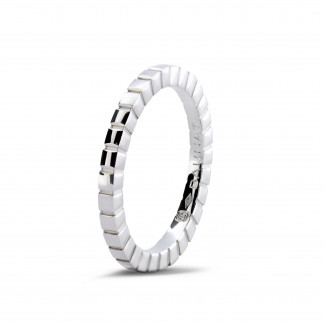
![Stackable chequered ring in white gold]() Stackable chequered ring in white goldFrom USD 1.990,00 (excl. VAT)
Stackable chequered ring in white goldFrom USD 1.990,00 (excl. VAT)


- The Cora Sun-Drop Diamond: this diamond is the largest-known yellow pear-shaped diamond, with a carat weight of 110. In November 2011, it was sold by Sotheby’s at an auction in Geneva for $10.9 million. The Sun-Drop was also found in South Africa.
- The Florentine Diamond: the Florentine Diamond, a yellow-coloured diamond which has, unfortunately, mysteriously disappeared, was apparently even more valuable. Whereas the Sun-Drop has a carat weight of 110, the carat weight of the Indian Florentine Diamond is 137 carats.
How do I mix and match a yellow diamond?
What kinds of yellow diamonds can you find at BAUNAT?
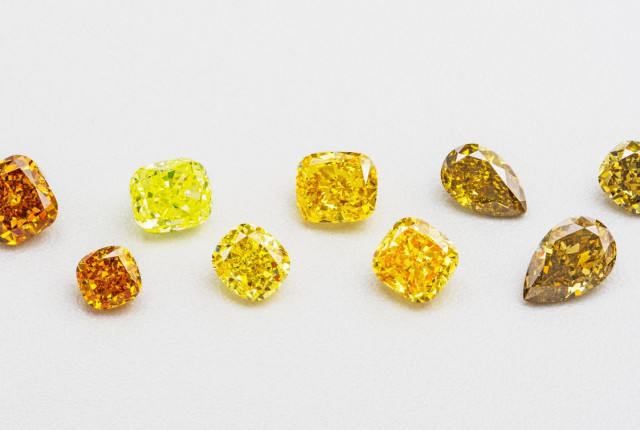
Color intensity in our inventory spans the Fancy scale. Much of our stock sits toward the more accessible end, with a meaningful share in Fancy Light and Fancy, a substantial selection in Fancy Intense, and fewer but special examples in Fancy Vivid. Fancy Deep and Fancy Dark appear more rarely and are chosen for specific designs. Many stones also show slight orangy or brownish overtones; our buying team assesses these modifiers for visual appeal and resale potential.
Shape choices are broad to suit different settings. Round, radiant, cushion, oval and marquise cuts are the most common; radiant and cushion cuts often concentrate color, making the yellow more visible at smaller weights, while round and oval shapes deliver strong brilliance that complements the hue.
For bespoke commissions we combine sourcing and design: after you and your advisor agree the desired spec and budget range, our procurement team searches the market and presents vetted candidates with full documentation. We explain the trade-offs between intensity, size and clarity so you can choose the best stone for the intended setting. Every diamond purchased from BAUNAT comes with independent certification appropriate to the stone, and our advisors walk you through the report so you understand the attributes behind your choice.
Understanding yellow-diamond intensity and what it means for price
Intensity influences three buyer-facing factors. First, perceived color: Fancy Light and Fancy can read as gentle yellow tones in some settings, while Fancy Intense and Fancy Vivid deliver a clear, saturated yellow that shows even at modest sizes. Second, rarity: availability declines as intensity increases toward Fancy Vivid, which attracts more collector interest. Third, demand and pricing: more vivid stones are sought for their visual impact and therefore carry higher premiums compared with lighter intensities when carat, clarity and cut are similar.
Expect a stepped relationship rather than a linear one. For two stones identical in carat, clarity and cut, a Fancy Vivid example will typically trade for significantly more than a Fancy Light counterpart; Fancy Intense sits between those points. Modifiers matter as well: a noticeable brownish overtone tends to soften demand, while a clean yellow without distracting overtones generally holds value better.
Examples to illustrate typical choices:
1. 1.00 ct • Fancy Light • VS2 - chosen for elegant, wearable designs and more accessible than deeper intensities.
2. 3.00 ct • Fancy Intense • VS2 - less common at this size, commands a stronger market position.
3. 2.50 ct • Fancy Vivid • VVS1 - a premium collectible-grade stone, notable for saturation and rarity.
If intensity and budget are both priorities, discuss trade-offs with a BAUNAT advisor. We can show how changes in intensity, clarity or cut shift visual effect and market position, and provide a custom quote for stones that meet your priorities.
Considering a 6‑carat yellow diamond? What to ask your advisor
Sample spec template to prepare
6.00 ct • Fancy Light–Fancy Vivid • VS2–SI1 • Radiant or Marquise • GIA (or equivalent laboratory)
Why these particulars matter
Carat sets scale and presence; intensity drives color impact and rarity; clarity affects visible inclusions and price at scale; and cut or shape determines how color and brilliance interact in the finished piece. For stones in the 6.00 ct class, certification is essential: an independent report validates the color and clarity statements that underpin market value. During a concierge consultation we will ask for any existing documentation, your stylistic preferences, and the intended use of the jewel so we can prioritise stones that match both visual goals and investment considerations.
Price for high-carat colored diamonds varies widely depending on the combination of specs; provide the detailed template above and BAUNAT will source comparable candidates and deliver a tailored quote and documentation package.


Learn more about other coloured diamonds
-
Stephanie Hesters
-
BAUNAT Antwerp
-
-
As the Head of Diamond Buying at BAUNAT, Stephanie has an extensive knowledge of the diamond and the evolution of diamond prices. Thanks to her broad product knowledge gained throughout her years at BAUNAT and the Diamond Foundation Course by De Beers, Stephanie advises our customers interested in the investment side of diamonds to optimize every investment. To support her skills she has a bachelor’s degree in Business Management together with her master’s in Communication.
About Stephanie Hesters (also known as Stephanie Lasters)
Stephanie Hesters, sometimes listed online as Stephanie Lasters, is Head of Diamond Buying at BAUNAT. She manages diamond sourcing and valuation, advises clients on market trends and pricing, and helps those looking for investment-grade stones. She completed the Diamond Foundation Course by De Beers and holds a bachelor’s degree in Business Management and a master’s in Communication.
Selected projects & collaborations
• Eternal Bloom Collection with Princess Delphine of Saxe-Coburg (2026), curator and project lead - guided creative direction and diamond selection for an exclusive collection that blends classical motifs with contemporary craftsmanship.
• Investment Diamonds Advisory Series (2024), author and presenter - developed client-facing guides and presentations on diamond valuation and market dynamics for private buyers and collectors.
• BAUNAT Editorial Features and Product Launches (2022–2025), contributor - worked with design and marketing teams to shape product narratives and ensure technical accuracy in launch materials and editorial content.
As the Head of Diamond Buying at BAUNAT, Stephanie has an extensive knowledge of the diamond and the evolution of diamond prices. Thanks to her broad product knowledge gained throughout her years at BAUNAT and the Diamond Foundation Course by De Beers, Stephanie advises our customers interested in the investment side of diamonds to optimize every investment. To support her skills she has a bachelor’s degree in Business Management together with her master’s in Communication.
About Stephanie Hesters (also known as Stephanie Lasters)
Stephanie Hesters, sometimes listed online as Stephanie Lasters, is Head of Diamond Buying at BAUNAT. She manages diamond sourcing and valuation, advises clients on market trends and pricing, and helps those looking for investment-grade stones. She completed the Diamond Foundation Course by De Beers and holds a bachelor’s degree in Business Management and a master’s in Communication.
Selected projects & collaborations
• Eternal Bloom Collection with Princess Delphine of Saxe-Coburg (2026), curator and project lead - guided creative direction and diamond selection for an exclusive collection that blends classical motifs with contemporary craftsmanship.
• Investment Diamonds Advisory Series (2024), author and presenter - developed client-facing guides and presentations on diamond valuation and market dynamics for private buyers and collectors.
• BAUNAT Editorial Features and Product Launches (2022–2025), contributor - worked with design and marketing teams to shape product narratives and ensure technical accuracy in launch materials and editorial content.