







Features:
-
Category:
-
Posted at:
-
Author:
- Fabienne Rauw
-
BAUNAT Antwerp
-


-
Reading time:9 minutes
In this article:
Why do we associate diamonds with trust and love?
For centuries, diamonds have been regarded as very special. As jewels, they adorned the crowns of kings and queens; they were a symbol of power, prosperity and high rank. They were even said to have magical qualities. Today, on the other hand, they are mainly associated with love, trust and romance.
Read summary
How did diamonds become the ultimate symbol of love and commitment?
While diamonds have historically represented power and prosperity among royalty, their modern association with love and romance can be largely attributed to De Beers' brilliant marketing strategy. In the 1930s, Harry Oppenheimer, son of the company's founder, launched a transformative campaign in America with the iconic slogan "Diamonds are Forever." By targeting young, affluent men ready for marriage, De Beers successfully created a cultural link between diamonds and romantic commitment.
Though this association may have started as a marketing tactic, diamonds' natural properties make them genuinely fitting symbols of eternal love. Their unmatched hardness, brilliance, and spectacular play of light create an enduring beauty that resonates with the idea of lasting commitment. Today, diamond rings are universally recognized as symbols of engagement and marriage, transcending their advertising origins to become a timeless expression of deep affection and trust.
Most viewed diamond jewels
-
![1.00Ct halo ring in white gold with oval diamond]() Bestseller1.00Ct halo ring in white gold with oval diamondFrom € 5.578,10 (incl. 21% VAT)
Bestseller1.00Ct halo ring in white gold with oval diamondFrom € 5.578,10 (incl. 21% VAT) -
![1.00 carat solitaire cluster ring in white gold with marquise diamond]() BestsellerNew1.00 carat solitaire cluster ring in white gold with marquise diamondFrom € 4.622,20 (incl. 21% VAT)
BestsellerNew1.00 carat solitaire cluster ring in white gold with marquise diamondFrom € 4.622,20 (incl. 21% VAT) -
![0.95 carat diamond rose design ring in white gold]() NewPrincess Delphine0.95 carat diamond rose design ring in white goldFrom € 16.831,10 (incl. 21% VAT)
NewPrincess Delphine0.95 carat diamond rose design ring in white goldFrom € 16.831,10 (incl. 21% VAT) -
![1.00 carat solitaire ring with an asscher cut diamond in white gold]() Bestseller1.00 carat solitaire ring with an asscher cut diamond in white goldFrom € 4.936,80 (incl. 21% VAT)
Bestseller1.00 carat solitaire ring with an asscher cut diamond in white goldFrom € 4.936,80 (incl. 21% VAT) -
![1.00 carat solitaire ring with a cushion diamond and hidden halo in white gold]() BestsellerNew1.00 carat solitaire ring with a cushion diamond and hidden halo in white goldFrom € 4.210,80 (incl. 21% VAT)
BestsellerNew1.00 carat solitaire ring with a cushion diamond and hidden halo in white goldFrom € 4.210,80 (incl. 21% VAT)


Definition: what is a "jewel"?
A jewel is an ornamental object, typically a gemstone set in metal, valued for beauty, rarity or sentimental meaning. The word comes from Old French jouel, from Latin jocale, meaning plaything or delight, and over time it gained the modern sense of a precious ornament. Beyond gemstones, jewel is used metaphorically for something admired for excellence or rarity, whether a work of art, a talented person or a treasured possession.
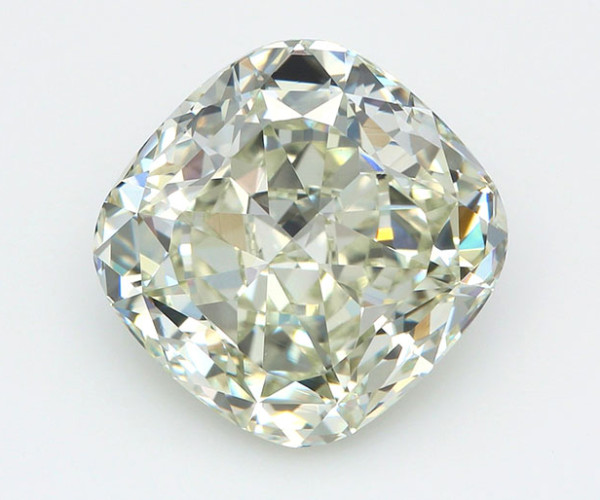
Diamonds have always been considered special and anyone who takes a look at the hardest gem in the world knows why. A polished diamond displays a unique play of light, colours, brilliance, radiance and sparkle, which no other stone can achieve. But why exactly does a <a href="/en/rings">diamond ring</a> represent love in our contemporary society?
Are diamonds really forever? The science behind the myth
Short answer: culturally we treat diamonds as "forever," but physically a diamond is extremely durable under normal conditions while still being, in scientific terms, metastable.
At the atomic level a diamond is a network of carbon atoms, each bonded to four neighbours in a rigid three-dimensional lattice. That tetrahedral bonding is why diamond rates among the hardest known materials and resists scratching and abrasion. Graphite, another carbon form, has planar sheets of atoms that bond strongly within a layer but only weakly between layers, so it cleaves and wears very differently. University materials groups and textbooks make the same point: the bonding difference explains their contrasting mechanical behaviour.
Metastable describes a material that is not in the absolute lowest-energy state but remains unchanged because a substantial energy barrier stops transformation. Picture a ball sitting in a shallow valley: without a strong push it will stay put rather than cross the hill to a deeper valley. Under surface conditions on Earth, graphite is the lower-energy carbon form, but the energy needed to break and rearrange diamond's strong tetrahedral bonds is large, so diamonds persist.
There are conditions that can damage or alter diamonds. High temperatures with oxygen can oxidise carbon to carbon dioxide, so intense heat from a fire can discolour or harm a stone and, in extreme cases, consume it. Exposure to high-energy particles in specialised industrial or research settings can produce lattice defects. Mechanical shocks along certain crystallographic directions can cause cuts, chips or fractures - diamond is hard but not unbreakable.
In everyday wear and care diamonds last a very long time. Their hardness makes them resistant to scratches, and under normal temperatures, light exposure and handling they keep their brilliance for generations. That practical longevity is why jewellers reasonably use the phrase "diamonds are forever": in daily life and ceremonial use diamonds outlast most other gemstones.
In short, the advertising slogan rests on a useful truth - diamonds are exceptionally durable in ordinary conditions - but it omits the scientific detail. From a materials perspective diamonds are metastable and can be changed given sufficient energy or the right chemical environment; culturally, the promise of "forever" reflects the emotional and practical longevity people observe.
A company called De Beers
The reason why diamond is associated with romance is mainly attributed to the global acting company De Beers. This company has, since the end of the 19th century, secured the lion's share of the world market through their control over the diamond supply chain and the diamond trade. By keeping a close eye on the opening of new mines, they successfully prevent the diamond prices from dropping.
Smart marketing
Harry Oppenheimer, the son of one of the founders of the syndicate, Ernest Oppenheimer, emigrated to America in the 1930s to promote the distribution of diamonds. The advertising slogan "Diamonds are forever" was born. The first advertising campaign focused on young, high-earning men of a marriageable age. With striking success. With growing marketing budgets and expansion to more and more countries, diamonds have become a synonym for De Beers, but also for love and romance.
'Forever' as marketing — what about value?
Durability and resale value are different matters. A diamond's physical resilience - its ability to resist scratches or ordinary wear - is not the same as how its market price behaves. Prices and demand change with supply, consumer preferences and wider economic shifts, so the slogan "forever" should be read as a comment on emotional and physical longevity rather than a promise of constant financial value.
If resale or investment potential matters, the practical step is to seek an independent valuation and learn the market for the specific stone, including cut quality, certification and provenance. Treat "forever" as a statement about lasting sentiment and material endurance, not guaranteed resale returns.
Advertising only?
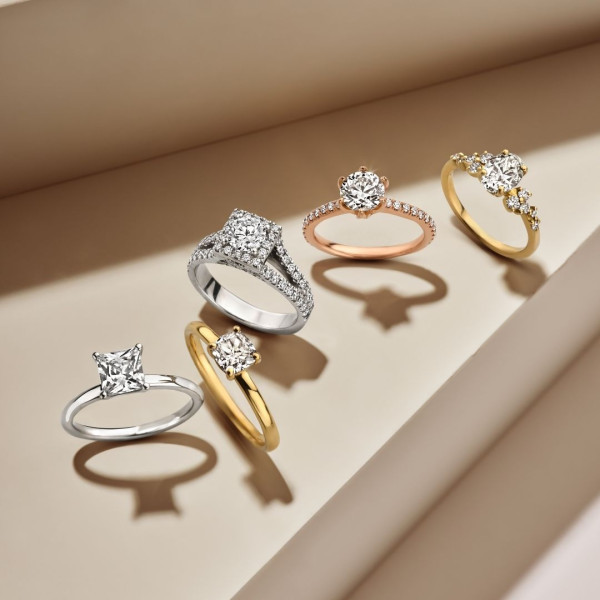
Even if the association between a diamond ring and love has arisen from decades of targeted advertising, it does not alter the incomparable beauty and timeless elegance that diamonds radiate. It does not change the fact that today, everyone you ask connects a diamond ring with engagement and marriage. And so the conclusion remains this: there is no woman on earth who would not consider a diamond ring as a sign of deep affection!
Are you looking for the perfect diamond ring? We are glad to help you with your choice!
-
Fabienne Rauw
-
BAUNAT Antwerp
-
-
Fabienne, manager of the German market is able to guide every client with finding the right jewel. She takes care of most of the German orders, but also takes other task on her plate. Thanks to her six years of experience at BAUNAT she acquainted well with the product and the marketing around it. Her degree in PR ensures that BAUNAT is well presented across all media channels. For anyone looking into a new investment opportunity, Fabienne is the perfect guide in this process. No question will be left unanswered, and she will help you every step of the way.
Selected Bespoke Projects
• Eternal Bloom bespoke engagement concept - Role: project lead for client briefing and prototype coordination. Fabienne translated personal design references into a 3D-printed prototype, supervised stone selection and ensured the finished piece matched the client’s vision and comfort preferences.
• Personalized anniversary necklace - Role: design coordinator and quality overseer. She managed the custom design process from the initial sketch to final polishing, liaising between client and workshop to preserve proportions and finish.
• Reimagined heirloom ring restoration and redesign - Role: client consultant and technical coordinator. Fabienne guided the client through options to modernize setting details while keeping sentimental elements, delivering a wearable result that respected the original piece.
Her hands-on involvement in bespoke commissions ensures each custom order has a clear brief, careful prototype review and close follow-up with the workshop, so clients receive a tailored jewel that meets both aesthetic and practical expectations.
Professional enquiries
For speaking engagements, press requests or research collaborations, please send your message to BAUNAT’s communications team with the subject line: "Fabienne Rauw - Professional Enquiry." Include a brief description of the request and any relevant dates or documents. The communications team will route enquiries to Fabienne and provide guidance on next steps.
Fabienne, manager of the German market is able to guide every client with finding the right jewel. She takes care of most of the German orders, but also takes other task on her plate. Thanks to her six years of experience at BAUNAT she acquainted well with the product and the marketing around it. Her degree in PR ensures that BAUNAT is well presented across all media channels. For anyone looking into a new investment opportunity, Fabienne is the perfect guide in this process. No question will be left unanswered, and she will help you every step of the way.
Selected Bespoke Projects
• Eternal Bloom bespoke engagement concept - Role: project lead for client briefing and prototype coordination. Fabienne translated personal design references into a 3D-printed prototype, supervised stone selection and ensured the finished piece matched the client’s vision and comfort preferences.
• Personalized anniversary necklace - Role: design coordinator and quality overseer. She managed the custom design process from the initial sketch to final polishing, liaising between client and workshop to preserve proportions and finish.
• Reimagined heirloom ring restoration and redesign - Role: client consultant and technical coordinator. Fabienne guided the client through options to modernize setting details while keeping sentimental elements, delivering a wearable result that respected the original piece.
Her hands-on involvement in bespoke commissions ensures each custom order has a clear brief, careful prototype review and close follow-up with the workshop, so clients receive a tailored jewel that meets both aesthetic and practical expectations.
Professional enquiries
For speaking engagements, press requests or research collaborations, please send your message to BAUNAT’s communications team with the subject line: "Fabienne Rauw - Professional Enquiry." Include a brief description of the request and any relevant dates or documents. The communications team will route enquiries to Fabienne and provide guidance on next steps.