







Features:
-
Category:
-
Posted at:
-
Author:
- An Van Puyvelde
-
An Van Puyvelde - Order & Administration Manager
-


-
Reading time:12 minutes
In this article:
What should I consider when buying a diamond ring?
Which occasions require a diamond ring? Diamonds are inextricably connected to the engagement ring. But ladies can certainly also be spoilt with a diamond ring on Valentine’s Day, Mother’s Day or a birthday. However, a few important matters need to be considered when purchasing one. We would like to help you make the right choice.
Read summary
What should you consider when buying a diamond ring?
Wondering what factors to consider when purchasing a diamond ring? Whether for an engagement, Valentine's Day, or Mother's Day, making the right choice involves several key considerations.
First, establish your budget. The price you're willing to pay for an engagement ring will likely differ from what you'd spend on a Mother's Day gift, but beautiful options exist at every price point.
Understanding the 4C's—carat, color, clarity, and cut—is essential as these factors determine the diamond's quality and value. Always select jewelry accompanied by a certificate from respected laboratories like GIA, IGI, or HRD.
Consider the diamond shape carefully, as it significantly impacts the ring's appearance. While round brilliants remain most popular, other shapes reflect different personalities and characteristics.
Finally, know the correct ring size, as diamond rings can be difficult or impossible to resize, especially those with diamonds encircling the band.
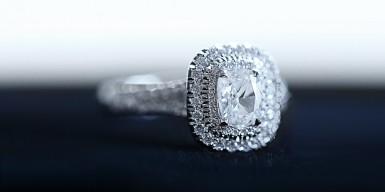
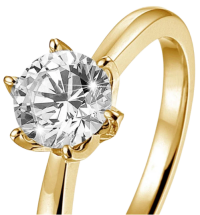
5 Questions to Find Her Perfect Engagement Ring
Are you planning to propose? Finding the right engagement ring is a defining step. Every ring is handcrafted in Antwerp from the finest materials by skilled artisans. Discover what engagement ring fits her personality.
Most viewed diamond jewels
-
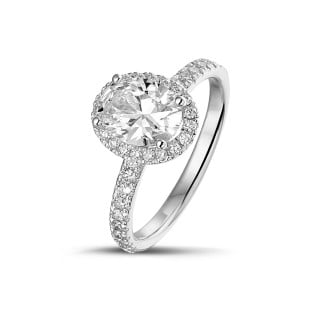
![1.00Ct halo ring in white gold with oval diamond]() Bestseller1.00Ct halo ring in white gold with oval diamondFrom USD 5.210,00 (excl. VAT)
Bestseller1.00Ct halo ring in white gold with oval diamondFrom USD 5.210,00 (excl. VAT) -
![1.00 carat solitaire cluster ring in white gold with marquise diamond]() BestsellerNew1.00 carat solitaire cluster ring in white gold with marquise diamondFrom USD 4.320,00 (excl. VAT)
BestsellerNew1.00 carat solitaire cluster ring in white gold with marquise diamondFrom USD 4.320,00 (excl. VAT) -
![0.95 carat diamond rose design ring in white gold]() NewPrincess Delphine0.95 carat diamond rose design ring in white goldFrom USD 15.720,00 (excl. VAT)
NewPrincess Delphine0.95 carat diamond rose design ring in white goldFrom USD 15.720,00 (excl. VAT) -
![1.00 carat solitaire ring with an asscher cut diamond in white gold]() Bestseller1.00 carat solitaire ring with an asscher cut diamond in white goldFrom USD 4.620,00 (excl. VAT)
Bestseller1.00 carat solitaire ring with an asscher cut diamond in white goldFrom USD 4.620,00 (excl. VAT) -
![1.00 carat solitaire ring with a cushion diamond and hidden halo in white gold]() BestsellerNew1.00 carat solitaire ring with a cushion diamond and hidden halo in white goldFrom USD 3.940,00 (excl. VAT)
BestsellerNew1.00 carat solitaire ring with a cushion diamond and hidden halo in white goldFrom USD 3.940,00 (excl. VAT)


How much do you want to spend?
When you’re planning on surprising that special lady who means so much to you with a diamond ring, you will first need to think about how much you want to spend. The amount you spend on a Mother’s Day gift will undoubtedly not be in the same ballpark as the amount you would spend on an engagement ring for your loved one.
You can definitely find a beautiful ring in any price class. When you’re planning on surprising that special lady who means so much to you with a diamond ring, you will first need to think about how much you want to spend. You can definitely find a beautiful ring in any price class.
Practical budget worksheet
Break your overall budget into three fields: total budget, diamond budget, and setting budget. For engagement rings, a common allocation is to place the largest share on the diamond, because it drives the visual impact and long-term value. As a rule of thumb within Baunat’s quality philosophy, consider allocating roughly 60 to 75 percent of the total spend to the diamond itself, with the remainder covering the setting and any customization.
Micro-actions and allocation examples
- Write down your total budget first; then calculate 60–75% for the diamond.
- If you prefer a larger-looking stone on a tighter budget, prioritise cut and choose a halo or pavé setting to increase perceived size without significantly increasing carat cost.
- If durability is crucial, allocate more to a robust setting and choose a slightly smaller diamond with excellent cut rather than chasing carat alone.
Negotiation and optimisation tips
Prioritise cut over carat when you want maximum sparkle per euro. Within Baunat’s standards you can accept slightly lower colour (for example G–H) or clarity (SI1–VS2), and still retain excellent visual performance. Ask to compare stones face-up: an excellent-cut stone with a marginally lower colour grade can outperform a larger but poorly cut diamond.
Example calculation
If your total budget is set, multiply by 0.65 to estimate the diamond allocation. Use the remaining 35 percent for the setting, engraving or resizing. With that diamond allocation in hand, decide whether you want to prioritise carat or cut, then ask to see candidate stones that match your allocation so you can compare real visual results rather than relying on numbers alone.
These small exercises help you enter a consultation with clear priorities, making it easier to find a ring that looks exceptional within your means.
And as you can see in this short video, there are also a number of useful tricks for making a diamond appear bigger.
What should you know about the 4C’s?
Plenty has already been written about the 4C’s. But a little bit of repetition never did anyone any harm. The 4C’s stand for carat, colour, clarity and cut. They determine the identity, quality and therefore also the price tag of the diamond. It’s also important for you to have some level of knowledge about these 4 determining factors when buying a diamond ring.
Therefore always make sure you opt for diamond jewellery which is accompanied by a certificate. A few renowned laboratories which issue these certificates are the GIA, IGI and HRD.
Which diamond shape are you going to go for?
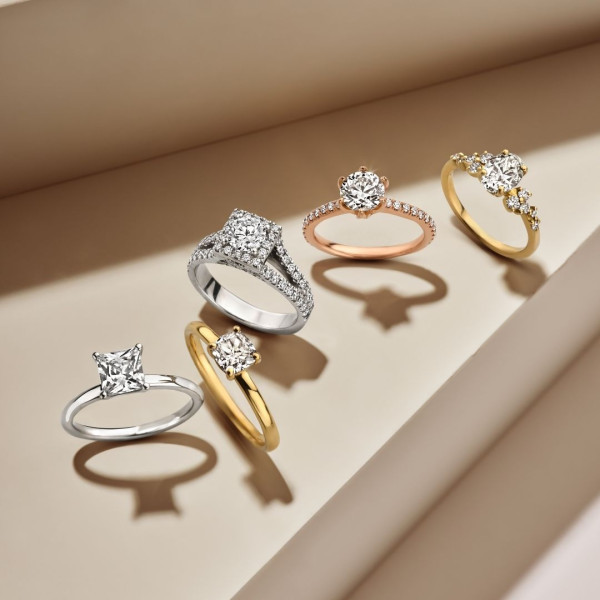
The shape of the diamond has a huge influence on the diamond ring’s appearance. The round brilliant is still the most popular diamond shape. Are you after something a little more original? Then go for a diamond shape based on her personality. After all, each shape has a certain meaning and stands for a certain character.
One final tip: make sure you have the correct ring size! Be aware of the fact it isn’t all that easy to alter a diamond ring. Plus this is actually impossible when you opt for a ring which is set with diamonds all around.
Which setting is best for her lifestyle?
The setting you choose affects three outcomes at once: how well the ring stands up to daily wear, how large the diamond appears, and how often it needs professional cleaning or maintenance. Below are recommended settings matched to common lifestyles, plus notes on metal choices aligned with Baunat’s standards.
Active wearer (hands-on life)
People who work with their hands or lead active lives benefit most from protective settings. A full bezel encloses the diamond’s girdle and resists knocks, while a low-profile four-prong with reinforced shoulders offers a compromise between protection and sparkle. Avoid raised, delicate pavé or exposed designs that catch on clothing. Metal choice: 18Kt gold or platinum for highest durability. Outcome: slightly reduced face-up size compared with open prongs, but far better protection and lower risk of damage.
Office / professional wearer
If the ring is worn daily in professional settings, balance elegance and practicality. A classic four-prong solitaire or a halo gives strong brilliance while remaining comfortable for everyday wear. Choose a setting with secure prongs rather than extremely thin claws. Metal choice: 18Kt white or yellow gold or platinum depending on wardrobe and skin tone. Outcome: excellent visual sparkle with moderate maintenance needs.
Occasional wearer / special occasion pieces
For rings worn rarely, maximise visual impact. Halo and pavé settings dramatically increase apparent size and sparkle, and intricate vintage designs emphasise presence. Be mindful that these designs require more careful cleaning to keep all small stones bright. Metal choice: 18Kt gold or platinum, depending on look. Outcome: highest perceived size and detail, higher cleaning frequency.
Settings that change perceived size
Halo settings, pavé shoulders and side stones all increase the apparent size of the centre diamond by reflecting light and framing the stone. A well-proportioned halo can make a 0.75ct centre appear closer to a full carat in presence. Conversely, bezels can make a stone appear smaller but add significant protection. Use these visual effects intentionally to meet either a size or durability goal.
Baunat recommendations and cautions
Baunat works with 18Kt gold and platinum for durability and premium finish. We do not recommend tension settings for everyday wear because they increase the risk of stones loosening. When you choose a setting, ask to see how it sits on the finger from different angles and under natural light, and discuss cleaning intervals - settings with many small stones typically need more frequent professional attention.
Annotated examples
- Bezel for the cyclist: a 0.75ct excellent-cut diamond in a low bezel will stay protected and remain brilliant during daily activity.
- Halo for presence: a 1.00ct good-to-excellent cut centre with a narrow halo and pavé shoulders maximises perceived size for formal occasions but will need careful cleaning to retain maximum sparkle.
These recommendations help match the ring’s design to daily realities, so the piece looks beautiful and lasts.
Buyer scenarios: budget, style and trade-offs
Choosing a diamond is easier when you think in concrete scenarios rather than abstract grades. Below are four common buyer profiles, each translating the 4C’s into practical trade-offs, recommended settings and metals, and what you can expect visually for your budget. These examples follow Baunat’s standards: we use 18Kt for gold and we do not recommend tension settings.
Tight budget: smart visual choices
If your budget is limited but you want the best-looking result, prioritise cut first and carat second. Aim for an excellent or very good cut, accept colour in the G–H range and clarity around SI1–VS2. A well-cut 0.75ct H SI1, excellent cut, will often face up larger and sparkle more than a poorly cut 1.0ct. Recommended setting: halo or delicate pavé to maximise perceived size; a low bezel can also protect the stone while appearing slightly smaller face-up. Metal: 18Kt white or yellow gold, or platinum for higher durability. Visual impact versus cost: strong sparkle and a larger apparent size for less money, at the expense of the absolute top grades on colour and clarity.
Balanced - best value
This profile suits buyers who want a classic, long-term piece with clear visual appeal and solid resale potential. Priorities: balance carat and cut equally, pick colour in the F–G range and clarity VS2–SI1 depending on the stone. A 1.00ct F VS2 with excellent cut will offer an attractive mix of brilliance and presence without extreme premiums. Recommended setting: classic four-prong solitaire or a low-profile halo to keep a timeless look while enhancing size. Metal: 18Kt gold or platinum depending on wearer preference.. Visual impact versus cost: noticeable presence and high sparkle with moderate premium for strong colour and clarity.
Premium / investment
For buyers focused on rarity and long-term value, prioritise carat and top-tier cut while choosing colour and clarity among the best available. Target diamonds from 1.5ct upward, excellent cut, colour in the D–F range and clarity VS2 or higher as needed for eye-clean appearance. Recommended setting: minimal prong settings that show the diamond fully, or three-stone designs that emphasise size. Metal: platinum or 18Kt white gold to enhance white stones. Visual impact versus cost: maximum face-up size and exceptional brilliance, with significantly higher cost per fraction of a carat but superior market perception and collectability.
Lifestyle-focused (active wearer)
If the ring will be worn daily while hands are active, durability and low maintenance must outrank marginal size gains. Priorities: excellent cut for sparkle, colour G–H acceptable, clarity SI1–VS2 provided inclusions are not surface or in vulnerable positions. Recommended setting: bezel or low-profile four-prong with reinforced shoulders for protection. Avoid delicate pavé if the wearer uses hands in rough conditions daily. Metal: 18Kt rose, yellow or white gold in 18Kt or platinum for the most abrasion resistance. Visual impact versus cost: slightly reduced apparent size if choosing protective settings, but a dramatic increase in longevity and fewer repair needs.
Quick checklist - what to ask when shopping
- What is the cut grade and how does it affect face-up brilliance?
- Will a halo or pavé enhance visual size more cost-effectively than a larger carat?
- What setting and metal suit daily activities - is protection or maximum sparkle the priority?
- Ask the consultant to show two stones with the same carat but different cut grades so you can compare sparkle directly.
These scenarios make it easier to pick trade-offs that match real life: whether you want the biggest visual impact for your budget, an heirloom-quality piece, or a ring that endures an active lifestyle.
Are you ready to choose the perfect diamond ring from our extensive collection? For extra tips and advice, you can contact BAUNAT’s experts via telephone, email or chat.
-
An Van Puyvelde
-
An Van Puyvelde - Order & Administration Manager
-
-
An supervises BAUNAT’s order processing and logistics, working closely with the internal order team to ensure a seamless customer experience. She plays a key role in coordinating production timelines and maintaining clear communication with clients throughout the entire process. With a strong focus on precision and reliability, An is dedicated to delivering each piece on time while keeping customers fully informed, contributing to BAUNAT’s high standard of service and customer satisfaction.
An supervises BAUNAT’s order processing and logistics, working closely with the internal order team to ensure a seamless customer experience. She plays a key role in coordinating production timelines and maintaining clear communication with clients throughout the entire process. With a strong focus on precision and reliability, An is dedicated to delivering each piece on time while keeping customers fully informed, contributing to BAUNAT’s high standard of service and customer satisfaction.