







Features:
-
Category:
-
Posted at:
-
Author:
- Fabienne Rauw
-
BAUNAT Antwerp
-


-
Reading time:15 minutes
In this article:
What superstitions are there around weddings, engagements and rings?
Superstition is eternal. There is no getting away from it, even when it comes to weddings and engagements. According to tradition, if you want to enjoy a happy and fruitful marriage, you will need to be very careful. Allow us to share some of the most ominous legends with you!
Read summary
What curious superstitions surround weddings, engagements, and rings in different cultures?
From avoiding church proposals to strict rules about wedding rings, marriage traditions are steeped in fascinating superstitions. Some warn against brides making their own wedding dresses or future wives writing their new surnames before the ceremony, claiming these actions bring misfortune. Italians believe stepping over a broom ruins marriage prospects, while the common practice of throwing rice at weddings comes with its own cautions about accidentally hitting the couple's eyes.
Not all superstitions spell doom - Victorians believed dropping wedding bands during the ceremony brought good luck and warded off evil spirits. Many cultures choose the ring finger for wedding bands due to an ancient belief about a direct vein to the heart, though this has no medical basis. While some warn against wearing others' wedding rings, an itchy ring finger is said to predict an upcoming engagement. Regardless of beliefs, the timeless beauty of a diamond engagement ring remains the centerpiece of wedding traditions.

5 Questions to Find Her Perfect Engagement Ring
Are you planning to propose? Finding the right engagement ring is a defining step. Every ring is handcrafted in Antwerp from the finest materials by skilled artisans. Discover what engagement ring fits her personality.
Most viewed diamond jewels
-
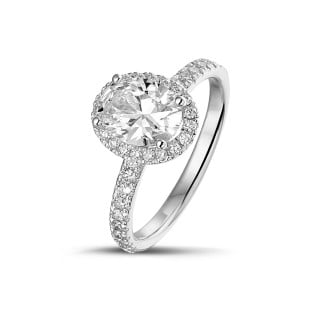
![1.00Ct halo ring in white gold with oval diamond]() Bestseller1.00Ct halo ring in white gold with oval diamondFrom € 5.578,10 (incl. 21% VAT)
Bestseller1.00Ct halo ring in white gold with oval diamondFrom € 5.578,10 (incl. 21% VAT) -
![1.00 carat solitaire cluster ring in white gold with marquise diamond]() BestsellerNew1.00 carat solitaire cluster ring in white gold with marquise diamondFrom € 4.622,20 (incl. 21% VAT)
BestsellerNew1.00 carat solitaire cluster ring in white gold with marquise diamondFrom € 4.622,20 (incl. 21% VAT) -
![0.95 carat diamond rose design ring in white gold]() NewPrincess Delphine0.95 carat diamond rose design ring in white goldFrom € 16.831,10 (incl. 21% VAT)
NewPrincess Delphine0.95 carat diamond rose design ring in white goldFrom € 16.831,10 (incl. 21% VAT) -
![1.00 carat solitaire ring with an asscher cut diamond in white gold]() Bestseller1.00 carat solitaire ring with an asscher cut diamond in white goldFrom € 4.936,80 (incl. 21% VAT)
Bestseller1.00 carat solitaire ring with an asscher cut diamond in white goldFrom € 4.936,80 (incl. 21% VAT) -
![1.00 carat solitaire ring with a cushion diamond and hidden halo in white gold]() BestsellerNew1.00 carat solitaire ring with a cushion diamond and hidden halo in white goldFrom € 4.210,80 (incl. 21% VAT)
BestsellerNew1.00 carat solitaire ring with a cushion diamond and hidden halo in white goldFrom € 4.210,80 (incl. 21% VAT)


What should you definitely not do?
We are not sure how often this happens, but asking your girlfriend to marry you in a church will bring misfortune to even the most pious choirboy. Also, women who intend to take their husband’s name but write it down before the wedding ceremony can expect years of sorrow and misfortune. And brides who make their own wedding dresses will not be lucky in love.
Italians go a step further. Have your feet ever come into contact with a broom? Then you can forget it; you do not even deserve to get engaged, let alone married – a great excuse to forgo the cleaning!
Be careful with rice at a wedding
Throwing rice at a wedding is a popular tradition in this part of the world. It originated in the East and is supposed to bestow fertility on the newlyweds. But beware: if you throw a grain of rice and it lands in the eye of the bride or groom, not only will you be a laughing-stock, you will have brought bad luck on the happy couple. Also, it tends not to be very good for wildlife, so we recommend choosing paper confetti instead.
Superstitions about wedding and engagement rings
But there is some positive news. For example, in Victorian times, people believed that if the wedding bands were dropped during the ceremony, it would bring good luck. Apparently, this is also a good way to drive away evil spirits. The same applies to the bridal veil, which is designed to keep demons at bay.
In terms of rings, there are lots of superstitions surround them. Most cultures wear engagement and wedding rings on their ring finger because it is believed that the vein in this finger runs straight to the heart. However, there is no medical basis for this.
Furthermore, it is supposedly bad luck to wear someone else’s wedding or engagement ring, so if you are feeling suspicious, maybe avoid the family heirloom! However, superstition dictates that having an itchy ring finger means that you will get engaged or married soon.
Itchy ring finger: meanings and what to do
An itchy ring finger is a familiar marriage superstition, and people interpret it in different ways. Instead of treating it as a sure omen, use the sensation as a prompt to reflect or take a few small, practical steps.
Left versus right hand
In many traditions the right hand is read as signalling incoming events while the left hand suggests matters already in progress. So a tingle on the right ring finger is often taken as forthcoming good news about a relationship, while an itch on the left can be read as a warning to pay attention to current partnership issues. These are folk meanings rather than facts, but they explain why a simple physical sensation can feel important.
Finger comparisons
The ring finger is traditionally linked to love and commitment, which is why its itch features in engagement lore. By contrast, an itchy index finger is sometimes tied to pride or a desire to act; the middle finger may be associated with balance or responsibilities; the little finger has historical links to reputation or secret messages. Treat these as loose guides rather than fixed rules.
Cultural and alternative interpretations
Across regions the same itch can mean opposite things. Some cultures say left-hand itching signals luck arriving, others say the reverse. This variety shows the superstition’s folk origin: people fit meanings to sensations based on local tradition and personal belief.
Practical steps when your ring finger itches
• Track frequency. Note whether the sensation is a one-off or recurring; repeated itches over days may warrant closer attention.
• Check the physical cause. Dry skin, eczema, insect bites, new soaps or rings that rub can produce itchiness. Rule out medical causes first.
• Reflect, don’t panic. Use the itch as a prompt to consider your relationship and whether there are conversations to be had.
• Communicate. If the feeling worries or excites you, share it with your partner as a light-hearted conversation starter rather than a directive.
A simple practice
Keep a small note on your phone for a week each time the sensation appears: date, hand, finger and any circumstances. Over time you may see patterns that are more practical than prophetic, and this habit turns a superstition into a mindful prompt.
But whether you’re superstitious or not, the first ingredient for a successful marriage is a breathtakingly beautiful diamond. In BAUNAT’s online shop, you will find an astonishing range of diamond engagement rings in a wide variety of colours and styles. And the prices are always the best on the market because BAUNAT sells its jewels exclusively online.
How to safely wear a pre-owned or inherited ring
Wearing an inherited or second-hand ring is a meaningful way to keep family history close. A few practical checks, done once and then periodically, will keep the piece comfortable and secure. Use the checklist below as a simple step-by-step guide before you start wearing the ring regularly.
1) Initial visual inspection (what to look for: loose stones, worn prongs)
Begin with a careful look in good light. Hold the ring up and look for stones that sit unevenly, small gaps between the stone and its setting, prongs that look flattened or misshapen, and visible cracks or chips in the band. Gently nudge any visible stones with a clean tool or toothpick; if a stone moves even slightly it needs attention. Also note dark residue under stones or inside the band, which can signal dirt build-up or past amateur repairs.
Questions to ask yourself: Do any stones shift when nudged? Are any prongs bent or missing? Is there obvious wear inside the band?
2) Professional cleaning and polish - why it matters and what to ask the jeweller
Even a ring that appears fine benefits from a professional clean. Ultrasonic cleaning and steam polishing remove grime from under and around stones, restore sparkle and often reveal hidden damage. When you bring the ring in, ask the jeweller to inspect it before cleaning and to explain the methods they will use. Request that they note loose stones and that no aggressive treatments are performed without your consent.
Useful question to ask: Can you clean and inspect the ring now and point out any weak points before work proceeds?
3) Fit and resizing guidance (how to check for correct fit, risks of ill-fitting rings)
A correct fit matters for comfort and security. The band should slide on with slight resistance and come off without forcing; it should not spin freely. If a ring is too loose the risk of loss rises; if too tight it can cut circulation and cause swelling. When resizing, mention any engraving or design details, since some settings or patterns limit how much the shank can be safely altered.
Practical check: Try the ring on at different times of day and after activity, then note whether it feels secure and comfortable.
4) Safety and allergy checks (testing for nickel, identifying metal allergies)
Older rings may include alloys that irritate sensitive skin. If you see redness or feel itching, ask the jeweller to test for nickel or other common allergens. A simple skin test or a surface metal analysis will identify problematic alloys. If an allergy is confirmed, options include a thin inner sleeve, plating with a hypoallergenic metal, or replacing the band while keeping the original gemstone.
Quick question to ask: Can you test this metal for nickel or perform a surface analysis?
5) Setting and security checks (how a jeweller tests the setting, when to re-tension or reinforce)
A trained jeweller inspects prongs, bezels and pavé settings for movement using magnification and small tools. They may recommend tightening prongs, rebushing thin bezels or reinforcing thin shanks. For older tension or delicate settings, discuss whether retensioning or adding a protective halo or bezel is appropriate to keep the stone secure in daily wear.
Practical prompt for the jeweller: Please show me the security of each stone under magnification and explain any recommended reinforcement.
6) Certification and documentation advice (asking for provenance or appraisal when relevant)
If provenance matters, request any available paperwork: appraisal reports, past repair receipts or notes on stone origin. For valuable or sentimental pieces, an independent appraisal helps for insurance and provenance. If no paperwork exists, a professional appraisal will at least confirm metal composition and approximate gem weight and quality.
Questions to request: Can you provide an appraisal or a written condition report after inspection?
7) Quick decision checklist
• Inspect visually in good light
• Have a professional clean and full inspection
• Confirm fit and resize as needed
• Test for metal allergies
• Ensure settings are tightened or reinforced
• Obtain a condition report or appraisal
If you bring the ring to a jeweller, say: “Could you check the prongs and tighten any loose stones, then provide a written condition report?” That short sentence focuses the appointment and helps ensure you leave with a safe ring and clear next steps.
Ownership, consent and family considerations
Family heirlooms often carry emotion as well as value, and wearing someone else’s ring without clear consent can cause hurt or legal complications. Before you decide to wear an inherited or passed-down ring, follow this short protocol to verify ownership and obtain the necessary permissions.
Verify provenance first
Ask relatives whether the ring was explicitly bequeathed or intended to remain in the family. If the ring was left in a will, probate documents or clear written instructions make ownership straightforward. When formal documentation is absent, a calm conversation with nearest relatives often clarifies intent.
What documentation to request
Politely ask for any appraisal papers, receipts, past repair records or a note specifying who the ring belonged to. These documents help establish provenance and are useful for insurance. If no paperwork exists, an independent appraisal after a professional inspection will establish the ring’s material and estimated value.
Red flags that deserve caution
If family members contest the ring, if there are multiple claimants, or if the ring’s origin is unclear, avoid wearing it until the dispute is resolved. Sudden surprises - for example, a relative stating they never agreed to pass the ring on - are signs to pause and seek agreement.
How to ask for permission - two sample sentences
• “I would love to wear Aunt Mary’s ring, but I want to make sure everyone is comfortable with that. May we agree on it together?”
• “Before I start wearing this piece, could we check whether it was intended to stay in the family or if anyone else has a wish for it?”
A short decision flow
If ownership is unclear → ask family members for their recollection → request any paperwork or agree to an appraisal → if contested, do not wear the ring until consensus is reached.
Practical note
If the piece is clearly given to you, a written confirmation from a family member reduces future questions. If emotions run high, consider alternatives such as commissioning a replica, remounting the stone into a new band that honours the original, or keeping the original safely stored and wearing a meaningful but uncontroversial replacement.
-
Fabienne Rauw
-
BAUNAT Antwerp
-
-
Fabienne, manager of the German market is able to guide every client with finding the right jewel. She takes care of most of the German orders, but also takes other task on her plate. Thanks to her six years of experience at BAUNAT she acquainted well with the product and the marketing around it. Her degree in PR ensures that BAUNAT is well presented across all media channels. For anyone looking into a new investment opportunity, Fabienne is the perfect guide in this process. No question will be left unanswered, and she will help you every step of the way.
Selected Bespoke Projects
• Eternal Bloom bespoke engagement concept - Role: project lead for client briefing and prototype coordination. Fabienne translated personal design references into a 3D-printed prototype, supervised stone selection and ensured the finished piece matched the client’s vision and comfort preferences.
• Personalized anniversary necklace - Role: design coordinator and quality overseer. She managed the custom design process from the initial sketch to final polishing, liaising between client and workshop to preserve proportions and finish.
• Reimagined heirloom ring restoration and redesign - Role: client consultant and technical coordinator. Fabienne guided the client through options to modernize setting details while keeping sentimental elements, delivering a wearable result that respected the original piece.
Her hands-on involvement in bespoke commissions ensures each custom order has a clear brief, careful prototype review and close follow-up with the workshop, so clients receive a tailored jewel that meets both aesthetic and practical expectations.
Professional enquiries
For speaking engagements, press requests or research collaborations, please send your message to BAUNAT’s communications team with the subject line: "Fabienne Rauw - Professional Enquiry." Include a brief description of the request and any relevant dates or documents. The communications team will route enquiries to Fabienne and provide guidance on next steps.
Fabienne, manager of the German market is able to guide every client with finding the right jewel. She takes care of most of the German orders, but also takes other task on her plate. Thanks to her six years of experience at BAUNAT she acquainted well with the product and the marketing around it. Her degree in PR ensures that BAUNAT is well presented across all media channels. For anyone looking into a new investment opportunity, Fabienne is the perfect guide in this process. No question will be left unanswered, and she will help you every step of the way.
Selected Bespoke Projects
• Eternal Bloom bespoke engagement concept - Role: project lead for client briefing and prototype coordination. Fabienne translated personal design references into a 3D-printed prototype, supervised stone selection and ensured the finished piece matched the client’s vision and comfort preferences.
• Personalized anniversary necklace - Role: design coordinator and quality overseer. She managed the custom design process from the initial sketch to final polishing, liaising between client and workshop to preserve proportions and finish.
• Reimagined heirloom ring restoration and redesign - Role: client consultant and technical coordinator. Fabienne guided the client through options to modernize setting details while keeping sentimental elements, delivering a wearable result that respected the original piece.
Her hands-on involvement in bespoke commissions ensures each custom order has a clear brief, careful prototype review and close follow-up with the workshop, so clients receive a tailored jewel that meets both aesthetic and practical expectations.
Professional enquiries
For speaking engagements, press requests or research collaborations, please send your message to BAUNAT’s communications team with the subject line: "Fabienne Rauw - Professional Enquiry." Include a brief description of the request and any relevant dates or documents. The communications team will route enquiries to Fabienne and provide guidance on next steps.