







Features:
-
Category:
-
Posted at:
-
Author:
- Sofie Kuppens
-
BAUNAT Antwerp
-


-
Reading time:14 minutes
In this article:
- Symbolism of wearing gold rings on particular fingers
- The Chronos Middle Finger
- Astrology & the middle finger: Saturn, the Sun and hand differences
- How to style a gold ring on the middle finger
- Wearing a gold ring on the pinky finger
- 22K gold — suitability, care and everyday considerations
- The Mysterious Powers of the Atlantis Ring
- The protective wedding ring superstitions
- Explore our exquisite collection of rings at BAUNAT
- Frequently asked Questions
Profound (gold) ring symbolism in earlier times
Throughout history, (gold) rings have served as powerful symbols of authority, love, protection, and mystery. From the divine connections of ancient civilizations to the superstitions of the Middle Ages, rings have played significant roles in various cultures and beliefs. This article delves into the deep symbolism associated with gold rings, focusing on their historical significance, the meanings behind wearing them on different fingers, and their enduring allure. Whether tied to gods, royalty, or romantic commitments, rings continue to captivate and represent personal stories through time.
Read summary
What's the deep symbolism behind gold rings throughout history?
Gold rings have served as powerful symbols across civilizations, carrying meanings far beyond their aesthetic appeal. Ancient Romans and Greeks attributed divine properties to different fingers—the middle finger connected to Chronos (time and death), while the pinky finger displayed authority through signet rings used to seal important documents.
The left ring finger became associated with marriage due to the Roman belief in the "vena amoris," a vein supposedly connecting directly to the heart. Meanwhile, superstitions flourished during the Middle Ages, with wedding rings thought to protect marriages from negativity when worn faithfully.
Perhaps most intriguing is the legendary Atlantis ring, discovered in Egypt but bearing non-Egyptian symbols, which Howard Carter credited for his survival of "Tutankhamun's curse." Whether representing power, eternal love, or divine protection, gold rings continue to captivate us with their rich symbolic heritage.
5 Questions to Find Her Perfect Engagement Ring
Are you planning to propose? Finding the right engagement ring is a defining step. Every ring is handcrafted in Antwerp from the finest materials by skilled artisans. Discover what engagement ring fits her personality.
Most viewed diamond jewels
-
![1.00 carat solitaire cluster ring in yellow gold with marquise diamond]() BestsellerNew1.00 carat solitaire cluster ring in yellow gold with marquise diamondFrom € 4.622,20 (incl. 21% VAT)
BestsellerNew1.00 carat solitaire cluster ring in yellow gold with marquise diamondFrom € 4.622,20 (incl. 21% VAT) -
![1.00 carat solitaire cluster ring in yellow gold with a round diamond]() Bestseller1.00 carat solitaire cluster ring in yellow gold with a round diamondFrom € 4.343,90 (incl. 21% VAT)
Bestseller1.00 carat solitaire cluster ring in yellow gold with a round diamondFrom € 4.343,90 (incl. 21% VAT) -
![1.00 carat solitaire ring with an asscher cut diamond in yellow gold]() Bestseller1.00 carat solitaire ring with an asscher cut diamond in yellow goldFrom € 4.936,80 (incl. 21% VAT)
Bestseller1.00 carat solitaire ring with an asscher cut diamond in yellow goldFrom € 4.936,80 (incl. 21% VAT) -
![1.00 carat solitaire ring with a cushion diamond and hidden halo in yellow gold]() BestsellerNew1.00 carat solitaire ring with a cushion diamond and hidden halo in yellow goldFrom € 4.210,80 (incl. 21% VAT)
BestsellerNew1.00 carat solitaire ring with a cushion diamond and hidden halo in yellow goldFrom € 4.210,80 (incl. 21% VAT) -
![0.15 carat solitaire ring with a oval cut diamond in yellow gold]() New0.15 carat solitaire ring with a oval cut diamond in yellow goldFrom € 2.323,20 (incl. 21% VAT)
New0.15 carat solitaire ring with a oval cut diamond in yellow goldFrom € 2.323,20 (incl. 21% VAT)



Symbolism of wearing gold rings on particular fingers
The Chronos Middle Finger
In Roman tradition, the middle finger was associated with Chronos, the ruler of time and death — two forces beyond human control. A gold ring on the middle finger thus stood for the desire for certainty and the need for willpower.Astrology & the middle finger: Saturn, the Sun and hand differences
In several astrological and Vedic traditions the middle finger is associated with Saturn, a planet linked to discipline, boundaries and structure, while gold is traditionally tied to the Sun and its warm, expansive energy. That contrast explains why some systems advise caution when placing a gold ring on the middle finger: the perceived austerity of Saturn can feel at odds with gold’s radiant character.
The meaning of a gold ring on the middle finger depends on cultural context. For some it signals mastery of responsibility or a conscious embrace of authority. Others see the pairing as energetically mismatched and therefore choose a different metal or finger to align with their chart.
Hand differences matter as well. A gold ring on the right middle finger reads as an outward statement, visible in social settings and signalling personal style or public authority. On the left middle finger the same gesture may be experienced as more private, a reminder of duty or a small talisman for resolve. These interpretations are cultural, not prescriptive, and work best as layers that enrich a ring’s meaning without dictating how it must be worn.
For those who value symbolism and durability, it makes sense to match astrological preferences with practical choices in metal and setting. That way the wearer keeps the intended nuance while ensuring the piece performs comfortably in daily life.
How to style a gold ring on the middle finger
The middle finger naturally draws the eye, so styling a gold ring there is about finding visual balance and everyday comfort. Because this finger sits at the centre of the hand and sees a lot of movement, proportions, setting choices and accompanying jewellery should be considered so the piece reads as deliberate rather than cumbersome.Begin with band width and profile. A medium-width classic band, about 3–6 mm, sits well on most hands: noticeable without feeling bulky. Wider statement bands can work too, but pair them with slimmer rings on adjacent fingers or keep the opposite hand understated to avoid an unbalanced look. Rounded profiles or a slight bevel soften the visual mass and improve wearability.
Stone size and setting affect practicality. The middle finger is often in use, so low-profile bezels or flush settings are sensible for daily wear; they sit close to the finger and reduce snagging. Reserve high-set, large stones for pieces worn occasionally. For active hands, smaller stones or pavé accents are more reliable than a single high-prong solitaire.
Stacking and metal harmony determine the final effect. Balance a bold middle-finger ring with thinner bands on the ring or pinky finger, or add a single fine bracelet on the opposite wrist to even out visual weight. When mixing metals, keep it restrained: match tones for cohesion, or introduce one contrasting piece as an accent. Maintain consistent textures across rings (polished with polished, matte with matte) for a considered appearance.Comfort tips. Comfort-fit interiors and rounded inner edges reduce pressure after long wear; low-profile settings and fewer exposed prongs cut down on catches. For daily wear choose a slightly thicker gauge rather than an ultra-delicate shank so the ring resists bending without compromising comfort.
When to choose statement or subtle
- Choose a statement ring when you want the hand to read as deliberate and confident, for formal occasions or as a signature piece.
- Choose a subtle, low-profile ring for everyday use, office settings, or when minimal snagging is important.
- A medium-width classic band is the safest everyday compromise between presence and comfort.
Wearing a gold ring on the pinky finger
Men often wore gold signet rings on their little fingers, a tradition that held deep symbolic meaning. These rings, typically adorned on the pinky finger, were not just for decoration. They served a functional and authoritative role, used to press a family crest or emblem into wax to sign and seal important documents. This ritual transformed the simple act of wearing a ring into a statement of power, legitimacy, and identity. With a single gesture, the ring’s wearer could validate legal matters, solidifying their influence before dispatching the sealed documents to messengers.
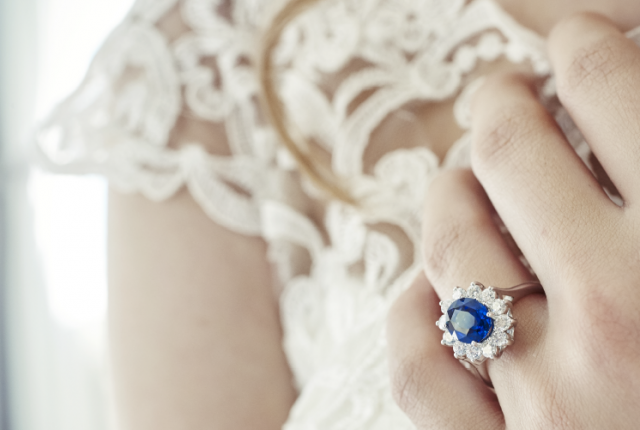
The symbolism of a ring on the left ring finger
Why do people wear a wedding ring on their left ring finger? The Romans believed in the 'vena amoris,' or the 'vein of love,' that ran directly from the heart to the left ring finger. This romantic notion, combined with the Egyptians' symbolic round rings made of hemp and reeds, gave rise to the tradition of wedding rings symbolising eternal love. Even today, wedding rings serve as a commitment of love and unity.
View this stunning white gold engagement ring with blue sapphire here
22K gold — suitability, care and everyday considerations
Pros and cons for rings
Because 22K is softer than lower-alloyed karats, it suits simple bands, heirloom bracelets and pieces that celebrate the metal itself rather than complex stone settings. Its luminous colour and gentle patina over time add character to family pieces. The main limitation is durability: delicate claws, fine filigree or heavily pronged high-set stones are more vulnerable in softer gold, so designers and wearers favour subdued settings in 22K.Care and maintenance
Handle 22K jewellery gently to preserve finish and shape. Clean pieces with warm soapy water and a soft brush, then dry thoroughly with a soft cloth. Avoid abrasive cleaners and ultrasonic baths for heavily ornamented 22K items. Store 22K rings separately from harder metals and gemstones to minimise scratches; soft pouches or individual compartments work well. Remove 22K rings for tasks that could expose them to knocks, chemicals or high abrasion.Everyday suitability and engagement considerations
For daily-wear engagement or wedding rings, Baunat’s preference for 18Kt and higher reflects a balance between longevity and luxury. In practice, 22K can be a beautiful choice for ceremonial heirlooms or distinctive occasional-wear pieces, especially when designs favour plain bands or low-profile settings. If a client likes the rich tone of 22K but expects frequent daily wear, discussing 18Kt alternatives that retain warmth with added durability is a practical route while keeping premium quality standards.These guidelines help ensure 22K gold is chosen and maintained in ways that honour its beauty while meeting modern life’s demands.
The Mysterious Powers of the Atlantis Ring
“Leader of the Tutankhamun expedition Howard Carter attributed his escape from the curse to the Atlantis ring.”

One reason to suspect the ring isn’t Egyptian and to think it’s even older are the extraordinary, yet different from the Egyptian hieroglyphs, images. The symbol on the Atlantis ring consists of three horizontal bars in the centre, two triangles with a hole above at the outer ends and a row of three squares between the bars and triangles at both ends.
Have your own symbolic ring made through our tailor-made services.
The protective wedding ring superstitions
During wedding ceremonies, the ring would pass symbolically from the left thumb, representing the divine, to the middle finger, symbolising the Holy Spirit, and finally to the ring finger of the left hand, believed to have a direct vein to the heart. Superstitions warned that losing or breaking a wedding ring could lead to misfortune, such as the loss of a spouse or even early death for both partners.
If you're interested in learning more, we’ve also dedicated a blog article to engagement ring superstitions, which explores fascinating beliefs surrounding these symbols of love.

The power of rings extended beyond the church, influencing all classes of society. Rings and amulets crafted at astrologically favourable times were believed to offer invulnerability, ensure success in games, or even grant invisibility.
“Rings have been held in great regard throughout the ages.”
Explore our exquisite collection of rings at BAUNAT
If you’re intrigued by the rich history and symbolism behind rings, explore our exquisite collection of gold rings at BAUNAT. Our experts are ready to help you find the perfect piece that speaks to your personal story and style.
Frequently asked Questions
Which hand do you wear your engagement ring on as a Christian or Muslim?
The engagement ring: on which hand do I wear it? The engagement ring: on which hand do I wear it as a Muslim? The engagement ring: on which hand do I wear it as a Christian?
In most cultures, people wear both the engagement ring and wedding ring on the left-hand ring finger. As a Christian, you can also wear the engagement ring on the left hand and the wedding ring on the right hand. In countries of the Islam culture, the hand on which rings are worn varies from country to country. Jordan Muslims wear their wedding ring on the right hand, but in Iran people choose the left hand.
How to wear your engagement ring and wedding ring?
In most Western cultures, the engagement ring is worn on the ring finger of the left hand. In the past, people believed that this finger was the 'artery of love' that was connected directly to the heart. After marriage in some countries, the engagement ring is moved to the middle finger of the left hand to make room for the wedding ring on the ring finger. Here, most people wear both rings on the left hand, although some prefer to wear the wedding ring on the right-hand ring finger.
What is the royal history of diamonds?
In the 13th century, an act of Saint Louis (Louis IX of France, 1214-70) established a sumptuary law that reserved diamonds for the king based on their rarity and value that was conferred to them at that time. From that moment onwards, diamonds began appearing in royal jewelry for both men and women. From the 17th century, they were also seen with the greater European aristocracy and the wealthy merchant class.
The earliest diamond-cutting industry is believed to have been positioned in Venice (Italy) somewhere around the 1330’s. It is estimated that diamond cutting found its way to Paris and Bruges around late 14th century and later to Antwerp.
By 1499, the Portuguese navigator Vasco da Gama discovered the sea route to the Orient around the Cape of Good Hope, providing Europeans an end-run around the Arabic impediment to the trade of diamonds coming from India. Goa, on India's Malabar Coast, was set up as the Portuguese trading center, and a diamond route developed from Goa to Lisbon to Antwerp.
-
Sofie Kuppens
-
BAUNAT Antwerp
-
-
“Logistics Champion”, which is the title Sofie was awarded with in 2018, leads and supervises the processing of orders and logistics and closely working together with the BAUNAT order team. She strives to ensure maximum customer satisfaction by keeping our clients up to date in the production process and delivering on-time. To improve her product expertise even further, Sofie completed the Diamond Foundation Course by De Beers, which makes her a true diamond specialist.
Professional experience
BAUNAT Group N.V. - Logistics Champion & Order Team Lead (2016–present)
Sofie supervises processing of bespoke orders and coordinates logistics between production and customer service. She keeps clients informed during production, improves internal workflows to reduce variability in lead times, and helped introduce quality checkpoints that raised order accuracy and client satisfaction.
Customer Service & Production Coordinator, BAUNAT Antwerp (2012–2016)
Coordinated daily activity between ateliers and the orders desk, trained new staff to handle custom requests, and developed procedures for order tracking and client communication that strengthened after‑sales follow‑up.
Retail Sales Advisor, Fine Jewellery Boutique (2009–2012)
Advised clients on high‑end jewellery purchases, gained hands‑on experience with diamond grading basics, and refined consultation skills that inform her current role in bespoke order management.
Diamond Foundation Course, De Beers - Certified Graduate (2020)
Completed professional training in diamond properties and grading to deepen gemstone knowledge used in quality checks and client consultations.
Education & credentials
AP Hogeschool Antwerpen - Degree in Applied Business Management, marketing track. De Beers Diamond Foundation Course - Certified Graduate, 2020. Ongoing in‑house BAUNAT training in bespoke jewellery processes and customer experience.
Selected publications & courses
Diamond Foundation Course, De Beers, provider certification and practical grading sessions. BAUNAT blog articles by Sofie Kuppens on engagement ring selection, diamond care and jewellery trends, published on the BAUNAT site between 2023 and 2025. Internal BAUNAT workshops on order logistics and client communication.
Recent activity & perspectives
Unveiling the importance of Engagement Ring Insurance in the UK - "Insuring an engagement ring is not only about protection, it is about securing the emotional and financial value of a lifelong symbol." (12-07-2024, Gemstones)
Unlocking the Meaning Behind Your Engagement Ring's Gemstone - "A gemstone can carry sentiment and story; choosing the right stone means balancing personal meaning with lasting quality." (11-07-2024, Jewellery)
Mastering the Art of Wearing Asymmetrical Earrings - "Asymmetry offers a contemporary silhouette that allows each ear to tell part of a single, stylish story; the key is proportional balance." (04-07-2024, Earrings)
Choosing the right carat weight for your diamond earrings - "Visual impact depends on setting and cut as much as on carat weight; thoughtful design can maximise perceived sparkle without unnecessary size." (11-09-2024, Jewellery)
“Logistics Champion”, which is the title Sofie was awarded with in 2018, leads and supervises the processing of orders and logistics and closely working together with the BAUNAT order team. She strives to ensure maximum customer satisfaction by keeping our clients up to date in the production process and delivering on-time. To improve her product expertise even further, Sofie completed the Diamond Foundation Course by De Beers, which makes her a true diamond specialist.
Professional experience
BAUNAT Group N.V. - Logistics Champion & Order Team Lead (2016–present)
Sofie supervises processing of bespoke orders and coordinates logistics between production and customer service. She keeps clients informed during production, improves internal workflows to reduce variability in lead times, and helped introduce quality checkpoints that raised order accuracy and client satisfaction.
Customer Service & Production Coordinator, BAUNAT Antwerp (2012–2016)
Coordinated daily activity between ateliers and the orders desk, trained new staff to handle custom requests, and developed procedures for order tracking and client communication that strengthened after‑sales follow‑up.
Retail Sales Advisor, Fine Jewellery Boutique (2009–2012)
Advised clients on high‑end jewellery purchases, gained hands‑on experience with diamond grading basics, and refined consultation skills that inform her current role in bespoke order management.
Diamond Foundation Course, De Beers - Certified Graduate (2020)
Completed professional training in diamond properties and grading to deepen gemstone knowledge used in quality checks and client consultations.
Education & credentials
AP Hogeschool Antwerpen - Degree in Applied Business Management, marketing track. De Beers Diamond Foundation Course - Certified Graduate, 2020. Ongoing in‑house BAUNAT training in bespoke jewellery processes and customer experience.
Selected publications & courses
Diamond Foundation Course, De Beers, provider certification and practical grading sessions. BAUNAT blog articles by Sofie Kuppens on engagement ring selection, diamond care and jewellery trends, published on the BAUNAT site between 2023 and 2025. Internal BAUNAT workshops on order logistics and client communication.
Recent activity & perspectives
Unveiling the importance of Engagement Ring Insurance in the UK - "Insuring an engagement ring is not only about protection, it is about securing the emotional and financial value of a lifelong symbol." (12-07-2024, Gemstones)
Unlocking the Meaning Behind Your Engagement Ring's Gemstone - "A gemstone can carry sentiment and story; choosing the right stone means balancing personal meaning with lasting quality." (11-07-2024, Jewellery)
Mastering the Art of Wearing Asymmetrical Earrings - "Asymmetry offers a contemporary silhouette that allows each ear to tell part of a single, stylish story; the key is proportional balance." (04-07-2024, Earrings)
Choosing the right carat weight for your diamond earrings - "Visual impact depends on setting and cut as much as on carat weight; thoughtful design can maximise perceived sparkle without unnecessary size." (11-09-2024, Jewellery)