







Features:
-
Category:
-
Posted at:
-
Author:
- Fabienne Rauw
-
BAUNAT Antwerp
-


-
Reading time:10 minutes
In this article:
- Gemstones to Choose for an Engagement Ring
- Semi-precious Gemstones to Choose for an Engagement Ring
- How to verify a gemstone and what certificates mean
- Gemstone durability & everyday-wear suitability
- Diamond - Mohs: 10
- Ruby - Mohs: 9
- Emerald - Mohs: 7.5–8
- Morganite - Mohs: 7.5–8
- Moissanite (lab-grown) - Mohs: 9.25
- Spinel - Mohs: 7.5–8
- Tanzanite - Mohs: 6–7
- Alexandrite - Mohs: 8.5
- Tourmaline - Mohs: 7–7.5
- Garnet - Mohs: 6.5–7.5 (varies by species)
- Zircon - Mohs: 6–7.5
- Opal - Mohs: 5–6.5 (varies by type)
- Pearl - Mohs: 2.5–4.5
- Turquoise - Mohs: 5–6
- Amethyst - Mohs: 7
- Lab-grown sapphire - Mohs: 9
- Lab-grown moissanite - Mohs: 9.25
- Best settings and care for each gem
Finding the Ideal Gemstone for Your Engagement Ring
The choice of the gemstone set in the engagement ring is essential, mainly because we see it as the symbol of the love the future bride and groom share. Each stone has its own meaning. Very often, the couple arranges their choice based on these meanings.
How do you know which gemstone to choose for your engagement ring?
Read summary
What gemstone should you choose for your engagement ring, and what do different stones symbolize?
While diamonds remain the classic choice for engagement rings, symbolizing purity, eternal love, and longevity, couples today have various meaningful options. Traditional precious stones like emeralds represent love and hope, while sapphires symbolize beauty and peace. Rubies signify power and protection against infidelity. For those considering alternatives, semi-precious stones offer unique meanings: turquoise represents friendship and prosperity, amethysts attract positive energy, and opals symbolize hope. When selecting an engagement ring stone, consider both personal meaning and practical factors like durability. Diamonds, being the hardest natural substance, offer superior durability for daily wear. Whatever your choice, ensure you select a high-quality, ethically sourced stone that resonates with your relationship's values and stands the test of time.
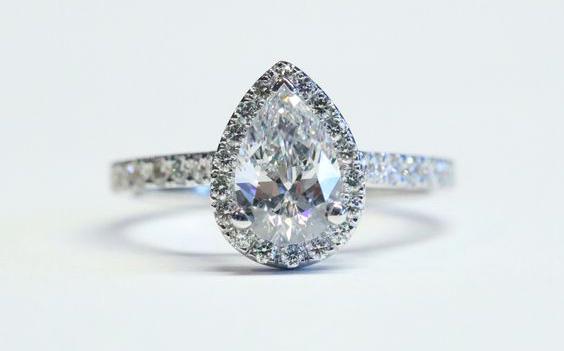
5 Questions to Find Her Perfect Engagement Ring
Are you planning to propose? Finding the right engagement ring is a defining step. Every ring is handcrafted in Antwerp from the finest materials by skilled artisans. Discover what engagement ring fits her personality.
Most viewed diamond jewels
-
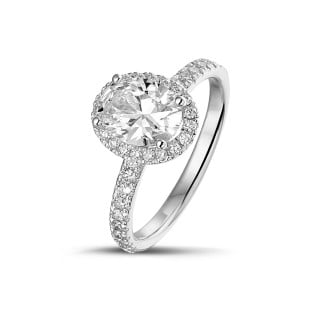
![1.00Ct halo ring in white gold with oval diamond]() Bestseller1.00Ct halo ring in white gold with oval diamondFrom € 5.578,10 (incl. 21% VAT)
Bestseller1.00Ct halo ring in white gold with oval diamondFrom € 5.578,10 (incl. 21% VAT) -
![1.00 carat solitaire cluster ring in white gold with marquise diamond]() BestsellerNew1.00 carat solitaire cluster ring in white gold with marquise diamondFrom € 4.622,20 (incl. 21% VAT)
BestsellerNew1.00 carat solitaire cluster ring in white gold with marquise diamondFrom € 4.622,20 (incl. 21% VAT) -
![0.95 carat diamond rose design ring in white gold]() NewPrincess Delphine0.95 carat diamond rose design ring in white goldFrom € 16.831,10 (incl. 21% VAT)
NewPrincess Delphine0.95 carat diamond rose design ring in white goldFrom € 16.831,10 (incl. 21% VAT) -
![1.00 carat solitaire ring with an asscher cut diamond in white gold]() Bestseller1.00 carat solitaire ring with an asscher cut diamond in white goldFrom € 4.936,80 (incl. 21% VAT)
Bestseller1.00 carat solitaire ring with an asscher cut diamond in white goldFrom € 4.936,80 (incl. 21% VAT) -
![1.00 carat solitaire ring with a cushion diamond and hidden halo in white gold]() BestsellerNew1.00 carat solitaire ring with a cushion diamond and hidden halo in white goldFrom € 4.210,80 (incl. 21% VAT)
BestsellerNew1.00 carat solitaire ring with a cushion diamond and hidden halo in white goldFrom € 4.210,80 (incl. 21% VAT)


Gemstones to Choose for an Engagement Ring
The emerald, from the Persian “heart of stone” is the symbol of love and hope. This intense green stone also represents rebirth and eternal youth.
Sapphire is Greek for “the most beautiful”. This precious gemstone has a number of meanings. It is considered as the greatest of talismans by the east and is renowned for its pious, richness and peacefulness.
The ruby is considered to be a king’s stone and represents power. For the couple, this stone means love and vitality, given the power to prevent betrayal.
Semi-precious Gemstones to Choose for an Engagement Ring
The turquoise stone is considered to be the stone of friendship, but it also represents love and prosperity.
Amethysts are among the most famous crystals because of their stunning purple colour and spiritual meaning. The amethyst attracts positive energy and people believe it has the ability to protect the wearer.
Opal gemstones are a hydrated amorphous form of silica and represent hope. There’s also the blue/green aquamarine, which is considered the stone of youth and perseverance. Both gemstones are perfect for an engagement ring.
There’s also the topaz gemstone, associated with notions of courage, frankness, and truth, which builds a solid foundation for a future marriage.
Do you need advice on choosing your future engagement ring? The diamond experts of BAUNAT jewellery are at your disposal to accompany you in your purchase. Get in touch to find out more.
How to verify a gemstone and what certificates mean
Certificates explained
- GIA (Gemological Institute of America): A widely recognised laboratory report that describes a stone’s characteristics, grading a diamond’s cut, colour, clarity and carat, or describing a coloured stone’s particulars. GIA reports are laboratory findings, not guarantees of future performance.
- IGI (International Gemological Institute): Another established lab offering grading and identification reports for diamonds and coloured stones. IGI certificates often accompany jewellery pieces and provide useful objective details.
- SSEF (Swiss Gemmological Institute): A respected laboratory known for advanced testing on coloured gemstones, including origin and treatment analysis for high-value stones. An SSEF report is particularly valuable for rare or valuable coloured gems.
What a hallmark indicates
A hallmark stamped on a piece of jewellery confirms the metal’s purity and that an authorised assay office has tested the metal. Hallmarks protect buyers by verifying the alloy used for the ring, for example confirming 18Kt gold. Ask to see the hallmark when provenance of the metal is important to you.
Provenance, treatments and ethical declarations
Provenance statements or supplier declarations explain a gemstone’s origin and any known treatments, for example heat treatment or fracture filling. Treatments are common and often stable, but they should always be declared. When provenance or ethical sourcing matters to you, request written confirmation from the supplier about origin and any third-party audits or traceability systems they use.Buyer’s checklist
- Ask for the stone’s certificate and read the key points: identification, reported treatments and any clarity observations.
- Ask about hallmarks on the metal and request to see the stamp indicating metal purity.
- Ask whether the stone has been treated and, if so, how that affects appearance and care.
- Request any available provenance or supplier statements about origin and ethical sourcing.
- If buying a high-value coloured stone, consider asking for an advanced lab report from a specialist lab such as SSEF
A brief buyer tip
Certificates and hallmarks add transparency, but always combine paper evidence with visual inspection and a trusted jeweller’s advice. Documentation shows what a stone is and whether it has treatments; a professional inspection confirms setting security and overall craftsmanship. Gemstone durability & everyday-wear suitability
Diamond - Mohs: 10
A classic for engagement rings, diamond is the hardestRuby - Mohs: 9
Also a corundum, ruby pairs vivid colour with good scratch resistance. Like sapphires, rubies resist surface scratches but can chip if struck hard. Suitable for daily wear. Practical takeaway: Clean with warm soapy water and a soft brush; avoid steam if the stone has documented fractures or fillings.Emerald - Mohs: 7.5–8
Known for rich green colour and frequent natural inclusions often called "jardin", emerald is softer than corundum and more prone to show internal fractures. Suitable when set protectively, for example in a bezel or with a halo, and for wearers who accept extra care. Practical takeaway: Avoid ultrasonic and steam cleaning; gently clean with a soft cloth and mild soapy water.Morganite - Mohs: 7.5–8
A pink to peach beryl with good brilliance but moderate hardness. It stands up better than very soft stones but can scratch with rough treatment. Suitable if set with protection such as a bezel or halo and if the wearer is mindful of impact. Practical takeaway: Clean with warm soapy water and a soft brush; store separately to avoid abrasion.Moissanite (lab-grown) - Mohs: 9.25
A silicon carbide gem noted for strong brilliance and high hardness; moissanite resists scratches and is well suited to daily wear. Suitable for daily wear. Practical takeaway: Safe for regular cleaning with warm soapy water; its high dispersion can appear more fiery than diamond, so view in person if comparing.Spinel - Mohs: 7.5–8
Spinel comes in a wide range of colours and is valued for clarity and brilliance. With moderate hardness it copes with everyday use but may scratch under rough treatment. Suitable for daily wear when set carefully. Practical takeaway: Clean with mild soap and a soft brush; avoid impact and store separately.Tanzanite - Mohs: 6–7
A blue-violet stone with pleochroism, tanzanite is softer than the hardest gems and more vulnerable to chipping or scratching. Suitable if worn with care and set in a protective style such as aAlexandrite - Mohs: 8.5
Known for its colour-change effect, alexandrite has good hardness and reasonable resistance to wear, though hard knocks can still damage it. Suitable for daily wear with normal care. Practical takeaway: Clean with warm soapy water and a soft brush; avoid sudden temperature changes.Tourmaline - Mohs: 7–7.5
Available in many colours, tourmaline has moderate hardness; some varieties have cleavage that raises the risk of breakage. Suitable if set protectively and treated as a semi-precious choice for daily wear. Practical takeaway: Clean with mild soap and a soft brush; avoid strong impacts and ultrasonic cleaners for stones with inclusions.Garnet - Mohs: 6.5–7.5 (varies by species)
Garnet is a family of minerals with differing hardness. Most common types sit in the mid-range and are reasonably durable but can scratch or chip under strong impact. Suitable for daily wear if set securely and if the wearer avoids rough use. Practical takeaway: Clean gently with soapy water; store separately to prevent abrasionZircon - Mohs: 6–7.5
A brilliant natural stone distinct from synthetic cubic zirconia, zircon can be relatively hard but is brittle and prone to cleavage. Suitable with caution and a protective setting. Practical takeaway: Avoid ultrasonic cleaners and hard knocks; clean with mild soap and a soft cloth.Opal - Mohs: 5–6.5 (varies by type)
Opals are hydrated silica with a unique play-of-colour but low hardness and sensitivity to temperature or humidity changes. They scratch and crack more easily than harder gems. Suitable only with careful wear, ideally in protective settings such as bezels, and for wearers who accept extra care. Practical takeaway: Never use ultrasonic or steam cleaning; clean with a damp soft cloth and avoid prolonged exposure to water or heat.Pearl - Mohs: 2.5–4.5
Organic and delicate, pearls are soft and vulnerable to scratching, acids, cosmetics and abrasion. Not ideal for everyday rings unless the wearer is extremely cautious and the setting offers protection. Practical takeaway: Wipe with a soft cloth after wear, avoid chemicals and store separately in a fabric pouch.Turquoise - Mohs: 5–6
A porous, often treated stone that can stain and scratch relatively easily. Turquoise needs protective settings and careful wear. Suitable only if set with protection and if the wearer accepts gentle handling. Practical takeaway: Avoid exposure to cosmetics and household chemicals; clean with a soft damp cloth.Amethyst - Mohs: 7
A popular quartz variety with decent toughness for daily wear, though it can fade with prolonged exposure to strong sunlight. Suitable for daily wear with normal care. Practical takeaway: Clean with warm soapy water and a soft brush; avoid prolonged direct sunlight to preserve colour.Lab-grown sapphire - Mohs: 9
Physically identical to natural sapphire, lab-grown sapphire has the same durability and is suitable for daily wear. Practical takeaway: Clean with mild soap and a soft brush; handle provenance and disclosure honestly when purchasing.Lab-grown moissanite - Mohs: 9.25
Lab-created moissanite matches natural moissanite for hardness and daily durability and is a strong practical alternative. Practical takeaway: Clean as you would other hard gems with warm soapy water and a soft brush. Practical note on Mohs values: The Mohs scale measures scratch resistance against other minerals, not resistance to impact or chipping. A high Mohs value helps prevent surface scratches, but cut, inclusions and setting also determine real-world durability. Best settings and care for each gem
Diamond
Recommended settings: Prong or bezel both work; claws that protect the girdle reduce chip risk. Because diamond is very hard, open settings that show off brilliance are common.Cleaning and care: Warm soapy water and a soft brush are ideal; professional inspection of prongs periodically helps prevent stone loss.
https://www.baunat.com/en/engagement-rings/sapphire.html Sapphire and Ruby
Recommended settings: Both stones are hard and suit prongs, bezels or halo settings. For active wearers, a bezel or lower-profile setting adds protection.Cleaning and care: Usually safe for ultrasonic cleaning if the stone has no significant fractures; otherwise use mild soap and a soft brush.
Emerald
Recommended settings: Bezel, halo or protective prong work best to shield the stone’s edges and surface. Avoid exposed, high-profile settings that increase risk of knocks.Cleaning and care: Avoid ultrasonic and steam cleaning; clean gently with a soft cloth and mild soapy water. Regularly check settings for loosened prongs due to the stone’s inclusions.
Morganite
Recommended settings: Bezel or halo settings protect edges and improve durability. A lower setting reduces snaggingCleaning and care: Clean with mild soap and a soft brush; store separately to avoid abrasion
Moissanite
Recommended settings: Prong or bezel settings both suit moissanite; its hardness allows open styles.Cleaning and care: Clean with warm soapy water and a soft brush; inspect settings routinely.
Opal
Recommended settings: Bezel settings are recommended to protect opal from knocks and changes in humidity or temperature. Low-profile mounts reduce risk.
Cleaning and care: Never use ultrasonic or steam cleaners; clean with a soft damp cloth and avoid prolonged immersion in water or exposure to heat.
Pearl
Recommended settings: Cabochon-style or low-set mounts with protective edges help shield pearls; consider earrings or pendants if daily wear is a concern.Cleaning and care: Wipe with a soft cloth after wear; avoid cosmetics and chemicals.
Tanzanite
Recommended settings: Bezel or halo settings help protect the softer stone from impact. Avoid high, exposed prong settings for very active wearers.Cleaning and care: Avoid ultrasonic and steam cleaning; clean with mild soap and a soft brush
Turquoise
Recommended settings: Bezel settings protect this porous gem and reduce staining risk.Cleaning and care: Avoid chemicals and cosmetics; clean with a soft, slightly damp cloth.
Spinel and Tourmaline
Recommended settings: Both benefit from protective settings such as bezels or halo surrounds if the wearer leads an active lifestyle. Prongs are fine when the setting profile is not overly exposed.
Cleaning and care: Clean with warm soapy water and a soft brush; avoid hard knocks and harsh cleaners.
Amethyst and Garnet
Recommended settings: Prongs or bezels depending on wearer preference; lower profiles reduce snagging.Cleaning and care: Clean with mild soap and a soft brush; avoid prolonged exposure to strong sunlight for amethyst
General inspection advice
All gemstone rings benefit from regular professional inspections to check prongs and setting security, especially for stones with inclusions or lower hardness. For softer gems, consider insurance and mindful daily habits such as removing rings during heavy manual tasks. -
Fabienne Rauw
-
BAUNAT Antwerp
-
-
Fabienne, manager of the German market is able to guide every client with finding the right jewel. She takes care of most of the German orders, but also takes other task on her plate. Thanks to her six years of experience at BAUNAT she acquainted well with the product and the marketing around it. Her degree in PR ensures that BAUNAT is well presented across all media channels. For anyone looking into a new investment opportunity, Fabienne is the perfect guide in this process. No question will be left unanswered, and she will help you every step of the way.
Selected Bespoke Projects
• Eternal Bloom bespoke engagement concept - Role: project lead for client briefing and prototype coordination. Fabienne translated personal design references into a 3D-printed prototype, supervised stone selection and ensured the finished piece matched the client’s vision and comfort preferences.
• Personalized anniversary necklace - Role: design coordinator and quality overseer. She managed the custom design process from the initial sketch to final polishing, liaising between client and workshop to preserve proportions and finish.
• Reimagined heirloom ring restoration and redesign - Role: client consultant and technical coordinator. Fabienne guided the client through options to modernize setting details while keeping sentimental elements, delivering a wearable result that respected the original piece.
Her hands-on involvement in bespoke commissions ensures each custom order has a clear brief, careful prototype review and close follow-up with the workshop, so clients receive a tailored jewel that meets both aesthetic and practical expectations.
Professional enquiries
For speaking engagements, press requests or research collaborations, please send your message to BAUNAT’s communications team with the subject line: "Fabienne Rauw - Professional Enquiry." Include a brief description of the request and any relevant dates or documents. The communications team will route enquiries to Fabienne and provide guidance on next steps.
Fabienne, manager of the German market is able to guide every client with finding the right jewel. She takes care of most of the German orders, but also takes other task on her plate. Thanks to her six years of experience at BAUNAT she acquainted well with the product and the marketing around it. Her degree in PR ensures that BAUNAT is well presented across all media channels. For anyone looking into a new investment opportunity, Fabienne is the perfect guide in this process. No question will be left unanswered, and she will help you every step of the way.
Selected Bespoke Projects
• Eternal Bloom bespoke engagement concept - Role: project lead for client briefing and prototype coordination. Fabienne translated personal design references into a 3D-printed prototype, supervised stone selection and ensured the finished piece matched the client’s vision and comfort preferences.
• Personalized anniversary necklace - Role: design coordinator and quality overseer. She managed the custom design process from the initial sketch to final polishing, liaising between client and workshop to preserve proportions and finish.
• Reimagined heirloom ring restoration and redesign - Role: client consultant and technical coordinator. Fabienne guided the client through options to modernize setting details while keeping sentimental elements, delivering a wearable result that respected the original piece.
Her hands-on involvement in bespoke commissions ensures each custom order has a clear brief, careful prototype review and close follow-up with the workshop, so clients receive a tailored jewel that meets both aesthetic and practical expectations.
Professional enquiries
For speaking engagements, press requests or research collaborations, please send your message to BAUNAT’s communications team with the subject line: "Fabienne Rauw - Professional Enquiry." Include a brief description of the request and any relevant dates or documents. The communications team will route enquiries to Fabienne and provide guidance on next steps.