







Features:
-
Category:
-
Posted at:
-
Author:
- An Van Puyvelde
-
An Van Puyvelde - Order & Administration Manager
-


-
Reading time:9 minutes
In this article:
- Protect the precious metal from scratches
- Can I wear my engagement ring in the ocean?
- Beware of saltwater damage
- Extra practical do's and don'ts for saltwater and pools:
- Avoid losing your ring in the water
- Don’t use a plastic bag for storage
- Knowing when to take off your engagement ring
- Sea-inspired Designs & Materials
Taking your engagement ring to the beach? Here's what you need to know
Congratulations on your engagement! That sparkling diamond ring on your finger signifies love, commitment, and the start of a beautiful journey. But what happens when you want to enjoy a day at the beach? Before you pack your sunscreen and beach towel, here are some vital tips for keeping your engagement ring safe and pristine during your seaside adventure.
Read summary
How can you protect your engagement ring during a beach day?
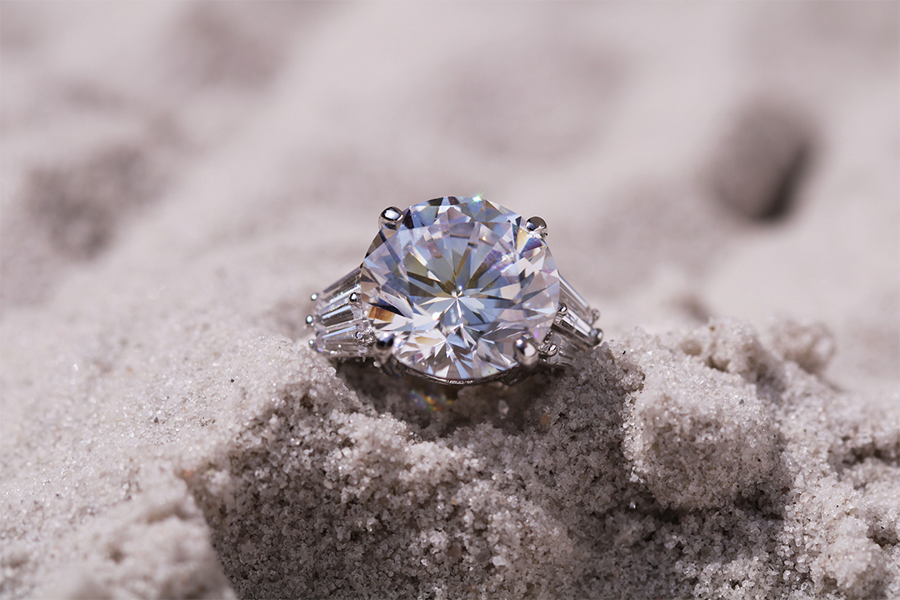
While a beach day sounds perfect, your precious engagement ring needs special care to maintain its beauty near sand and saltwater. The biggest threats come from sand particles that can scratch precious metals, saltwater that can corrode settings and weaken prongs, and cold water that can cause rings to slip off shrinking fingers.
To protect your ring, avoid direct contact with sand and consider removing it before swimming or applying sunscreen. If your ring does touch saltwater, rinse it thoroughly with fresh water. Rose gold rings need extra caution as their copper content makes them particularly sensitive to salt damage.
While you can store your ring in a breathable fabric pouch during beach activities, the safest option is leaving it at home. This precaution ensures your cherished symbol of love stays as brilliant as the day you received it, letting you enjoy the beach worry-free.
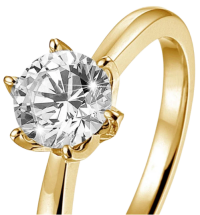
5 Questions to Find Her Perfect Engagement Ring
Are you planning to propose? Finding the right engagement ring is a defining step. Every ring is handcrafted in Antwerp from the finest materials by skilled artisans. Discover what engagement ring fits her personality.
Most viewed diamond jewels
-
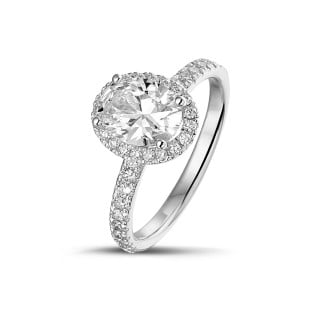
![1.00Ct halo ring in white gold with oval diamond]() Bestseller1.00Ct halo ring in white gold with oval diamondFrom USD 5.210,00 (excl. VAT)
Bestseller1.00Ct halo ring in white gold with oval diamondFrom USD 5.210,00 (excl. VAT) -
![1.00 carat solitaire cluster ring in white gold with marquise diamond]() BestsellerNew1.00 carat solitaire cluster ring in white gold with marquise diamondFrom USD 4.320,00 (excl. VAT)
BestsellerNew1.00 carat solitaire cluster ring in white gold with marquise diamondFrom USD 4.320,00 (excl. VAT) -
![0.95 carat diamond rose design ring in white gold]() NewPrincess Delphine0.95 carat diamond rose design ring in white goldFrom USD 15.720,00 (excl. VAT)
NewPrincess Delphine0.95 carat diamond rose design ring in white goldFrom USD 15.720,00 (excl. VAT) -
![1.00 carat solitaire ring with an asscher cut diamond in white gold]() Bestseller1.00 carat solitaire ring with an asscher cut diamond in white goldFrom USD 4.620,00 (excl. VAT)
Bestseller1.00 carat solitaire ring with an asscher cut diamond in white goldFrom USD 4.620,00 (excl. VAT) -
![1.00 carat solitaire ring with a cushion diamond and hidden halo in white gold]() BestsellerNew1.00 carat solitaire ring with a cushion diamond and hidden halo in white goldFrom USD 3.940,00 (excl. VAT)
BestsellerNew1.00 carat solitaire ring with a cushion diamond and hidden halo in white goldFrom USD 3.940,00 (excl. VAT)


Protect the precious metal from scratches
- Avoid direct contact with sand: if you need to apply sunscreen or play beach volleyball, consider temporarily removing your ring and placing it in a secure, breathable pouch
- Clean your hands frequently to remove any lingering sand particles before touching your ring
Also, sand grains can get stuck between your diamond’s setting. Professional cleaning is the solution here. We advise you not to attempt cleaning your ring at home as you could accidentally scratch the metal or dull the diamond’s sparkle.
Can I wear my engagement ring in the ocean?
Short answer: not recommended. Saltwater and sand can damage the metal and loosen settings, and cold seawater can make fingers contract so a ring slips off more easily. If you plan to go in the sea, take the ring off first and keep it in a breathable pouch or a jewellery case until you’re dry and have rinsed it with fresh water.Practical quick rules:
- Do: remove your ring before swimming and store it out of direct sun.- Don’t: put the ring in a sealed plastic bag or assume seawater won’t affect the prongs or metal.
- Do: rinse with fresh water and have a professional check the settings if the ring has been in contact with seawater.

Beware of saltwater damage
- Leave your ring at home or in a safe place to avoid any potential damage caused by saltwater
- Clean your ring thoroughly with fresh water if it does come into contact with seawater to minimise the corrosive effects
Definitely stay out of the sea if you have a rose gold diamond engagement ring. Rose gold gets its beautiful colour from copper, which is extremely sensitive to salt.
Extra practical do's and don'ts for saltwater and pools:
Do
- Take your ring off before entering the sea or a chlorinated pool to protect the metal and prongs.- Rinse the ring thoroughly with fresh water after any contact with seawater or pool water to remove salts and chemicals.
- Pat the ring dry with a soft cloth and store it in a breathable pouch until you can get a professional inspection if you notice grit or corrosion under the setting.
Don’t
- Leave your ring in a sealed plastic bag after a day at the beach; trapped moisture speeds tarnishing.- Assume chlorine is harmless; pool chemicals can dull metal finishes and affect some alloys.
- Use harsh home-cleaning methods after seawater exposure; strong solvents or rough scrubbing can scratch the metal or loosen settings.
Avoid losing your ring in the water
- Remove your ring before swimming and store it in a secure, breathable pouch
- Be cautious while applying sunscreen or lotion, as these can make your fingers slippery and increase the likelihood of your ring sliding off
The same goes for the pool, however, the chance of you finding your engagement ring there is higher.
Find out more about engagement ring insurance in the UK.
Don’t use a plastic bag for storage
- Use a fabric or mesh pouch that allows air circulation while keeping your ring secure
- Store your ring in a designated jewellery case if you have one with you
Knowing when to take off your engagement ring
In conclusion, while your engagement ring is a beautiful symbol of your love and commitment, it’s best to keep it safe and sound when enjoying a day at the beach. Following these guidelines will ensure your ring stays pristine, allowing you to focus on creating wonderful memories without any worry.
Your engagement ring is a precious symbol of your love, but there are certain times when it's best to take it off to protect its beauty and integrity. Here are a few other scenarios where removing your ring is advisable:
- During physical activities: Whether you’re hitting the gym, going for a run, or participating in sports, physical activities can put undue stress on your ring, potentially causing damage or loss.
- When doing household chores: Cleaning agents, particularly those with harsh chemicals, can tarnish or damage your ring. Removing it while cleaning, washing dishes, or gardening can prevent this.
- Applying beauty products: Lotions, perfumes, and makeup can leave residues on your ring dulling its sparkle. Take off your ring before applying these products to keep it shining brightly.
- At bedtime: While it may be tempting to leave your ring on while you sleep, it’s best to remove it. Sleeping with your ring on can lead to accidental damage or discomfort.
For more tips on caring for your precious jewellery, connect with our dedicated team of diamond experts. They’ll guide you every step of the way to ensure your treasures remain radiant for a lifetime.
Sea-inspired Designs & Materials
Shoreline Wave Band
Inspired by the surf, this design has a subtle undulating profile across an 18Kt band that catches light like wet sand. Recommended metals: 18Kt white gold or 18Kt platinum for better durability near salt air. Gemstone options: a brilliant-cut diamond centre or a sapphire accent to echo sea tones.Tide-pool Halo
This ring borrows from tide pools, with clustered melee around a central stone to mimic scattered pebbles. Recommended metals: 18Kt yellow gold for warm contrast with mixed stones. Gemstone options: small brilliant diamonds or ethically sourced sapphires for a soft, natural palette.Sand & Sea Solitaire
A pared-back solitaire with a textured bezel that recalls shoreline grains, designed to reduce snagging. Recommended metals: 18Kt platinum for wear resistance and a low-maintenance finish. Gemstone options: a high-clarity round diamond or a durable coloured stone for everyday wear.Materials, sourcing and customization
Baunat pieces use premium metals starting at 18Kt to ensure longevity, especially for pieces worn near coastal environments. Gemstones are chosen with emphasis on provenance and durability; we do not recommend lower-quality stones for everyday engagement rings. Recycled metal options and ethically sourced gemstones are available on request, and bespoke consultations let you tailor alloys, stone choices and finishes - important when designing a ring that should withstand beachside life while remaining personal.-
An Van Puyvelde
-
An Van Puyvelde - Order & Administration Manager
-
-
An supervises BAUNAT’s order processing and logistics, working closely with the internal order team to ensure a seamless customer experience. She plays a key role in coordinating production timelines and maintaining clear communication with clients throughout the entire process. With a strong focus on precision and reliability, An is dedicated to delivering each piece on time while keeping customers fully informed, contributing to BAUNAT’s high standard of service and customer satisfaction.
An supervises BAUNAT’s order processing and logistics, working closely with the internal order team to ensure a seamless customer experience. She plays a key role in coordinating production timelines and maintaining clear communication with clients throughout the entire process. With a strong focus on precision and reliability, An is dedicated to delivering each piece on time while keeping customers fully informed, contributing to BAUNAT’s high standard of service and customer satisfaction.