







Features:
-
Category:
-
Posted at:
-
Author:
- Fabienne Rauw
-
BAUNAT Antwerp
-


-
Reading time:13 minutes
In this article:
How to invest in diamonds smartly
There’s a lot of talk in newspapers, magazines, blogs, articles and so forth about the importance of investing your money and investing it smartly, but what does that actually mean?
Read summary
How can you make smart diamond investments in today's market?
Smart diamond investing requires understanding both the product and market dynamics while building a diversified investment portfolio. Unlike traditional investments, diamonds offer unique advantages - they maintain long-term value, show strong crisis resistance, and come with certified quality guarantees from respected global laboratories. What makes diamonds particularly attractive is their dual nature as both an investment vehicle and a wearable luxury item with emotional value.
Before investing, it's crucial to research diamond markets, particularly price trends over recent years, and consult with industry professionals. Working with established companies like BAUNAT, which sources diamonds directly from manufacturers, can provide access to high-quality stones at competitive prices. The key is to view diamonds as part of a broader investment strategy, rather than putting all your resources into a single asset type. This approach provides both security and flexibility in managing your investment portfolio.
Most viewed diamond jewels
-
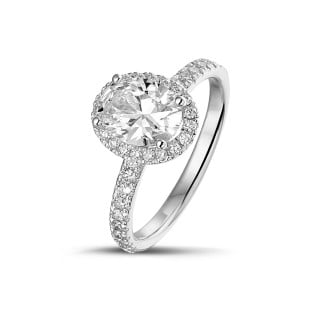
![1.00Ct halo ring in white gold with oval diamond]() Bestseller1.00Ct halo ring in white gold with oval diamondFrom € 5.578,10 (incl. 21% VAT)
Bestseller1.00Ct halo ring in white gold with oval diamondFrom € 5.578,10 (incl. 21% VAT) -
![1.00 carat solitaire cluster ring in white gold with marquise diamond]() BestsellerNew1.00 carat solitaire cluster ring in white gold with marquise diamondFrom € 4.622,20 (incl. 21% VAT)
BestsellerNew1.00 carat solitaire cluster ring in white gold with marquise diamondFrom € 4.622,20 (incl. 21% VAT) -
![0.95 carat diamond rose design ring in white gold]() NewPrincess Delphine0.95 carat diamond rose design ring in white goldFrom € 16.831,10 (incl. 21% VAT)
NewPrincess Delphine0.95 carat diamond rose design ring in white goldFrom € 16.831,10 (incl. 21% VAT) -
![1.00 carat solitaire ring with an asscher cut diamond in white gold]() Bestseller1.00 carat solitaire ring with an asscher cut diamond in white goldFrom € 4.936,80 (incl. 21% VAT)
Bestseller1.00 carat solitaire ring with an asscher cut diamond in white goldFrom € 4.936,80 (incl. 21% VAT) -
![1.00 carat solitaire ring with a cushion diamond and hidden halo in white gold]() BestsellerNew1.00 carat solitaire ring with a cushion diamond and hidden halo in white goldFrom € 4.210,80 (incl. 21% VAT)
BestsellerNew1.00 carat solitaire ring with a cushion diamond and hidden halo in white goldFrom € 4.210,80 (incl. 21% VAT)


.
Know your product and the market
Investing is one thing and investing smartly is another. Although information about investing and how to, is readily available through the internet, through consultants at banks and brokers, investing smartly is not an easy task because it does not necessarily mean higher returns.
It also means that there is a certain security, that there is a long-term return and that there is a continuous interest and value goes up.
There are few assets that could be considered to fit perfectly the above mentioned criteria, and those are the ones that are considered smart such as gold, platinum and diamonds.
Before entering into any investment portfolio though it is good to gain knowledge regarding the asset, from general knowledge of what it actually is, to in depth knowledge about the market prices over the past 5 years to grasp the potential of it. Of course, talking to a professional is the best way forward ultimately, but going in with some information does look more invested and professional.
How to verify a diamond’s provenance and certificate
Provenance and certification matter for the value and resale potential of investment-grade diamonds. A clear paper trail and an authentic laboratory report protect you from misrepresentation, let you check what you bought later, and improve resale prospects. For investment use, provenance is evidence of the stone’s authenticity, history and grade.
Step-by-step verification process
- Request full lab reports and high-resolution scans. Ask the seller for complete, legible scans of any lab reports that come with the stone. The scan should show the report number, carat weight, measurements and any plotted diagrams. A partial or low-quality scan is a warning sign.
- Confirm the report number with the issuing laboratory. Reputable labs have searchable online databases where you can enter the report number to confirm the record matches the document. Check that carat weight, proportions and any plotted diagram or photograph on the online entry correspond to the scan you received.
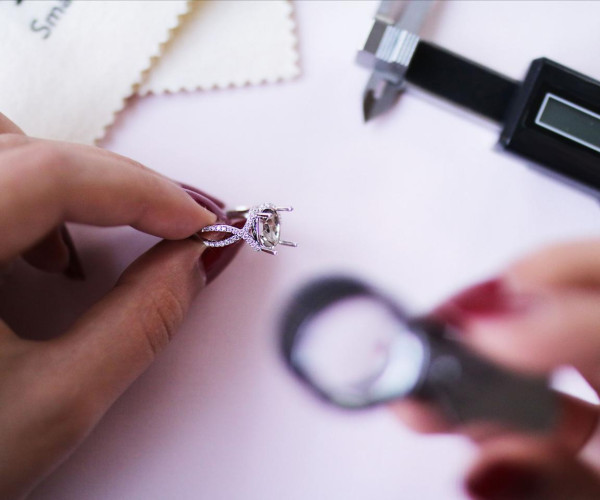
- Check for laser-inscribed report numbers on the girdle. Many investment-grade diamonds have their report number micro-engraved on the girdle. Request a loupe or microscope image that clearly shows this inscription and compare it to the number on the report.
- Compare images and proportions. If the lab report includes a plotted diagram or photograph, compare those to high-resolution images of the actual stone. Match points such as table and culet positions, visible facet characteristics and the proportions listed on the report.
- Verify chain-of-custody and provenance documents. For high-value stones, ask for provenance documents such as invoices, auction consignment records, export/import paperwork or previous appraisals. A continuous chain of custody increases confidence that the diamond has not been altered or misrepresented.
Red flags to watch for
- Mismatched details: report number, carat weight or measurements that differ between the physical stone and the lab document.
- Missing or illegible report numbers on scans or images.
- Poor-quality or absent photographs and diagrams that prevent visual comparison.
- Vague provenance or gaps in ownership history for stones presented as investment grade.
- Reluctance to allow independent verification or to provide clear scans of original documents.
Minimum certificate standards for investment use
For investment purposes, prioritise diamonds that come with full laboratory reports from internationally recognised laboratories, with a certificate of authenticity from a recognized lab. Market acceptance varies between labs; certificates from widely recognised labs often help liquidity because buyers and auction houses rely on those standards when pricing and consigning stones. For any stone intended as an investment, insist on a complete lab report and verifiable documentation rather than informal or seller-only grading notes.
When to insist on third-party verification
If any point in the verification process raises doubt, arrange independent confirmation. Request an independent appraisal or on-the-spot verification from a qualified third-party gemmologist when: the stone is high value relative to your portfolio, provenance documents contain gaps, the lab report cannot be verified online, or you plan to consign the stone to an auction house or specialist dealer. Third-party verification reduces transaction risk and supports future resale value.
Know how to diversify your portfolio
Another important aspect when thinking of investing is not to invest everything you have into one asset only and to diversify. Diversifying gives us a little more security in case one or the other investment didn't work out as well as predicted and it also allows you to get rid of part of your portfolio if you need extra cash without having to sell everything.
Where to buy and sell investment diamonds — channels, fees and liquidity
Knowing where diamonds trade and how liquid they are matters as much as choosing the right stone. Different channels serve different buyers and goals, and each has its own advantages, practical considerations and qualitative fee expectations.
Auction houses
Typical audience: collectors, dealers and buyers seeking rare or high-profile stones. Pros and cons: auctions can trigger competitive bidding that lifts prices for scarce or exceptional diamonds, but results are less predictable and consignment standards are strict. Fee and liquidity profile: high visibility with higher seller-side costs described qualitatively as high, and liquidity that can be excellent for truly rare material. Recommended when: selling rare, fancy-colour stones or exceptional certified diamonds where public competitive bidding is likely to increase value.
Specialist dealers and wholesale networks
Typical audience: private investors and trade buyers who want direct access to inventory and professional sourcing. Pros and cons: direct dealer sales offer speed, professional negotiation and potential access to source pricing; dealer offers typically reflect market margins and are more conservative than auction results. Fee and liquidity profile: fees are normally low to moderate in the sense that dealer margins are embedded in the price; liquidity is generally good for well-documented, market-standard stones. Recommended when: you prioritise discreet, efficient transactions and predictable pricing.
Private sales and consignments
Typical audience: bespoke buyers and those seeking anonymity or direct negotiation. Pros and cons: private sales avoid public fees and allow tailored agreements, but take more effort to match buyer and seller and to verify credentials. Fee and liquidity profile: fees vary depending on intermediaries and are often moderate; liquidity depends entirely on finding the right counterparty. Recommended when: you have a known buyer or prefer a controlled sale process for sentimental or bespoke pieces.
Secondary-market retailers and online platforms
Typical audience: retail investors and buyers seeking certified stones with transparent listings. Pros and cons: online platforms offer broad reach and convenience, but price discovery can be slower and listings vary in quality. Fee and liquidity profile: platform commissions are generally low to moderate; time-to-sale can be longer depending on demand. Recommended when: selling well-documented, market-standard diamonds that appeal to a broad retail audience.
Preparing to sell: a short checklist
- Gather all original lab reports, invoices and provenance documents.
- Obtain high-resolution images that clearly show the stone and any laser inscriptions.
- Secure a recent professional valuation if you plan to consign to auction or seek wider market exposure.
- Consider professional cleaning and secure transport arrangements to present the stone optimally.
When to seek auction representation or specialist dealer advice
If your aim is to maximise price for a rare or unusual stone, seek auction house representation to access their buyer networks and marketing reach. For discreet, efficient sales or when you prioritise speed and certainty over headline prices, specialist dealers provide market access and negotiation expertise. In all cases, provide clear certification and provenance to reduce friction and support the best possible outcome.
Why diamonds are smart
In the past decade diamonds have proven to be great assets for investment purposes for various reasons. Diamonds have observed long term profitability and their prices have strong crisis resistance. Adding the fact that there are laboratories with worldwide recognition that certify diamonds, there is a maximum guarantee regarding the grade and quality of the diamond.
And last but not least, the emotional value that can be attached to diamonds is important. They are physical and not virtual, they are beautiful and can actually be worn while still being an investment.
What isn’t there to like?
BAUNAT is a leader in investment diamonds. Through their established supply network of dedicated diamond manufacturers, BAUNAT has the unique capacity to buy diamonds at the very source which of course also guarantees exceptional diamonds at astounding prices.
How diamond prices are formed and when to get an appraisal
Market pricing for diamonds combines established benchmark quotes, dealer pricing and specific premiums or discounts that reflect a stone’s desirability. Dealers and wholesale networks use benchmark price lists as starting points, then adjust for factors such as rarity, demand, certificate acceptance and the stone’s documented history. Rarity and documented provenance can create meaningful premiums, particularly for stones that are well certified and have a clear chain of custody.
Dealers versus indices
Benchmark indices and price lists provide a useful reference, but dealer quotes show actual buy-sell spreads, stock costs and market demand. Institutional buyers and specialists often quote differently from retail-facing sellers because they operate on other margins and inventory strategies. Knowing both types of reference points helps set realistic expectations when buying or selling.
Premiums and market drivers
Premiums apply to stones that are scarce, have exceptional provenance or carry certificates from widely recognised laboratories. Market sentiment and regional demand can also shift premiums; some markets pay relatively stronger prices for particular types of stones. Conversely, stones lacking clear documentation or with non-standard reports may trade at a discount to benchmark prices.
When to get a professional valuation
- Estate settlement or inheritance: a formal valuation supports fair distribution and insurance.
- Consigning to auction: auction houses and buyers expect up-to-date, professional documentation.
- Insurance purposes: rare, high-value stones require a professional report for adequate coverage.
- Sale negotiations: a third-party valuation provides an objective baseline when entering negotiations.
A professional valuation does more than assign a number. It records condition, confirms certification details and, when requested, provides market context that helps determine the most appropriate sales channel. For investors, a valuation is a tool to reduce uncertainty and to support future liquidity.
-
Fabienne Rauw
-
BAUNAT Antwerp
-
-
Fabienne, manager of the German market is able to guide every client with finding the right jewel. She takes care of most of the German orders, but also takes other task on her plate. Thanks to her six years of experience at BAUNAT she acquainted well with the product and the marketing around it. Her degree in PR ensures that BAUNAT is well presented across all media channels. For anyone looking into a new investment opportunity, Fabienne is the perfect guide in this process. No question will be left unanswered, and she will help you every step of the way.
Selected Bespoke Projects
• Eternal Bloom bespoke engagement concept - Role: project lead for client briefing and prototype coordination. Fabienne translated personal design references into a 3D-printed prototype, supervised stone selection and ensured the finished piece matched the client’s vision and comfort preferences.
• Personalized anniversary necklace - Role: design coordinator and quality overseer. She managed the custom design process from the initial sketch to final polishing, liaising between client and workshop to preserve proportions and finish.
• Reimagined heirloom ring restoration and redesign - Role: client consultant and technical coordinator. Fabienne guided the client through options to modernize setting details while keeping sentimental elements, delivering a wearable result that respected the original piece.
Her hands-on involvement in bespoke commissions ensures each custom order has a clear brief, careful prototype review and close follow-up with the workshop, so clients receive a tailored jewel that meets both aesthetic and practical expectations.
Professional enquiries
For speaking engagements, press requests or research collaborations, please send your message to BAUNAT’s communications team with the subject line: "Fabienne Rauw - Professional Enquiry." Include a brief description of the request and any relevant dates or documents. The communications team will route enquiries to Fabienne and provide guidance on next steps.
Fabienne, manager of the German market is able to guide every client with finding the right jewel. She takes care of most of the German orders, but also takes other task on her plate. Thanks to her six years of experience at BAUNAT she acquainted well with the product and the marketing around it. Her degree in PR ensures that BAUNAT is well presented across all media channels. For anyone looking into a new investment opportunity, Fabienne is the perfect guide in this process. No question will be left unanswered, and she will help you every step of the way.
Selected Bespoke Projects
• Eternal Bloom bespoke engagement concept - Role: project lead for client briefing and prototype coordination. Fabienne translated personal design references into a 3D-printed prototype, supervised stone selection and ensured the finished piece matched the client’s vision and comfort preferences.
• Personalized anniversary necklace - Role: design coordinator and quality overseer. She managed the custom design process from the initial sketch to final polishing, liaising between client and workshop to preserve proportions and finish.
• Reimagined heirloom ring restoration and redesign - Role: client consultant and technical coordinator. Fabienne guided the client through options to modernize setting details while keeping sentimental elements, delivering a wearable result that respected the original piece.
Her hands-on involvement in bespoke commissions ensures each custom order has a clear brief, careful prototype review and close follow-up with the workshop, so clients receive a tailored jewel that meets both aesthetic and practical expectations.
Professional enquiries
For speaking engagements, press requests or research collaborations, please send your message to BAUNAT’s communications team with the subject line: "Fabienne Rauw - Professional Enquiry." Include a brief description of the request and any relevant dates or documents. The communications team will route enquiries to Fabienne and provide guidance on next steps.