












Black Friday
Code: BLACKFRIDAY2026
This Black Friday, elevate your diamond jewel with a complimentary upgrade in Colour, Clarity or Cut. Enjoy an exceptional diamond at no additional cost. Exclusive offer until 30 November 2026.


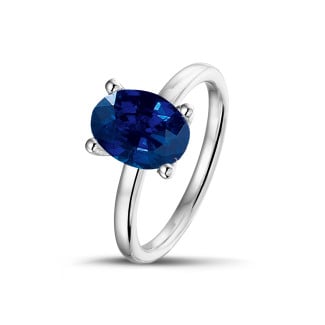
Blue diamonds are definitely amongst the rarest precious stones in the world and are incredibly valuable. Some exceptional blue diamonds even carry an intense history with them. Read more about this special hue with a special charm here.
Discover our best-selling jewellery here
Are you curious about what makes blue diamonds command such extraordinary prices? These mesmerizing gems rank among the world's rarest precious stones, with their distinctive blue hue created when boron particles become trapped in the diamond's crystal lattice during formation.
Only about 200,000 diamonds worldwide are classified as blue diamonds, with deep blue specimens being exceptionally scarce. Their value has consistently increased over the past decade due to growing investment interest and limited supply. A 0.5-carat blue diamond averages $26,280, while fancy vivid blue diamonds larger than 3 carats can fetch over €900,000 per carat.
Famous blue diamonds include the allegedly cursed 45.52-carat Hope Diamond, the 31.06-carat Wittelsbach-Graff (which sold for $80 million), and the mysterious 27.64-carat Heart of Eternity, whose current owner remains undisclosed.

.
All coloured diamonds have their colour due to the presence of impurities, yet they are more valuable than colourless diamonds.
When boron particles are trapped in the crystal lattice during the formation of a diamond, the blue colour of the diamond is created. This substance absorbs red light but gives the precious stone a blue colour. Only a few boron atoms are enough to make a diamond's colour blue.Yellow diamonds, for example, get their colour due to the presence of nitrogen, while in brown diamonds, the colour comes from distortions in the crystal lattice.
Not all blue diamonds are identical at a chemical level. Gemologists sort natural diamonds into types; most coloured diamonds fall into Type Ia, which have nitrogen aggregates, while the rare Type IIb group contains boron and is electrically conductive. Type IIb diamonds are the classic boron-coloured blues and account for a tiny fraction of all diamonds, which contributes to their scarcity and collector interest.
Fluorescence and phosphorescence are optical behaviours buyers sometimes notice. Some blue diamonds fluoresce under ultraviolet light or show phosphorescence, meaning they continue to emit light after the UV source is removed. In a few famous cases a stone will show a lasting red glow when exposed to UV, an identifying curiosity that also adds to a gem's story. Laboratories report notable fluorescence or phosphorescence on the certificate, and collectors often treat such notes as part of a stone's profile rather than a defect.
Blue diamonds most likely form deep in the Earth's mantle and reach the surface through volcanic activity. Boron is introduced to the diamond-forming environment by subducted crustal material, carried downward by tectonic processes and incorporated into the crystal as it forms. This geological pathway helps explain why natural, boron-bearing Type IIb blue diamonds are so rare and so prized.
Read more about red diamonds, the rarest among the coloured diamonds
Natural, treated and laboratory-grown blue diamonds all appear on the market, so clear disclosure matters. Some stones show their original colour; others have been altered to intensify their blue, and an increasing number are created in laboratories. Ask the seller for full transparency and the lab documents that confirm a stone's origin and any treatments.
Two treatment methods are commonly seen. Irradiation followed by annealing changes the crystal lattice and can produce a blue hue that did not originate from boron. High Pressure High Temperature treatment, abbreviated HPHT, can alter trace elements and the lattice to clean up brown body tone and make blue colour appear purer. Both treatments should be listed on any certificate, because they influence long-term stability and market value differently than a naturally coloured stone.
Lab-grown blue diamonds are produced by HPHT synthesis or by Chemical Vapour Deposition (CVD). HPHT recreates high-pressure, high-temperature conditions and may include boron to produce blue tones. CVD grows diamond from a carbon-rich gas and can be engineered with boron or other dopants to yield blue colour. A reputable report will state "laboratory-grown" when appropriate and, if determinable, note the growth method. Because lab-grown stones can look like natural blues, certification is the reliable way to tell them apart.
Request a recognised laboratory report, for example a GIA Colored Diamond Report or a GIA Diamond Grading Report with a colour note, and check that the document includes: (1) a clear statement whether the diamond is natural or laboratory-grown; (2) any treatment disclosure naming the method, such as irradiation or HPHT; (3) the colour grade and the descriptive hue/tone/saturation used by the lab; (4) comments on origin or whether origin was determinable; (5) inclusion photographs or plotted diagrams when available; and (6) a certificate image or certificate number you can verify with the issuing laboratory. If any item is missing, ask the seller to provide the full report before purchase.
BAUNAT works only with natural, ethically sourced diamonds and requires lab documentation for the stones we sell. Every blue diamond listed includes the relevant grading information and full disclosure of any treatment or synthesis. That makes it straightforward to compare offers and to choose a stone with the provenance and certificate you prefer.
Price for blue diamonds varies widely because colour intensity, clarity, cut and provenance all interact to determine market value. A vivid, well-cut stone from a reputable source will command a premium per carat, while paler hues and treated or smaller stones sit at the lower end of typical market ranges. The paragraphs below give typical market ranges by carat band and intensity to help frame expectations.
Smaller blue diamonds are rare but more commonly available than large sizes. For a 0.5 carat natural blue, market ranges move significantly with colour intensity: Fancy Light or Fancy blues sit at the lower end, while Fancy Intense stones sit higher per carat. Expect a marked step-up in price as hue saturation increases; clarity and cut quality still strongly influence the final figure.
One-carat blue diamonds are a clear step into collectible territory. A natural Fancy to Fancy Intense blue typically trades at a substantial per-carat premium compared with 0.5 carat stones; Fancy Vivid examples command the highest per-carat prices in this band. Provenance and certification can move similar stones into different market positions, so laboratory reports are essential for accurate comparison.
At two to three carats the market thins and availability drops. Fancy Intense and Fancy Vivid stones in this band become much rarer, and buyers pay a strong scarcity premium per carat. The per-carat difference between a Fancy Intense and a Fancy Vivid stone in this size range is often substantial, reflecting how saturation drives collector demand.
Stones above three carats enter the elite category. Natural Fancy Vivid blue diamonds over this threshold are exceptionally scarce and typically trade at the highest per-carat rates. At these sizes, certified provenance, complete paperwork and auction history or notable previous ownership can multiply buyer interest and price.
Auction results show how provenance and venue influence final prices. Stones with royal, historical or celebrity provenance, or those sold through major international auction houses, frequently realise headline per-carat records compared with off-market sales. Provenance - clear documentation of origin and previous ownership - can move a stone into a different valuation bracket. For any significant purchase, compare comparable auction results, insist on full certificates and consider specialist advice to understand how provenance may affect long-term value.
Blue diamonds repeatedly raised record amounts in recent years
Fabienne, manager of the German market is able to guide every client with finding the right jewel. She takes care of most of the German orders, but also takes other task on her plate. Thanks to her six years of experience at BAUNAT she acquainted well with the product and the marketing around it. Her degree in PR ensures that BAUNAT is well presented across all media channels. For anyone looking into a new investment opportunity, Fabienne is the perfect guide in this process. No question will be left unanswered, and she will help you every step of the way.
• Eternal Bloom bespoke engagement concept - Role: project lead for client briefing and prototype coordination. Fabienne translated personal design references into a 3D-printed prototype, supervised stone selection and ensured the finished piece matched the client’s vision and comfort preferences.
• Personalized anniversary necklace - Role: design coordinator and quality overseer. She managed the custom design process from the initial sketch to final polishing, liaising between client and workshop to preserve proportions and finish.
• Reimagined heirloom ring restoration and redesign - Role: client consultant and technical coordinator. Fabienne guided the client through options to modernize setting details while keeping sentimental elements, delivering a wearable result that respected the original piece.
Her hands-on involvement in bespoke commissions ensures each custom order has a clear brief, careful prototype review and close follow-up with the workshop, so clients receive a tailored jewel that meets both aesthetic and practical expectations.
For speaking engagements, press requests or research collaborations, please send your message to BAUNAT’s communications team with the subject line: "Fabienne Rauw - Professional Enquiry." Include a brief description of the request and any relevant dates or documents. The communications team will route enquiries to Fabienne and provide guidance on next steps.
BAUNAT diamond experts assure real diamonds with profound market knowledge and personalized service. Start your diamond journey with trust and no obligations.
How can i recognize a real diamond? What are 3 characteristics to take into account? Find out more at BAUNAT.
Every month has a birthstone. Find out more about yours at BAUNAT and take a look at our collection.
This Black Friday, elevate your diamond jewel with a complimentary upgrade in Colour, Clarity or Cut. Enjoy an exceptional diamond at no additional cost. Exclusive offer until 30 November 2026.


