







Features:
-
Category:
-
Posted at:
-
Author:
- An Van Puyvelde
-
An Van Puyvelde - Order & Administration Manager
-


-
Reading time:8 minutes
In this article:
- The Dawn of Diamond Engagement Rings: The Middle Ages
- Romantic Inscriptions: The 1500s - 1700s
- Historical Ring Types and How They Were Used
- Victorian Era: The 1800s
- The Art Deco Influence: The 1920s - 1930s
- 20th Century: Industry, Marketing and Why Diamonds Became Dominant
- The Hollywood Glamour and the Rise of Big Diamonds: The 1960s - 1970s
- The Era of Personalization: From the 1990s to Now
The Natural Beauty of Engagement Rings: A Historical Journey
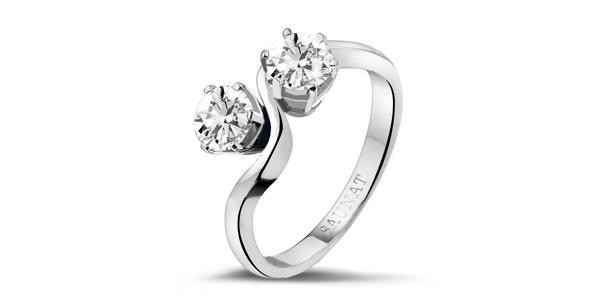
Tracing the rich heritage of engagement rings, we find ourselves journeying back to ancient times. Egyptians found solace in adorning their left finger with a wire ring, believing it was connected to the heart via a vein. This symbolic token of love evolved significantly over time, ultimately culminating in the spectacular handcrafted diamond engagement rings we associate with BAUNAT today.
Read summary
How has the tradition of engagement rings evolved through history to become the cherished symbol we know today?
The engagement ring's journey begins in ancient Egypt, where people wore wire rings on their left hand, believing it connected directly to the heart. The diamond engagement ring's pivotal moment came in 1477 when Archduke Maximilian of Austria presented Mary of Burgundy with a diamond-adorned gold ring, setting a royal precedent. Through the Renaissance, rings became vessels for romantic inscriptions, while the Victorian era introduced sentimental motifs like hearts and flowers. The Art Deco period brought geometric designs and mixed gemstones, followed by the Hollywood era's preference for large diamonds. Today's engagement rings reflect a blend of these historical influences while emphasizing personalization. BAUNAT honors this rich heritage by crafting high-quality diamond rings that combine timeless elegance with modern preferences, ensuring each piece tells its own unique love story.
5 Questions to Find Her Perfect Engagement Ring
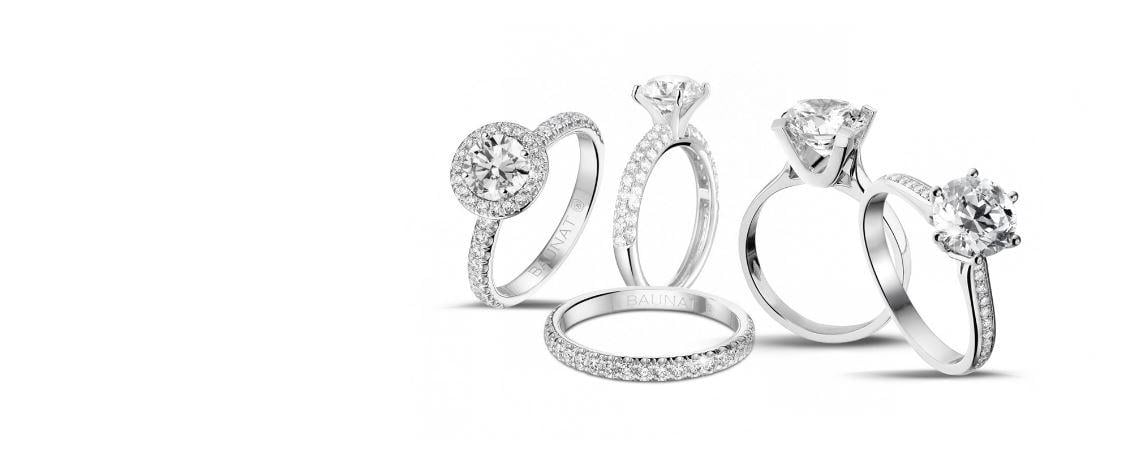
Are you planning to propose? Finding the right engagement ring is a defining step. Every ring is handcrafted in Antwerp from the finest materials by skilled artisans. Discover what engagement ring fits her personality.
Most viewed diamond jewels
-
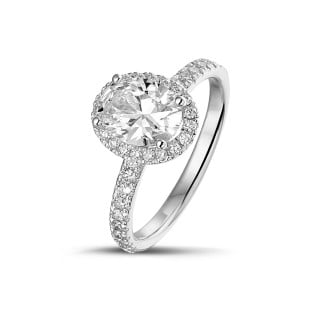
![1.00Ct halo ring in white gold with oval diamond]() Bestseller1.00Ct halo ring in white gold with oval diamondFrom USD 5.210,00 (excl. VAT)
Bestseller1.00Ct halo ring in white gold with oval diamondFrom USD 5.210,00 (excl. VAT) -
![1.00 carat solitaire cluster ring in white gold with marquise diamond]() BestsellerNew1.00 carat solitaire cluster ring in white gold with marquise diamondFrom USD 4.320,00 (excl. VAT)
BestsellerNew1.00 carat solitaire cluster ring in white gold with marquise diamondFrom USD 4.320,00 (excl. VAT) -
![0.95 carat diamond rose design ring in white gold]() NewPrincess Delphine0.95 carat diamond rose design ring in white goldFrom USD 15.720,00 (excl. VAT)
NewPrincess Delphine0.95 carat diamond rose design ring in white goldFrom USD 15.720,00 (excl. VAT) -
![1.00 carat solitaire ring with an asscher cut diamond in white gold]() Bestseller1.00 carat solitaire ring with an asscher cut diamond in white goldFrom USD 4.620,00 (excl. VAT)
Bestseller1.00 carat solitaire ring with an asscher cut diamond in white goldFrom USD 4.620,00 (excl. VAT) -
![1.00 carat solitaire ring with a cushion diamond and hidden halo in white gold]() BestsellerNew1.00 carat solitaire ring with a cushion diamond and hidden halo in white goldFrom USD 3.940,00 (excl. VAT)
BestsellerNew1.00 carat solitaire ring with a cushion diamond and hidden halo in white goldFrom USD 3.940,00 (excl. VAT)


.
The Dawn of Diamond Engagement Rings: The Middle Ages
Romantic Inscriptions: The 1500s - 1700s
Historical Ring Types and How They Were Used
Across Europe and beyond, a range of specialised engagement and betrothal rings developed to fulfil symbolic and practical roles. Gimmel, poesy, fede, puzzle and Claddagh rings each answered different social needs and often included mechanical or pictorial features that carried meaning.Gimmel or gimmal rings typically had two or more interlocking bands that fitted together to form a single ring. The separate parts could be worn individually during a betrothal - for example, by the betrothed and a witness - and reunited at the wedding to symbolise union. Some versions included small hinges or hidden clasps so the bands snapped together precisely, allowing a ceremonial rejoining at the marriage.
Poesy rings were inscribed with brief, often rhyming sentiments on the interior or exterior. These mottos personalised the ring and acted as a private pledge rather than a public statement. Fede rings, showing two hands clasped, go back to Roman and medieval legal symbolism for fidelity and mutual promise; their imagery echoed the contract-like nature of early betrothals.
Puzzle rings, made of multiple interlocking bands that form a single shape when assembled, were both ornament and token. In some traditions their complexity signified the giver's skill and care; in others disassembly could conceal the ring or let the wearer keep a part as a talisman. The Irish Claddagh ring combines hands, heart and crown in a compact emblem of love, loyalty and friendship; its clear visual code made it useful both as an engagement token and as a symbol of community identity.
Regional traditions about how rings were worn varied considerably. In ancient Rome a groom might give both an iron ring for contractual purposes and a gold ring as a display of status. Many Western countries now use the fourth finger of the left hand, a tradition often linked to earlier beliefs about a vein connecting finger and heart, while parts of Eastern Europe and Latin America favour the right hand for engagement or wedding rings. In Hindu culture, toe rings can play a formal role in marriage traditions and signal marital status in ways that differ from finger-worn Western rings.
Practical arrangements around betrothal objects also differed: in some communities parts of a multi-band ring were divided among family members or witnesses until the marriage, while in others a single ring was reserved for the bride. Expectations about what happened to a ring if an engagement ended depended on local custom and legal practice and were not uniform across places or eras.
Victorian Era: The 1800s
The Art Deco Influence: The 1920s - 1930s
20th Century: Industry, Marketing and Why Diamonds Became Dominant
The prominence of diamonds in modern engagement culture grew from a mix of supply changes and organised marketing rather than from inevitability. Two factors stand out: larger, more reliable supplies and advertising that linked diamonds to engagement in consumers' minds.From the late 1800s new discoveries and industrial mining expanded the availability of gem-quality diamonds. Large finds in South Africa made diamonds more visible on international markets and allowed companies to manage supply and distribution on a bigger scale. As trade networks matured, firms could influence which gems people associated with special occasions.
De Beers played a central role in turning greater supply into a cultural standard. In the mid-20th century the company combined control over distribution with long-term advertising aimed at making diamonds the default token of engagement. A defining element of that strategy was the slogan "A Diamond Is Forever," introduced in 1947–48, which tied durability and romance to the stone. Alongside adverts, the industry promoted standardised quality criteria and consumer guidance, encouraging buyers to weigh cut, clarity, colour and carat when choosing stones. Those efforts professionalised how diamonds were sold and discussed.
Broader legal and social changes mattered too. As formal remedies like breach-of-promise suits became less common in many places, the engagement ring moved further toward a symbolic object and a portable store of value. That shift in legal context, combined with marketing and higher supply, made the diamond ring both a sentimental emblem and an economic gift in ways earlier rings often were not.
Supply growth, concentrated market influence and sustained education campaigns together explain why diamonds eclipsed other gems by mid-century. That same momentum helps account for the appetite for larger stones later on: once diamonds became the expected standard, celebrity displays and aspirational advertising pushed visible size and brilliance into the spotlight, setting the stage for the glamorous rings of the 1960s and 1970s.

The Hollywood Glamour and the Rise of Big Diamonds: The 1960s - 1970s
The Era of Personalization: From the 1990s to Now
-
An Van Puyvelde
-
An Van Puyvelde - Order & Administration Manager
-
-
An supervises BAUNAT’s order processing and logistics, working closely with the internal order team to ensure a seamless customer experience. She plays a key role in coordinating production timelines and maintaining clear communication with clients throughout the entire process. With a strong focus on precision and reliability, An is dedicated to delivering each piece on time while keeping customers fully informed, contributing to BAUNAT’s high standard of service and customer satisfaction.
An supervises BAUNAT’s order processing and logistics, working closely with the internal order team to ensure a seamless customer experience. She plays a key role in coordinating production timelines and maintaining clear communication with clients throughout the entire process. With a strong focus on precision and reliability, An is dedicated to delivering each piece on time while keeping customers fully informed, contributing to BAUNAT’s high standard of service and customer satisfaction.