







Features:
-
Category:
-
Posted at:
-
Author:
- An Van Puyvelde
-
An Van Puyvelde - Order & Administration Manager
-


-
Reading time:11 minutes
In this article:
- Quick decision checklist: five questions, one-line answers
- How design choices change how a diamond looks: perceived size & sparkle
- Choosing to purchase your diamond ring online or in a store
- Choosing the design for your diamond ring
- Which ring setting suits your lifestyle? Practical pros & cons
- Fancy coloured or white diamond?
Diamond ring: which design is for you?
We have all come to the point in life where we are looking at purchasing a diamond ring. Whether it is a person looking to purchase a special ring for their partner for a particular occasion or whether its a person looking at treating themselves with a very special gift.
Quick decision checklist: five questions, one-line answers
- Is she active or practical? If yes, choose bezel, channel or a low-profile setting for comfort and durability.
- Does she want maximum sparkle and perceived size? If yes, choose a halo or pavé accents with a narrow band.
- Prefers classic and timeless? If yes, opt for a solitaire in a prong setting with a balanced band.
- Loves warm tones or vintage looks? If yes, select 18Kt yellow or red gold; for a crisper, modern look choose platinum or 18Kt white gold.
- Buying online or in-store? If you value convenience and range, online is secure and detailed; if you want to try on styles in person, visit a showroom.
Use these quick cues to jump to the detailed sections below and confirm choices based on lifestyle, metal preference and diamond type.
Read summary
How do you choose the perfect diamond ring design for your unique style and preferences?
Selecting a diamond ring involves several key decisions, from choosing between online and in-store shopping to determining the perfect design and materials. Today's secure online platforms make purchasing diamond jewelry both safe and convenient, with detailed photos and product information readily available. When considering design, you can opt for classic styles, contemporary fashion-inspired pieces, or even create a custom ring based on personal preferences or historical periods like Art Deco.
The choice of metal - whether white gold, rose gold, yellow gold, or platinum - affects both aesthetics and budget. For the centerpiece, you can select either traditional white diamonds, evaluated by the 4C's (Color, Clarity, Cut, and Carat), or fancy colored diamonds in various hues like yellow, pink, or blue. BAUNAT offers both ready-to-wear designs and custom-made options, crafted by expert artisans in Antwerp.
5 Questions to Find Her Perfect Engagement Ring
Are you planning to propose? Finding the right engagement ring is a defining step. Every ring is handcrafted in Antwerp from the finest materials by skilled artisans. Discover what engagement ring fits her personality.
Most viewed diamond jewels
-
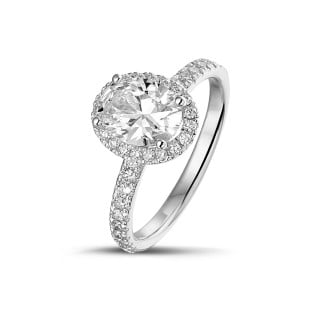
![1.00Ct halo ring in white gold with oval diamond]() Bestseller1.00Ct halo ring in white gold with oval diamondFrom € 5.578,10 (incl. 21% VAT)
Bestseller1.00Ct halo ring in white gold with oval diamondFrom € 5.578,10 (incl. 21% VAT) -
![1.00 carat solitaire cluster ring in white gold with marquise diamond]() BestsellerNew1.00 carat solitaire cluster ring in white gold with marquise diamondFrom € 4.622,20 (incl. 21% VAT)
BestsellerNew1.00 carat solitaire cluster ring in white gold with marquise diamondFrom € 4.622,20 (incl. 21% VAT) -
![0.95 carat diamond rose design ring in white gold]() NewPrincess Delphine0.95 carat diamond rose design ring in white goldFrom € 16.831,10 (incl. 21% VAT)
NewPrincess Delphine0.95 carat diamond rose design ring in white goldFrom € 16.831,10 (incl. 21% VAT) -
![1.00 carat solitaire ring with an asscher cut diamond in white gold]() Bestseller1.00 carat solitaire ring with an asscher cut diamond in white goldFrom € 4.936,80 (incl. 21% VAT)
Bestseller1.00 carat solitaire ring with an asscher cut diamond in white goldFrom € 4.936,80 (incl. 21% VAT) -
![1.00 carat solitaire ring with a cushion diamond and hidden halo in white gold]() BestsellerNew1.00 carat solitaire ring with a cushion diamond and hidden halo in white goldFrom € 4.210,80 (incl. 21% VAT)
BestsellerNew1.00 carat solitaire ring with a cushion diamond and hidden halo in white goldFrom € 4.210,80 (incl. 21% VAT)


How design choices change how a diamond looks: perceived size & sparkle
Halo versus solitaire
A halo of smaller diamonds around the centre stone creates a visible frame that makes the centre look larger than its actual carat weight. A solitaire, by contrast, keeps all attention on the centre stone and offers a cleaner, timeless silhouette. Halos increase perceived size and overall brilliance but add more small stones to maintain; solitaires put the spotlight on a single diamond and often need less detailed upkeep.
Band width and profile
A narrow band makes the centre diamond appear bigger because there is less metal competing with the stone, while a wider band can make the same diamond seem smaller. The band profile also matters: a tapered or knife-edge band directs the eye toward the centre, increasing perceived size, whereas a flat, wide band creates a more substantial, architectural look.
Metal colour and diamond perception
Metal colour affects how white or near-colourless diamonds are perceived. Cool-toned metals such as platinum or 18Kt white gold reflect light in a way that complements near-colourless diamonds and can help them look crisper. Warm metals like yellow or red gold add warmth and character, which can suit warmer-coloured diamonds or a vintage aesthetic. At Baunat we generally recommend 18Kt or higher metals for their mix of durability and finish.
Low-profile versus high-set
Low-profile settings sit closer to the finger and are more comfortable for everyday activities, but they can reduce how much light reaches the pavilion and slightly affect brilliance. High-set designs lift the diamond into more light, maximising show, though they can catch more and may need extra care during active use.
Quick decision checklist
- Need low maintenance and durability → choose bezel, channel, or low-profile settings.
- Want maximum perceived size → consider a halo or narrower band that focuses attention on the centre.
- Prefer maximum brilliance and a traditional look → a well-cut solitaire in a prong setting offers the most fire.
- Love warm metal tones or vintage style → opt for yellow or red gold in 18Kt or higher; for a crisper, cooler presentation choose platinum or 18Kt white gold.
These design choices interact: selecting a halo with a narrow band will amplify perceived size, while pairing a high-set solitaire with a wide band will emphasise presence and ceremony. Use the checklist to match aesthetics, lifestyle and maintenance preferences before choosing metal and setting.
Choosing to purchase your diamond ring online or in a store
Today, buying online with all the secured payment systems and great insured shipping services, has made choosing this particular option incredibly easy and increasingly successful. Photos are very accurate and information about the product is very detailed therefore once you know what you are looking for, buying a diamond ring in a few clicks is so simple.
Choosing the design for your diamond ring
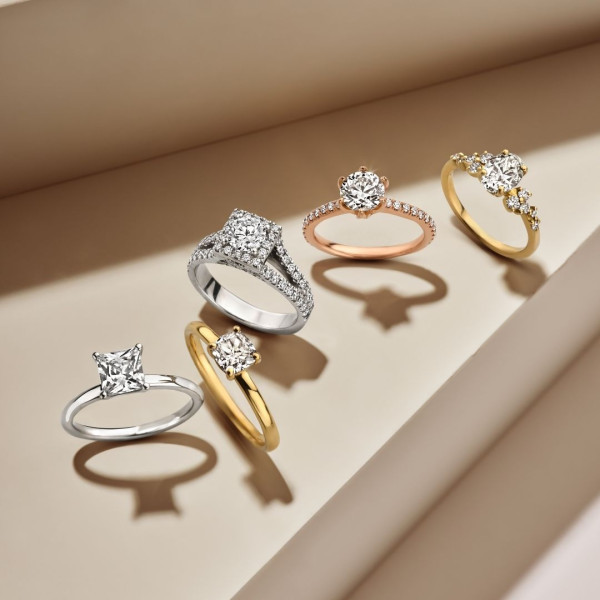
The next step is understanding which design you are looking for for your diamond ring. Do you wish to buy a classic design, or would you rather wish to make a fashion statement and buy a ring that is similar to one you may have seen on a famous person? Or would you instead like to design your own ring, based on a ring you may have had in the past, or based on an era that you particularly appreciate such as Art deco jewellery?
Furthermore, are you more of a white gold, red gold, yellow gold person, or would you prefer the durability of platinum? That choice does make a difference, not only in terms of the budget you would like to spend, but also depending on what type of diamond you would like to set in the ring.
Which ring setting suits your lifestyle? Practical pros & cons
Prong setting (claw)
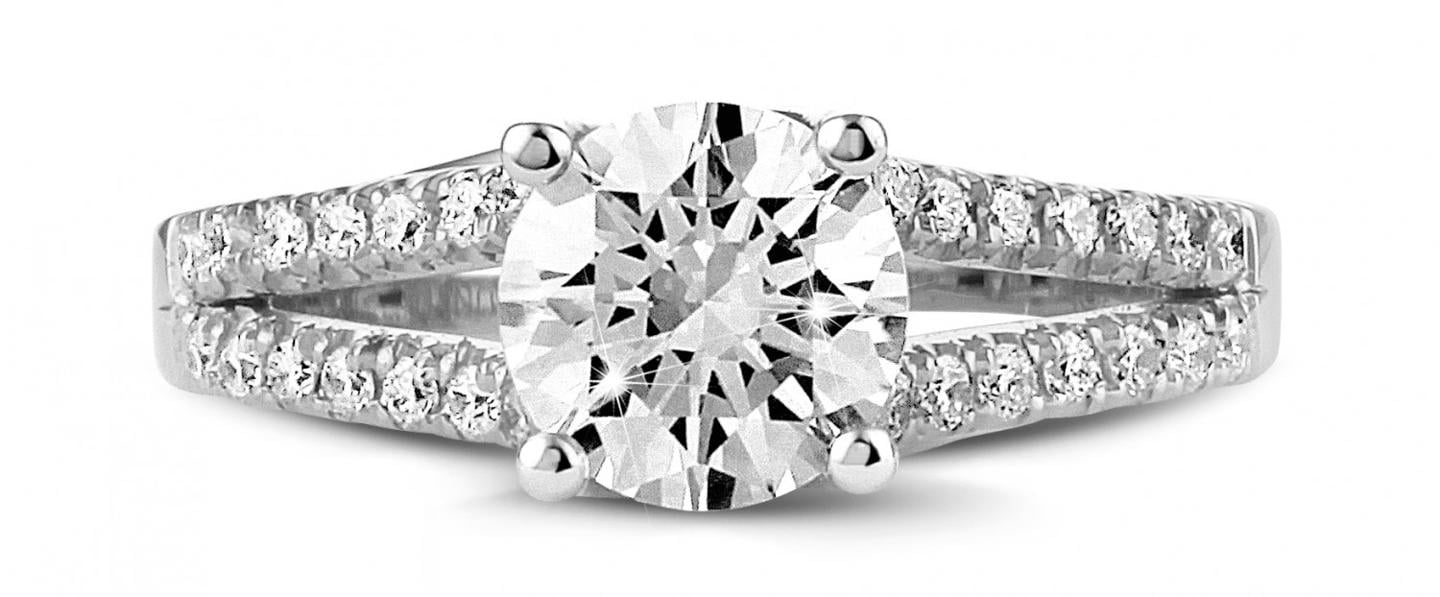
A prong setting holds the diamond with small metal claws that lift the stone above the band, letting more light reach the diamond.
- Pros: increases sparkle and fire; puts the diamond front and centre; easier to clean beneath the stone; often makes the centre stone look larger.
- Cons: prongs can catch on fabric and need occasional checks to stay secure; the girdle is more exposed so the stone can be more vulnerable to hard knocks.
- Best for: someone who prefers a classic, striking look, wears jewellery selectively, and wants maximum brilliance.
- Maintenance & durability: prongs are sturdy when made in 18Kt gold or platinum, but they remain small parts that benefit from routine visual checks.
Bezel setting
A bezel wraps the diamond in a continuous rim of metal, holding it flush with or slightly above the band for a smooth profile.
- Pros: very good protection for the stone; low risk of snagging; highly secure and suitable for everyday wear.
- Cons: hides some of the diamond’s surface, which can slightly reduce apparent sparkle compared with open settings.
- Best for: active lifestyles, frequent hand-washing, sports, or anyone who prefers a modern, low-maintenance ring.
- Maintenance & durability: bezels are robust, especially in 18Kt or higher gold and platinum, and work well where durability is a priority.
Channel setting
Small diamonds sit between two metal walls along the band, forming a smooth row without exposed prongs.
- Pros: clean, continuous appearance; low profile with little chance of catching; good protection for side stones.
- Cons: needs precise workmanship; replacing stones or resizing can be more complex than with single prongs.
- Best for: someone who wants elegant sparkle along the band and a secure, streamlined design for regular wear.
- Maintenance & durability: channel settings are solid but should be inspected so stones stay snug in their rails.
Pavé setting
Many small diamonds are set close together with tiny beads of metal, creating a surface of continuous sparkle.
- Pros: strong overall brilliance; makes the ring read as larger; decorative and glamorous.
- Cons: more small stones to check over time; delicate milgrain or bead work can be affected by rough wear.
- Best for: evening wear or formal occasions, and for those who prioritise sparkle and a luxurious appearance.
- Maintenance & durability: pavé benefits from careful handling; choose higher-karat metals like 18Kt or platinum for lasting support.
Halo setting
A ring of small diamonds surrounds the centre stone, forming a frame that increases the centre’s visual impact.
- Pros: makes the centre stone appear larger and adds extra brilliance; can give a vintage or glamorous look.
- Cons: more facets to clean and check; the halo can increase the ring’s profile and complexity.
- Best for: those who want maximum perceived size and decorative detail, often for special occasions or statement wear.
- Maintenance & durability: well-built halos are secure, but the small surrounding stones benefit from periodic inspection.
Low-profile / flush setting
The diamond sits close to the band, either set within the metal or barely rising above it, prioritising comfort and practicality.
- Pros: very comfortable for daily wear; low chance of snagging; practical for active hands.
- Cons: less side light reaches the diamond, which can slightly alter perceived sparkle compared with higher settings.
- Best for: an active lifestyle, frequent hand-washing, or anyone who prefers comfort and discreet elegance.
- Maintenance & durability: one of the most robust choices for everyday resilience, especially in 18Kt gold or platinum.
A short recommendation
For most wearers who want a balance of beauty and longevity, choose settings made in 18Kt gold or platinum. These metals give the structural strength needed to protect diamonds while keeping fine detail. Baunat does not promote tension settings because they can compromise stone retention over time; our priority is secure, long-lasting settings that keep the diamond safe.
Fancy coloured or white diamond?
Would you like to go for the authentic, slightly more traditional white diamond or would you opt for a fancy coloured diamond? In the case of a white diamond, the one and only thing to take into account is the Colour, Clarity, Cut and Carat grading - the 4C’s. Whether you opt for a perfect diamond with little to no colour at all; the number and the visibility of the inclusions to the naked eye; whether the diamond has excellent cut grading or less; and of course last but not least, the size of the diamond itself.
If you instead choose to go for a coloured diamond, based on your favourite colour for example, there’s a variety of colours to choose from: yellow, brown, pink, blue, red, orange or even black. These colours are not all easy to find and some are extremely rare and very pricey depending on their saturation and the tone of the colour itself.
We at BAUNAT offer you the possibility of either choosing from our vast catalogue of diamond rings online or the option of tailor making which ever design you have in mind through an easy process with our teams of designers and artisans in Antwerp.
-
An Van Puyvelde
-
An Van Puyvelde - Order & Administration Manager
-
-
An supervises BAUNAT’s order processing and logistics, working closely with the internal order team to ensure a seamless customer experience. She plays a key role in coordinating production timelines and maintaining clear communication with clients throughout the entire process. With a strong focus on precision and reliability, An is dedicated to delivering each piece on time while keeping customers fully informed, contributing to BAUNAT’s high standard of service and customer satisfaction.
An supervises BAUNAT’s order processing and logistics, working closely with the internal order team to ensure a seamless customer experience. She plays a key role in coordinating production timelines and maintaining clear communication with clients throughout the entire process. With a strong focus on precision and reliability, An is dedicated to delivering each piece on time while keeping customers fully informed, contributing to BAUNAT’s high standard of service and customer satisfaction.