







Features:
-
Category:
-
Posted at:
-
Author:
- Fabienne Rauw
-
BAUNAT Antwerp
-


-
Reading time:9 minutes
In this article:
Captivating Charm: The European-Cut Diamond Engagement Ring
As you embark upon the joyous journey of selecting a diamond engagement ring for your loved one, the myriad of traditional diamond shapes might leave you bewildered. Will it be a brilliant or a princess cut – the reigning pair amongst the top ten most desired diamond shapes? While fashions transform and diamond shapes evolve, the allure of bygone eras often call, inviting many back to the timeless charm of the European-cut diamond ring. This magnificent specimen however, isn't the easiest to procure, given its unique vintage semblance. Let us delve deeper into understanding this diamond shape and the diamond prices evolution related to it.
Read summary
What makes European-cut diamonds unique, and are they the right choice for your engagement ring?
European-cut diamonds, popular in the late 19th and early 20th centuries, offer a distinctive vintage charm that appeals to those seeking historical elegance. These diamonds evolved from the old mine cut and feature a refined cushion-like shape, either round or oval. However, finding authentic European-cut diamonds can be challenging today, as many have been re-polished into modern cuts that offer greater brilliance. While these vintage pieces typically carry higher carat weights, they generally display less sparkle than contemporary cuts. Due to their rarity and historical significance, European-cut diamonds often command premium prices. For those drawn to their classic appeal but unable to source one, modern brilliant or oval cuts provide excellent alternatives, offering superior sparkle that resonates with today's jewelry preferences. Consider these factors carefully when selecting your perfect engagement ring.
5 Questions to Find Her Perfect Engagement Ring
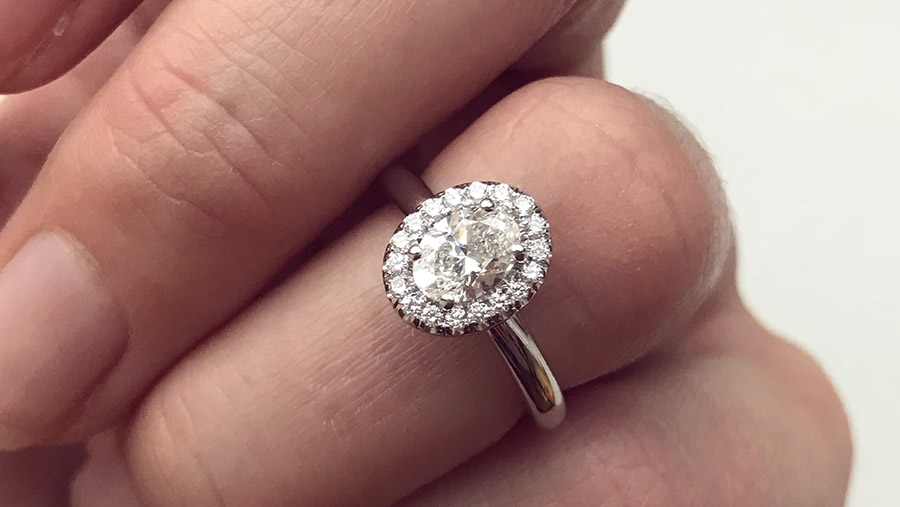
Are you planning to propose? Finding the right engagement ring is a defining step. Every ring is handcrafted in Antwerp from the finest materials by skilled artisans. Discover what engagement ring fits her personality.
Most viewed diamond jewels
-
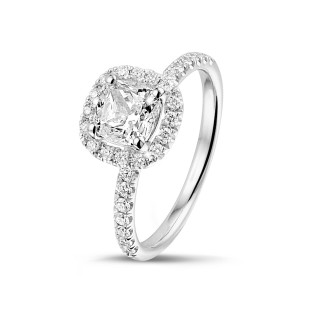
![1.00 carat solitaire ring with a cushion diamond and hidden halo in white gold]() BestsellerNew1.00 carat solitaire ring with a cushion diamond and hidden halo in white goldFrom USD 3.940,00 (excl. VAT)
BestsellerNew1.00 carat solitaire ring with a cushion diamond and hidden halo in white goldFrom USD 3.940,00 (excl. VAT) -
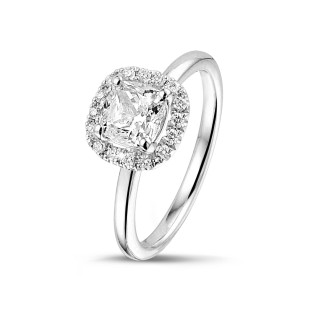
![1.00 carat solitaire cluster ring in white gold with a cushion cut diamond]() BestsellerNew1.00 carat solitaire cluster ring in white gold with a cushion cut diamondFrom USD 3.520,00 (excl. VAT)
BestsellerNew1.00 carat solitaire cluster ring in white gold with a cushion cut diamondFrom USD 3.520,00 (excl. VAT) -
![1.00 carat solitaire halo ring with a cushion diamond in white gold with round diamonds]() Bestseller1.00 carat solitaire halo ring with a cushion diamond in white gold with round diamondsFrom USD 4.210,00 (excl. VAT)
Bestseller1.00 carat solitaire halo ring with a cushion diamond in white gold with round diamondsFrom USD 4.210,00 (excl. VAT) -
![1.00 carat solitaire halo ring with a cushion diamond in white gold with round diamonds]() Bestseller1.00 carat solitaire halo ring with a cushion diamond in white gold with round diamondsFrom USD 3.750,00 (excl. VAT)
Bestseller1.00 carat solitaire halo ring with a cushion diamond in white gold with round diamondsFrom USD 3.750,00 (excl. VAT) -
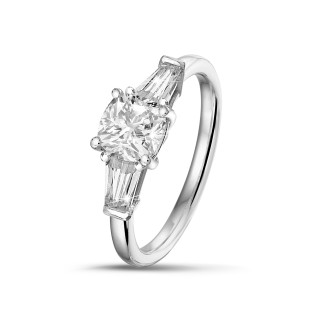
![1.00 carat trilogy ring in white gold with a cushion diamond and tapered baguettes]() Bestseller1.00 carat trilogy ring in white gold with a cushion diamond and tapered baguettesFrom USD 5.560,00 (excl. VAT)
Bestseller1.00 carat trilogy ring in white gold with a cushion diamond and tapered baguettesFrom USD 5.560,00 (excl. VAT)


.
The Intriguing Legacy of European-Cut Diamonds
Rose Cut & Antique Cuts: How They Relate to the European Cut
Rose cuts and other antique cuts belong to the same family of vintage diamond shapes as the European cut. They share hand-cut proportions and period faceting, which gives them that old-world appearance. Knowing how a rose cut or an antique cut differs from a European cut helps you choose the right look - whether you want a broad table presence, a soft glow, or an authentic period style.
A rose cut is easy to recognise. It usually has a shallow or absent pavilion and a domed crown made of triangular or kite-shaped facets that meet at a point, often with a flat or slightly angled base. That dome and shallow profile produce broad, satiny flashes rather than the pinpoint sparkle of modern brilliants. Early mine cuts and transitional shapes share similar traits: larger tables, fewer facets and a gentler light return. From the top they read as open and geometric; in profile they look much shallower than modern cuts.
There are practical trade-offs to consider. Because rose and many antique cuts lack deep pavilions, inclusions and body color can be more visible through the large table. For smaller stones you will often prefer higher clarity and color grades to keep the top view clean; if you want a larger-looking face and accept a touch of warmth, slightly lower color grades can work provided inclusions don’t disrupt the visual plane.
Face-up size and market pricing also differ. A rose cut usually appears larger for the same carat weight because more weight sits near the table rather than in a deep pavilion. That makes a 1.00 carat rose cut look noticeably bigger on the finger than a 1.00 carat brilliant, and collectors may pay more for rare, well-provenanced examples. Simpler rose cuts can be easier to find and sometimes more affordable per visible millimetre, depending on demand and cutting yield.
Think about wear and care for everyday use. The shallow pavilion of a rose cut can sit lower in a bezel or half-bezel, which protects the stone but also makes surface dirt and oils more visible on the broad table. Gentle, regular cleaning preserves the appearance. Protective mounts such as bezels, partial bezels or secure halos reduce the risk of edge chips. Avoid settings that expose the pavilion underside unnecessarily; prong mounts that lift a shallow stone can leave vulnerable edges. For daily wear, choose a setting that balances the desired vintage look with structural protection.
In short, pick an antique or rose cut if you want a clear vintage character, a larger face-up for the carat weight and a soft, satiny sparkle. Choose a European cut for period charm with a slightly more substantial profile, and select a modern brilliant when maximum scintillation is the priority. For many buyers the decision comes down to whether the face-up presence and vintage appeal outweigh the brighter, cleaner appearance of modern cuts.

European Cut vs. Present-Day Diamond Shapes
To recognise a European cut quickly, look for a relatively large table, broad facets that give flash-like reflections rather than pinpoint sparkle, and a higher crown combined with a shallower pavilion than many modern brilliants. From above the facet pattern reads more open and geometric; from the side the stone looks squatter compared with the taller pavilion of a modern brilliant. Modern brilliant and oval cuts use many small facets to concentrate light and return intense scintillation; the European cut gives a softer, antique glow.
When choosing a setting, pick mounts that suit the cut’s character. Solitaires and vintage-inspired settings highlight the stone’s historical lines, while a delicate halo can increase perceived brilliance without covering the antique table. Avoid overly deep settings that conceal a shallow pavilion; instead choose styles that lift and show the open table. As a practical note, European and other antique cuts start to read most clearly from around 0.75 carat and up if you want a pronounced period look on a slender finger. Very small stones may lose their distinctive faceting. Matching a European cut with a shank width that fits the finger and using a supportive bezel or prong structure preserves both the look and the stone’s security.
If you are also weighing rose or other antique cuts, remember they emphasise table presence even more than the European cut. Rose cuts will appear larger face-up for the same carat weight and will show warmth and inclusions differently. Use these visual cues: choose a European cut for a balance of vintage appeal and a slightly fuller profile, a rose or antique cut for a pronounced historical, large-face-up look, and a modern brilliant when brilliance matters most.
-
Fabienne Rauw
-
BAUNAT Antwerp
-
-
Fabienne, manager of the German market is able to guide every client with finding the right jewel. She takes care of most of the German orders, but also takes other task on her plate. Thanks to her six years of experience at BAUNAT she acquainted well with the product and the marketing around it. Her degree in PR ensures that BAUNAT is well presented across all media channels. For anyone looking into a new investment opportunity, Fabienne is the perfect guide in this process. No question will be left unanswered, and she will help you every step of the way.
Selected Bespoke Projects
• Eternal Bloom bespoke engagement concept - Role: project lead for client briefing and prototype coordination. Fabienne translated personal design references into a 3D-printed prototype, supervised stone selection and ensured the finished piece matched the client’s vision and comfort preferences.
• Personalized anniversary necklace - Role: design coordinator and quality overseer. She managed the custom design process from the initial sketch to final polishing, liaising between client and workshop to preserve proportions and finish.
• Reimagined heirloom ring restoration and redesign - Role: client consultant and technical coordinator. Fabienne guided the client through options to modernize setting details while keeping sentimental elements, delivering a wearable result that respected the original piece.
Her hands-on involvement in bespoke commissions ensures each custom order has a clear brief, careful prototype review and close follow-up with the workshop, so clients receive a tailored jewel that meets both aesthetic and practical expectations.
Professional enquiries
For speaking engagements, press requests or research collaborations, please send your message to BAUNAT’s communications team with the subject line: "Fabienne Rauw - Professional Enquiry." Include a brief description of the request and any relevant dates or documents. The communications team will route enquiries to Fabienne and provide guidance on next steps.
Fabienne, manager of the German market is able to guide every client with finding the right jewel. She takes care of most of the German orders, but also takes other task on her plate. Thanks to her six years of experience at BAUNAT she acquainted well with the product and the marketing around it. Her degree in PR ensures that BAUNAT is well presented across all media channels. For anyone looking into a new investment opportunity, Fabienne is the perfect guide in this process. No question will be left unanswered, and she will help you every step of the way.
Selected Bespoke Projects
• Eternal Bloom bespoke engagement concept - Role: project lead for client briefing and prototype coordination. Fabienne translated personal design references into a 3D-printed prototype, supervised stone selection and ensured the finished piece matched the client’s vision and comfort preferences.
• Personalized anniversary necklace - Role: design coordinator and quality overseer. She managed the custom design process from the initial sketch to final polishing, liaising between client and workshop to preserve proportions and finish.
• Reimagined heirloom ring restoration and redesign - Role: client consultant and technical coordinator. Fabienne guided the client through options to modernize setting details while keeping sentimental elements, delivering a wearable result that respected the original piece.
Her hands-on involvement in bespoke commissions ensures each custom order has a clear brief, careful prototype review and close follow-up with the workshop, so clients receive a tailored jewel that meets both aesthetic and practical expectations.
Professional enquiries
For speaking engagements, press requests or research collaborations, please send your message to BAUNAT’s communications team with the subject line: "Fabienne Rauw - Professional Enquiry." Include a brief description of the request and any relevant dates or documents. The communications team will route enquiries to Fabienne and provide guidance on next steps.