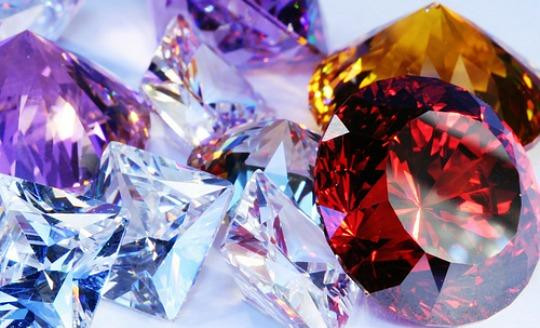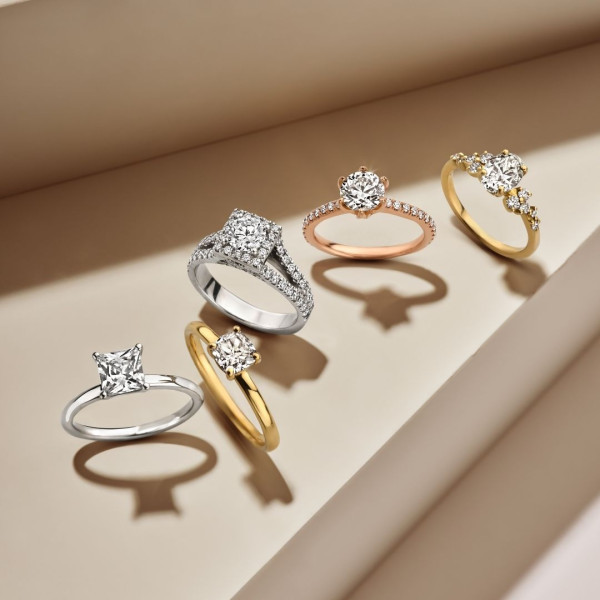








Allow us to introduce you to the fancy red
A naturally coloured diamond is incredibly rare. Only 1 in 10,000 will be certified as a fancy colour diamond. A separate grading applies to these exclusive gemstones, where the intensity of the colour determines the value. Buying coloured diamonds, particularly the fancy red, is therefore certainly more of an investment.
Read summary
What makes red diamonds one of the rarest gemstones in the world?
Red diamonds represent the pinnacle of diamond rarity, with only 20-30 ever discovered worldwide. Unlike other colored diamonds, red diamonds exist in only one shade—"fancy red"—caused by crystal lattice deformations that even GIA experts cannot fully explain.
Most red diamonds weigh less than half a carat, yet their price starts around $100,000 for just 0.2 carats. These exceptional gems have no fixed price and are typically sold at auction, with record sales reaching $5 million.
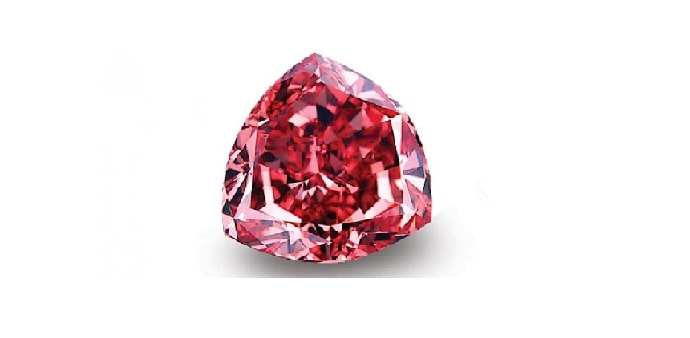
The most valuable is the Moussaiëff Red Diamond, worth $7 million. Originally discovered by Brazilian farmers as a 13.9-carat rough stone, this 5.11-carat triangular brilliant is the largest red diamond in existence. Its exceptional size and color make it truly one-of-a-kind in the diamond world.
Most viewed diamond jewels
-
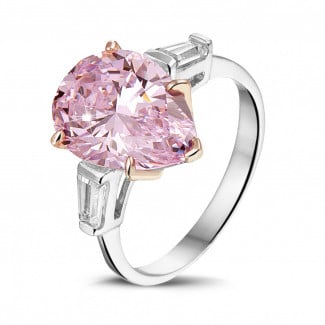
![Ring in white gold with ‘fancy pink‘ pear shaped diamond and taper cut diamonds]() Ring in white gold with ‘fancy pink‘ pear shaped diamond and taper cut diamondsFrom € 2.998.924,50 (incl. 21% VAT)
Ring in white gold with ‘fancy pink‘ pear shaped diamond and taper cut diamondsFrom € 2.998.924,50 (incl. 21% VAT) -
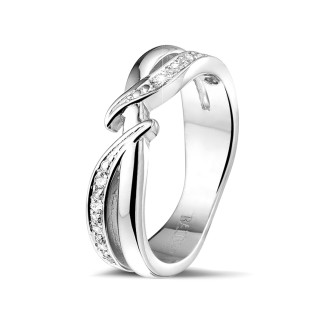
![0.11 carat diamond ring in white gold]() Bestseller0.11 carat diamond ring in white goldFrom € 4.005,10 (incl. 21% VAT)
Bestseller0.11 carat diamond ring in white goldFrom € 4.005,10 (incl. 21% VAT) -
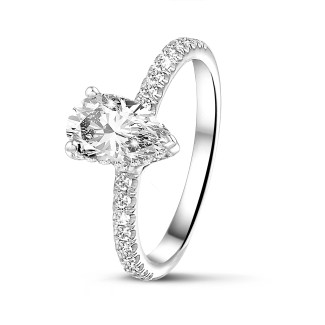
![1.00 Ct. solitaire ring in white gold with pear diamond and hidden halo]() BestsellerNew1.00 Ct. solitaire ring in white gold with pear diamond and hidden haloFrom € 5.215,10 (incl. 21% VAT)
BestsellerNew1.00 Ct. solitaire ring in white gold with pear diamond and hidden haloFrom € 5.215,10 (incl. 21% VAT) -
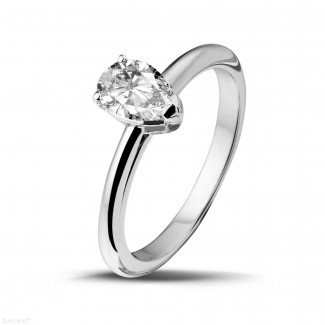
![1.00 carat solitaire ring in white gold with pear shaped diamond]() 1.00 carat solitaire ring in white gold with pear shaped diamondFrom € 4.416,50 (incl. 21% VAT)
1.00 carat solitaire ring in white gold with pear shaped diamondFrom € 4.416,50 (incl. 21% VAT) -
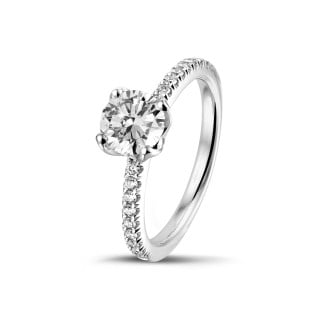
![1.00 carat solitaire ring in white gold with side diamonds]() Bestseller1.00 carat solitaire ring in white gold with side diamondsFrom € 4.876,30 (incl. 21% VAT)
Bestseller1.00 carat solitaire ring in white gold with side diamondsFrom € 4.876,30 (incl. 21% VAT)
How rare are red diamonds?
Unlike other coloured diamonds, the red diamond is only ever found in 1 shade, namely the ‘fancy red’. The colour is supposed to be the result of deformations in the crystal lattice. Having said that, even the experts at GIA can’t explain the red colour. To date, only 20 to 30 red diamonds have ever been found right across the world.
Most red diamonds weigh less than half a carat. But even buying small red diamonds is an expensive affair.
How many red diamonds are known — documented counts and size distribution
Regarded as the rarest of naturally coloured diamonds, red stones are tracked carefully by specialist researchers and reference projects. Two frequently consulted sources are Regal Studio, which maintains an updated list of known specimens, and the GIA, whose reports and individual gemstone records are cited in those compilations. Regal Studio’s recent summaries place the documented population in the range of about 20 to 30 naturally occurring red diamonds; public museum and auction records show similar totals in their latest updates.
The documented specimens are unevenly distributed by size. Combining Regal Studio’s listings with public GIA entries and auction catalogues yields a practical size-tier breakdown that reflects known, recorded stones rather than theoretical finds.
• Less than 0.20 carat: the largest group. Most recorded red diamonds fall below 0.20 ct. These small stones appear most often in archival lists and private collections and make up the majority of the documented population. Their size helps explain their greater frequency relative to larger tiers, though they remain extremely rare compared with other coloured diamonds.
• 0.20–0.50 carat: a small but visible tier. Several examples appear in this class. Stones in this range are uncommon and attract attention because they are large enough to be set and shown while still far scarcer than the sub-0.20 ct specimens.
• 0.50–1.00 carat: very scarce. Only a handful of documented red diamonds fall into this bracket. Once a red diamond reaches or exceeds half a carat, known examples drop markedly, and provenance and documentation are critical to confirm authenticity.
• 1.00–2.00 carat: extremely rare. Recorded examples here are limited to a very small number of historically important stones and auctioned pieces. These are typically museum- or collection-worthy due to their combination of size and natural red colour.
• Greater than 2.00 carat: exceptionally rare. Stones above 2.00 ct are counted in the single digits in public compilations; the Moussaieff Red (5.11 ct) sits in this upper echelon and illustrates how unusual such sizes are.
What these counts mean for buyers and collectors
The available counts make clear that large, naturally red diamonds are vanishingly rare. For collectors this means provenance, authoritative laboratory documentation and an unbroken paper trail materially affect market perception and resale prospects. Smaller documented specimens, while proportionally more numerous within the already tiny global population, still represent a very limited supply compared with other coloured diamonds. Buyers should therefore prioritise independently verifiable documentation and the stone’s recorded history when assessing rarity and potential longer-term significance. Regal Studio and public museum or auction records remain the most accessible references for up-to-date population tracking.
How much can you buy red diamonds for?
In contrast to colourless diamonds, there is no fixed price for coloured diamonds. The price is determined during an auction. Red diamonds will generally soon cost you more than 100,000 dollars from 0.2 carat. The record price ever paid for a red diamond was noted in Hong Kong a few years ago and was a grand total of 5 million dollars.
The most expensive red diamond in the world is the Moussaiëff Red Diamond. This is worth 7 million dollars and, with its 5.11 carat, is also the biggest red diamond.
Market, auctions and why collectors value red diamonds
The modern market for natural red diamonds depends as much on provenance and documented supply as on gemmological rarity. The Argyle mine in Western Australia accounted for a disproportionate share of recorded red and intense pink finds; when Argyle closed in 2020 that source of red material effectively disappeared, tightening available supply and shifting attention to already-documented specimens. Industry summaries emphasize Argyle’s historical role and note that few, if any, large new finds are expected from that origin.
Auction records provide the clearest public signal of collector value. High-profile sales recorded in market reports and auction catalogues show that prices rise steeply with size, colour purity and provenance. Several auctioned red and red-pink stones have achieved multi-hundred-thousand to multi-million dollar results, with per-carat values increasing sharply for stones that combine confirmed natural origin and larger carat weight. Public sale results and provenance notes from specialist dealers and auction houses are the primary benchmarks for pricing rare natural reds.
Practical points commonly emphasised by market participants when assessing red diamonds for collection or investment:
• Laboratory grading and explicit confirmation of natural colour origin are essential. A GIA report stating “Natural Fancy Red” or equivalent wording from other recognised laboratories is the baseline for high-end market acceptance.
• Provenance and an unbroken ownership history materially affect market perception.
• Liquidity can be limited. Very rare red diamonds trade infrequently, and sale timelines often depend on access to specialist auction rooms or private collector networks.
• Buyer profiles concentrate around dedicated collectors and institutions; private investors and museums form the most active pool for the very largest or most storied examples.
These factors explain why documented provenance and certification matter as much as a gemstone’s physical attributes. For market comparables, consult specialist market write-ups and auction house archives. Color intensity and the absence of modifying secondary hues are primary value drivers for red diamonds; while the 4 C’s remain relevant, colour dominates value in this category and should be the main focus when comparing auction outcomes and historical sales.
What makes the Moussaiëff Red Diamond unique?
Its rare colour and size! The rough stone weighed 13.9 carat when it was first found in the nineteen nineties by Brazilian farmers in the Abaetezinho river in the Alto Paranaíba region. The diamond was bought and cut into a triangular brilliant by the William Goldberg Diamond Corp.
It was bought by Shlomo Moussaiëff in 2001, an Israeli-American jewellery merchant from London.
Are you interested in buying coloured diamonds yourself? Contact BAUNAT’s experts via telephone, email or chat. Are you looking for a more affordable alternative to jewellery with coloured diamonds? Take a look at our collection of jewellery with rubies, sapphires and emeralds.
Notable red diamonds and where they are now
Notable red diamonds and where they are now
Winston Red - Often listed in specialist references, the Winston Red is a historic fancy red diamond associated with a major jewellery house. Its provenance includes private collections and occasional exhibition loans, and it appears in museum and auction records.
DeYoung Red - Part of the DeYoung collection, this stone has been shown in museum displays and is commonly mentioned in compiled lists of important red diamonds. Its museum links make it one of the better-documented examples available for public study.
Argyle Phoenix - Discovered while Argyle operated, the Argyle Phoenix is highlighted in industry reporting as one of the notable larger red/pink-red finds from that mine. Its provenance is closely tied to Argyle’s production history.
Argyle Everglow - Another stone connected to Argyle, the Everglow appears in specialist compendia and auction literature as an example of Argyle-origin red material. Its documented history underlines Argyle’s role in supplying naturally coloured reds.
Rob Red - A named red diamond that shows up in auction and reference listings; its recorded carat weight and sale history are used by collectors and analysts when comparing mid-to-high tier examples.
Hancock Red - A historically notable red stone with records in museum and auction archives. It is frequently cited alongside other named stones when compiling lists of significant natural red diamonds.
Each named stone above appears in specialist documentation such as NaturalDiamonds, auction archives and compiled lists on reference sites. Museum placement or public display, where recorded, strengthens a stone’s documentation and market recognition, making these examples useful reference points for collectors and researchers.
-
Fabienne Rauw
-
BAUNAT Antwerp
-


-
Fabienne, manager of the German market is able to guide every client with finding the right jewel. She takes care of most of the German orders, but also takes other task on her plate. Thanks to her six years of experience at BAUNAT she acquainted well with the product and the marketing around it. Her degree in PR ensures that BAUNAT is well presented across all media channels. For anyone looking into a new investment opportunity, Fabienne is the perfect guide in this process. No question will be left unanswered, and she will help you every step of the way.
Selected Bespoke Projects
• Eternal Bloom bespoke engagement concept - Role: project lead for client briefing and prototype coordination. Fabienne translated personal design references into a 3D-printed prototype, supervised stone selection and ensured the finished piece matched the client’s vision and comfort preferences.
• Personalized anniversary necklace - Role: design coordinator and quality overseer. She managed the custom design process from the initial sketch to final polishing, liaising between client and workshop to preserve proportions and finish.
• Reimagined heirloom ring restoration and redesign - Role: client consultant and technical coordinator. Fabienne guided the client through options to modernize setting details while keeping sentimental elements, delivering a wearable result that respected the original piece.
Her hands-on involvement in bespoke commissions ensures each custom order has a clear brief, careful prototype review and close follow-up with the workshop, so clients receive a tailored jewel that meets both aesthetic and practical expectations.
Professional enquiries
For speaking engagements, press requests or research collaborations, please send your message to BAUNAT’s communications team with the subject line: "Fabienne Rauw - Professional Enquiry." Include a brief description of the request and any relevant dates or documents. The communications team will route enquiries to Fabienne and provide guidance on next steps.
Fabienne, manager of the German market is able to guide every client with finding the right jewel. She takes care of most of the German orders, but also takes other task on her plate. Thanks to her six years of experience at BAUNAT she acquainted well with the product and the marketing around it. Her degree in PR ensures that BAUNAT is well presented across all media channels. For anyone looking into a new investment opportunity, Fabienne is the perfect guide in this process. No question will be left unanswered, and she will help you every step of the way.
Selected Bespoke Projects
• Eternal Bloom bespoke engagement concept - Role: project lead for client briefing and prototype coordination. Fabienne translated personal design references into a 3D-printed prototype, supervised stone selection and ensured the finished piece matched the client’s vision and comfort preferences.
• Personalized anniversary necklace - Role: design coordinator and quality overseer. She managed the custom design process from the initial sketch to final polishing, liaising between client and workshop to preserve proportions and finish.
• Reimagined heirloom ring restoration and redesign - Role: client consultant and technical coordinator. Fabienne guided the client through options to modernize setting details while keeping sentimental elements, delivering a wearable result that respected the original piece.
Her hands-on involvement in bespoke commissions ensures each custom order has a clear brief, careful prototype review and close follow-up with the workshop, so clients receive a tailored jewel that meets both aesthetic and practical expectations.
Professional enquiries
For speaking engagements, press requests or research collaborations, please send your message to BAUNAT’s communications team with the subject line: "Fabienne Rauw - Professional Enquiry." Include a brief description of the request and any relevant dates or documents. The communications team will route enquiries to Fabienne and provide guidance on next steps.